Best Baby Carriers for Very Short Torsos: 14-Inch Fit Test
By Linh Pham • 29th May
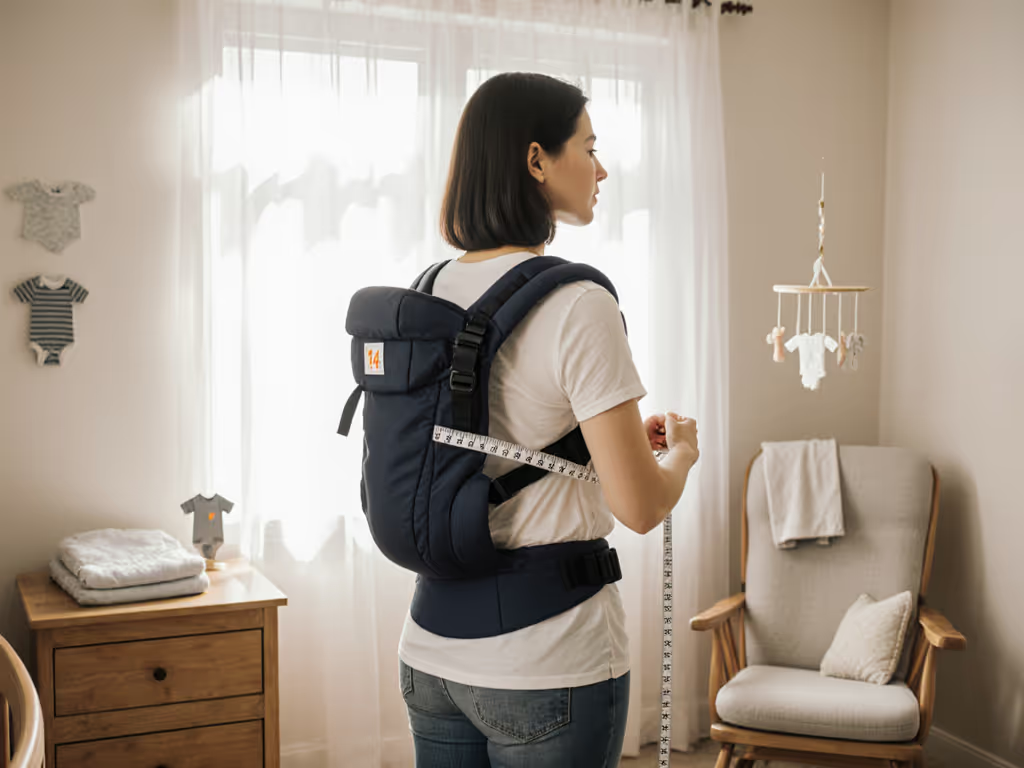
If you have a truly petite torso, most baby carriers for short torso still ride too high, dig into your ribs, or swallow your baby's face. This guide is for caregivers whose shoulder-to-waist length is closer to 14 inches and who need very short torso baby carriers that actually match their frame.
Comfort is a posture achieved, not a promise on packaging.
Instead of guessing from size charts or influencer photos, we'll walk through a 14-inch fit test you can run on any carrier: the one you own, one on your registry, or one you're about to buy. Along the way, we'll compare carrier types, highlight low torso height carriers, and give you repeatable petite parent carrier adjustments you can reuse with any brand.
Problem: Why standard carriers fight a 14-inch torso
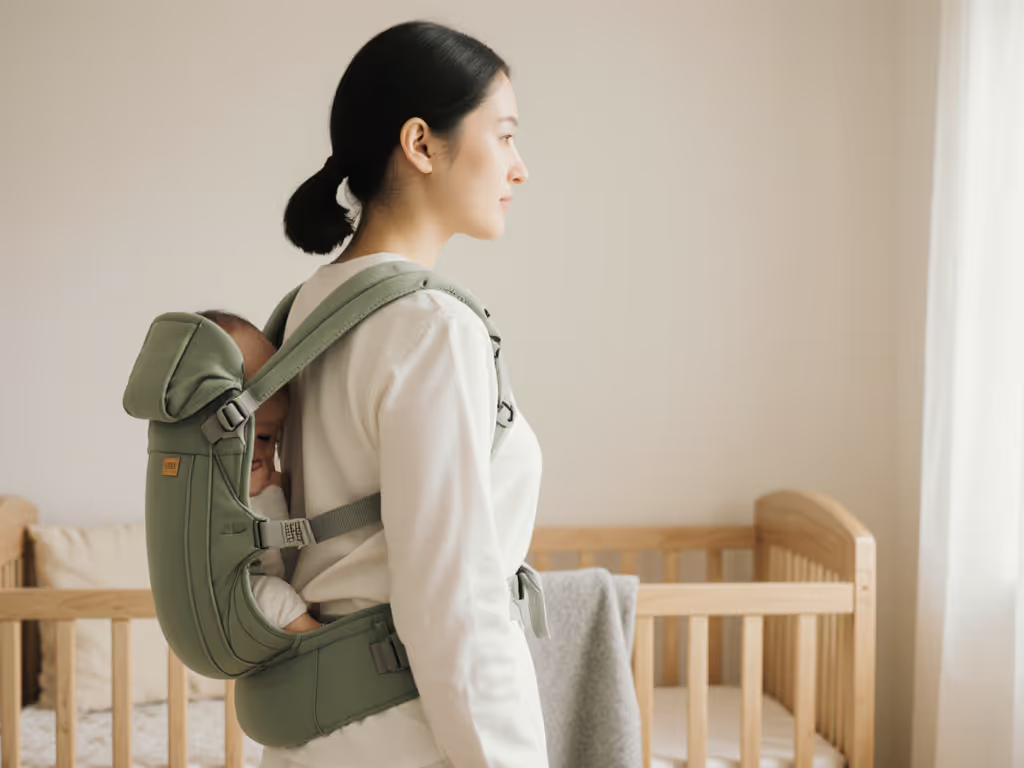
Most mainstream carriers are designed around an "average" adult torso length that's several inches longer than 14 inches. Independent reviews often focus on overall comfort and max size range, but rarely on how torso length affects strap path and panel height. This is why you can technically "fit" the size range yet still feel miserable.
On a very short torso, common problems show up fast:
- The padded waist hits your ribs or underbust instead of sitting at your true waist.
- The panel climbs too high, covering baby's face or pushing their chin down.
- Shoulder straps crowd your neck because they are designed to angle down a longer back.
- The chest/back clip lands on the back of your neck instead of mid-shoulder blade.
Expert guides typically divide carriers into wraps, soft structured/buckle carriers, and ring slings, then rate them for support and ease of use. But they rarely say, "If your torso is 14 inches, this is how the harness geometry will feel." That gap is what we're solving here.
When the carrier fit for short torso is off, you feel it everywhere: rib pressure, neck strain, lower-back ache, and that creeping doubt about baby's airway and hip position. For caregivers already managing postpartum recovery, back pain, or hypermobility, those misalignments can end a babywearing session within minutes.
Agitate: How misfit shows up on a very short torso
If you've tried multiple carriers and disliked all of them, you're not "bad at babywearing" (the geometry just hasn't matched your body yet). Here are the patterns I see most often when working with very petite caregivers.
1. Waist belt in the wrong place, every time
On a 14-inch torso, a tall, stiff waist belt can't sit low enough without colliding with your hips or pulling your pelvis forward. If you raise it, it runs into your ribs or chest. That creates:
- Pinching under the bust
- Increased pressure on a healing core or pelvic floor
- A feeling that the whole carrier is "floating" instead of anchored
2. Baby is always too high or too low
Standard advice says baby's head should land around "kissing height," but on a short torso that can be misleading. If you place the waist where your caregiver friends do, baby's head can end up under your chin, forcing your neck into flexion. Drop the waist too low, and baby's face can sink below your chest line where your line of sight and airflow are worse.
3. Shoulder straps crowd your neck
Carriers built for longer torsos expect more vertical distance between the waist and the top of your shoulders. On you, that extra length folds forward or inwards, steering the padded sections into your neck. You experience:
- Tingling or numbness at the tops of shoulders
- Trapezius fatigue after short walks
- A constant urge to "roll" your shoulders to escape the padding
4. The back clip is simply out of reach
If you have limited shoulder range of motion or are early postpartum, reaching a high back clip behind a very short torso can be nearly impossible. Carriers that only allow the clip to sit high on the back demand a reach that many caregivers cannot safely perform.
5. Pressure where you're most vulnerable
For many, a tall, rigid waist intersects exactly with:
- A c-section scar
- Sensitive pelvic floor and low-back areas
- Bony hips that don't enjoy wide, padded belts
Combine that with a baby who prefers long contact naps, and you have a recipe for resentment instead of relief.
If you recognize several of these, your torso length (not your skills) is likely the main issue. That's where the 14-inch fit test comes in.
Solve: The 14-Inch Fit Test (step-by-step)
Think of this as a quick, repeatable protocol you can run on any carrier. We'll work through: your body, the carrier's geometry, and a 60-second on-body check.
Step 1: Measure your torso the babywearing way
You don't need a tailor-level measurement; you need a functional one.
- Stand naturally, bare feet, in the clothes you'd normally wear under a carrier.
- Place one finger at the top of your shoulder, where a bra strap or backpack strap would sit.
- Place the other at the point on your front where you'd like the top edge of the waist belt to land (often around your true waist or just above your hip bones, away from scars).
- Measure that distance. If it's around 14 inches, you're squarely in the baby carriers for 14 inch torso conversation.
This is shorter than the frame many mass-market carriers are built around, so we'll deliberately choose designs that keep structure compact and adjustable. For broader fit strategies beyond this test, see our babywearing for petite parents guide.
Step 2: Decode the carrier's geometry
Most brands don't publish the exact panel and harness measurements, but you can get them at home with a soft tape measure.
Measure these four points:
- Panel height: From the top of the waistband padding to the top of the panel in its shortest usable setting.
- Seat width: From knee-to-knee area in its smallest and largest settings.
- Waist belt height: Top to bottom of the padded portion.
- Strap anchor height: From the top of the waistband to where the shoulder straps connect or cross the panel.
For low torso height carriers, these guideline ranges usually work better on a 14-inch torso (for a standard front carry):
| Element | Petite-friendly guideline (front carry) |
|---|---|
| Panel height (shortest) | About 13-15 in |
| Waist belt height | About 3-4 in (low profile, not bulky) |
| Strap anchor height | Starts no more than ~10-11 in above waist |
These are not strict rules; they're a starting zone. A well-sculpted panel that curves under baby's bum can "wear shorter" than the raw number suggests, while a very tall, boxy panel can feel longer.
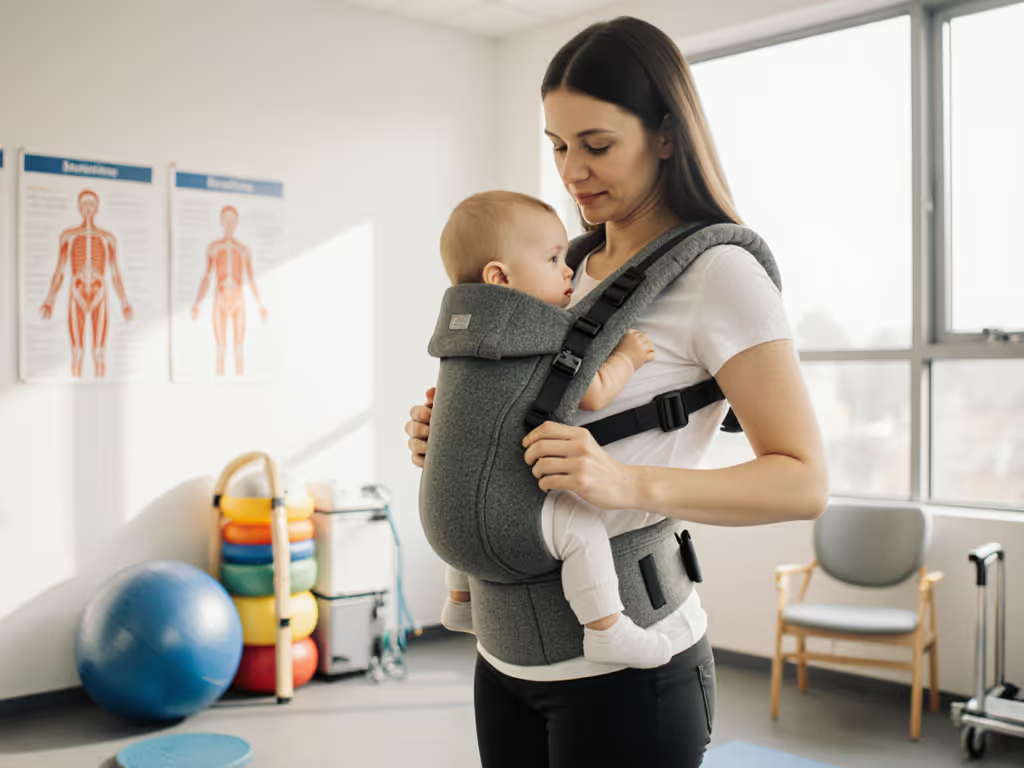
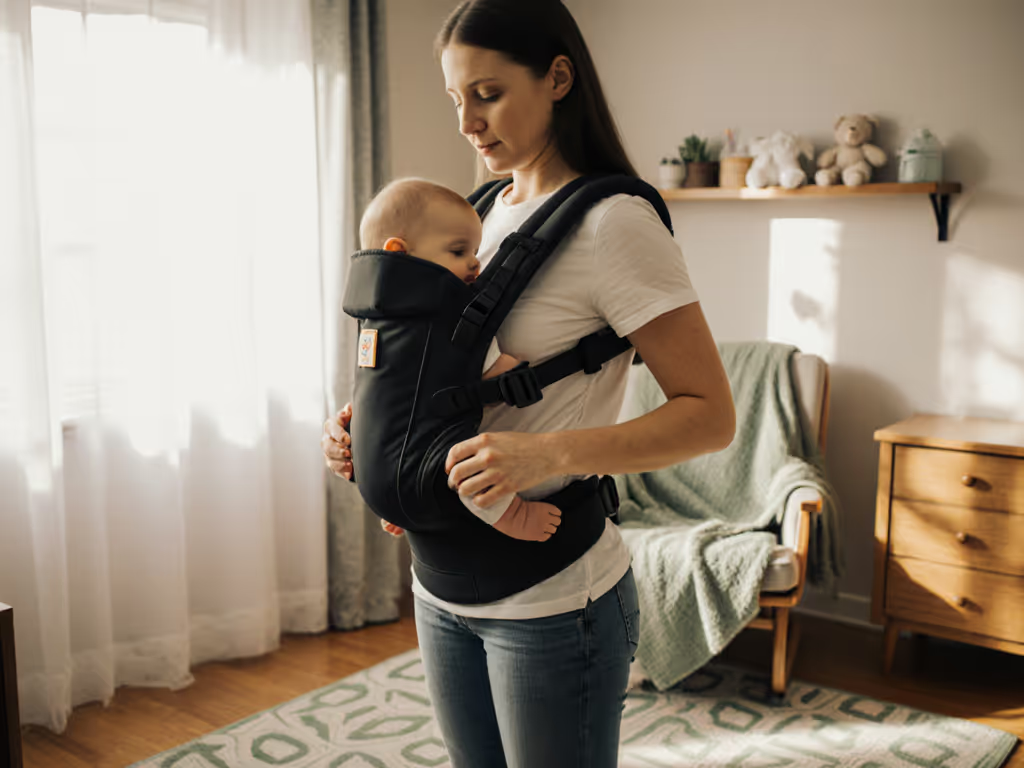
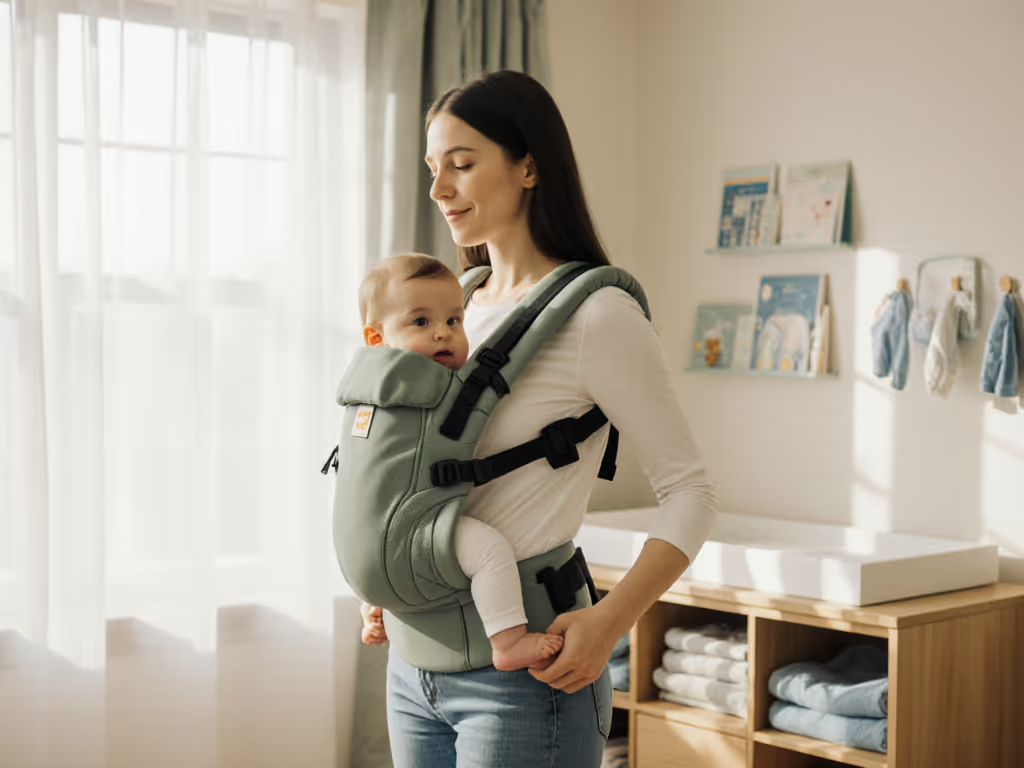
Step 3: Run a 60-second mirror fit check
Put the carrier on with baby (or a weighted doll/pillow if you're expecting) and assess:
-
Waist placement
The top of the waist belt sits on soft tissue you can tolerate for 1-2 hours, not on your ribs, and not directly on a fresh scar. -
Baby's height
Baby's head is within easy kiss reach without you having to crane your neck down. Their nose and mouth are fully visible from above. -
Panel height on baby
For a young baby, the top of the panel reaches the base of the neck or lower ear without covering the face. For older babies, between mid-back and armpit level is common, depending on posture and support needs. -
Leg and hip position
Knees higher than bum, forming a gentle "M" shape, with the seat supporting from knee to knee without forcing a split that's too wide (see M-position babywearing guidance). -
Strap path
The padded part of the shoulder straps lands fully on your shoulder shelf, not your neck, and not sliding off toward your upper arm. -
Chest/back clip
In an H-back configuration, the clip sits roughly between the shoulder blades and is reachable without straining.
If two or more points fail, that carrier is probably not your best match out of the box. Some can be salvaged with micro-adjustments (next sections), others are simply the wrong geometry for your body.
Comfort carries competence: when your harness fits, your body can focus on baby, not on bracing against the carrier.
Comparing carrier types for very short torsos
Most expert overviews compare wraps, structured carriers, and ring slings on ease of use and support. Here, we'll add a layer: How do they behave on a 14-inch torso?
Soft structured / full-buckle carriers
These look and feel like a backpack on the front or back. Reviews often highlight them as the most convenient for long-term use from newborn through toddlerhood.
Why they can work well for short torsos:
- Many have adjustable panel height and width, letting you shorten the body.
- Dual-adjust shoulder straps allow you to tighten from the front, crucial if you can't reach far behind you.
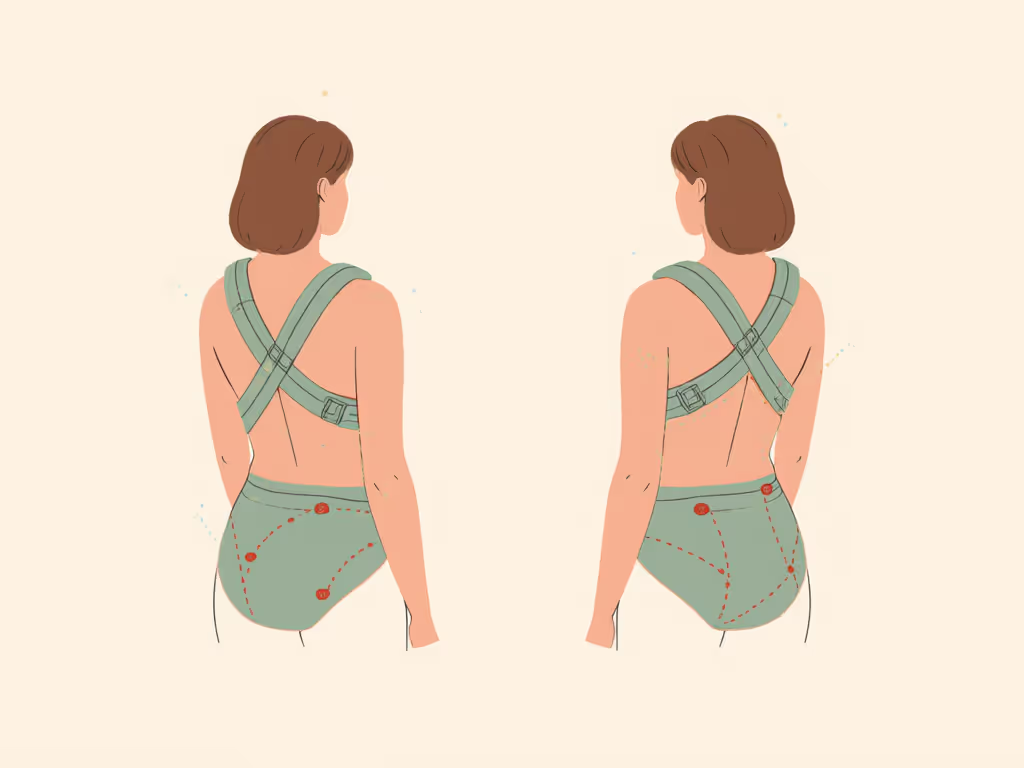
- Some offer crossable straps, which change the strap path and relieve neck crowding.
Watch out for:
- Very tall, stiff waist belts.
- Back clips that only sit high on the back.
- Long, non-sculpted panels that ride into your throat when the waist is high enough to clear your hips.
Half-buckle and meh dai-style carriers
These combine a structured panel with fabric straps you tie. They divide weight more like a woven wrap but give you the panel support of a buckle carrier.
Why they can shine on a 14-inch torso:
- You can angle and tie the waist lower or higher, avoiding ribs and scars.
- Shoulder straps can be spread out for custom support or bunched for less bulk.
- Back finishes (tying in front, side, or back) can be chosen based on your shoulder range of motion.
Watch out for:
- Long learning curve if you dislike tying.
- Extra fabric might feel like too much in very hot climates.
Stretchy and woven wraps
Wraps are long pieces of fabric you tie and tighten around you and baby. If you're choosing between materials, compare our stretchy vs woven wrap picks for newborn-safe options. Guides often recommend them for newborn snuggles due to the custom fit they offer.
Why they are friendly to very short torsos:
- Essentially infinite adjustability - the "panel" is wherever you place and tighten the fabric.
- No pre-set strap anchor height; you create it.
Watch out for:
- Learning curve and setup time, especially for quick in-and-outs.
- Stretchy wraps can feel hot and less supportive for heavier babies over time.
Ring slings
A ring sling is a single layer of fabric threaded through two rings and worn over one shoulder.
Why short torsos often like them for errands:
- The "waist" is just fabric; you can position it exactly where your body wants it.
- Setup is fast once threaded, ideal for short carries or contact naps at home.
Watch out for:
- One-shoulder load can aggravate existing shoulder or neck issues during long wears.
- Steeper learning curve to get deep seats and smooth rails if you're anxious about safety.
Hybrids and buckle wraps
These combine a buckle waist with wrap-style shoulder straps or vice versa, aiming to give the best of both worlds.
For a very short torso, they can offer:
- A low-profile buckle waist plus customisable strap path.
- More structure than a wrap, more flexibility than a classic full-buckle.
Always check where the buckle lands on your body and whether the panel can shorten enough for your baby's stage.
Features that signal a good match for a 14-inch torso
When reading specs or trying a carrier in person, prioritize these traits over colors or pockets:
-
Low-profile waist belt
Padded section around 3-4 inches tall so it doesn't climb into your ribs when you tighten. -
Curved or contoured waist
Allows the belt to hug your hips or true waist instead of creating a rigid horizontal "shelf". -
Shortening panel options
Cinches, sliders, or multiple height settings so the panel doesn't cover baby's face on a short torso. -
Dual-adjust shoulder straps
Buckles that tighten in both directions so you can adjust from the front without extreme reaching. -
Crossable straps or low-sliding chest clip
This lets you keep the strap path wide, off your neck, and the clip in a reachable zone. -
Wide size range in webbing
Enough strap length to accommodate plus-size bodies and the ability to snug down for petite frames. -
Breathable fabric options
Mesh panels, linen, or lighter weaves, especially if you live in hot or humid climates where thick padding feels suffocating.
When these design choices line up, even a carrier marketed for "all sizes" can function as a true low torso height carrier in real life.
Petite parent carrier adjustments: micro-tweaks that change everything
I started taking a tape measure to my carriers after one painful grocery run made it obvious that the problem wasn't my strength (it was the mismatch between panel height, seat width, and my torso). Since then, I've used the same small tweaks with hundreds of caregivers.
Front carry micro-adjust checklist
Use a mirror the first few times and move in small increments.
-
Start with the waist lower than you think
Clip it where you think it should go, then slide it down 1-2 cm and re-check baby's height. On a very short torso, small changes matter. -
Angle the waist, don't just lower it
Tilt the front edge slightly down and the back edge slightly up. This helps keep baby snug to your body without riding into your ribs. -
Set the chest clip first
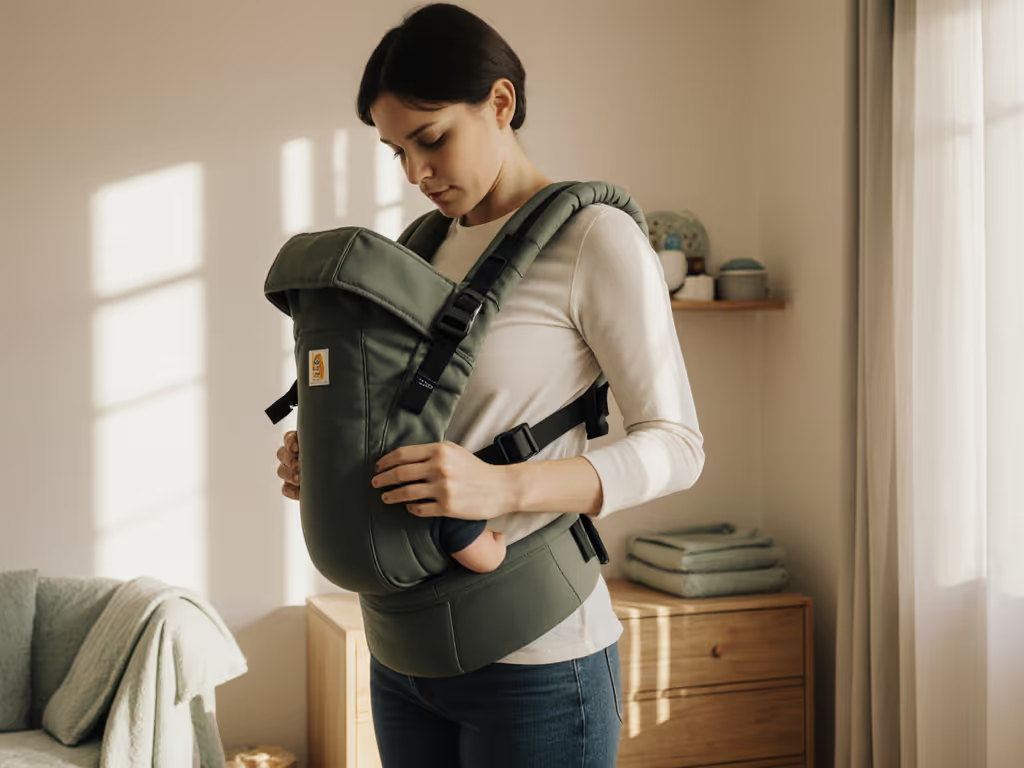
With baby off you, buckle the shoulder straps and adjust the chest clip to sit right at your shoulder blade level. Then put the carrier on like a t-shirt. This avoids straining to move the clip behind you. -
Widen the strap path
Before tightening, use your thumbs to push the padded strap edges away from your neck, so they rest fully on the shoulder shelf. -
Tighten from the front
Prioritize carriers with front-tightening straps. Tighten in short pulls while lifting baby's weight slightly with your hands. -
Final check
Take three deep breaths. If you feel pinching, burning, or the urge to hunch, adjust or stop. Your body is data, not decoration.
Back or hip carry adjustments (when developmentally appropriate)
Only attempt these when baby meets the age and development guidelines for those positions as outlined by the manufacturer and safety experts. Review the TICKS babywearing safety checklist before progressing to back or hip carries.
- Pre-set strap lengths with baby off you so the chest clip lands lower on your back, not at your neck.
- Use hip scoot techniques taught by certified babywearing educators if reaching over your shoulders is difficult.
- Spread straps over as much surface area as is comfortable; more contact equals less pressure per square inch.
These micro-adjustments often turn a "maybe this isn't for me" carrier into a solid part of your daily routine.
Your 10-minute next step: run the 14-inch fit test at home
To turn all of this from theory into relief, give yourself one focused 10-minute session.
-
Measure your torso
Use the shoulder-to-preferred-waist method and write the number down. If it's ~14 inches, treat that as a core spec when choosing any future carrier. -
Audit your current or wishlist carrier
Grab a soft tape and note the panel height, waist belt height, and strap anchor height. Compare them roughly to the petite-friendly ranges above. -
Do a mirror trial with the checklist
Put baby in (or simulate with weight), run through the 60-second fit check, and make at least two of the micro-adjustments in the previous section.
If, after those tweaks, you still feel pressure at your ribs, neck crowding, or unreachable clips, give yourself permission to say: This isn't a good geometric match, not "I'm doing it wrong." Then carry your measurements with you to in-store try-ons, local lending libraries, or online rentals, so you can quickly identify baby carriers for short torso that genuinely work for your 14-inch frame.
When your carrier matches your body, babies tend to settle faster, your back works less, and your shoulders stop bracing. The promise on the box becomes something you can actually feel: Comfort carries competence.
Related Articles