Best Baby Carriers for Limb Length Discrepancy Compared
By Avery Sullivan • 17th May
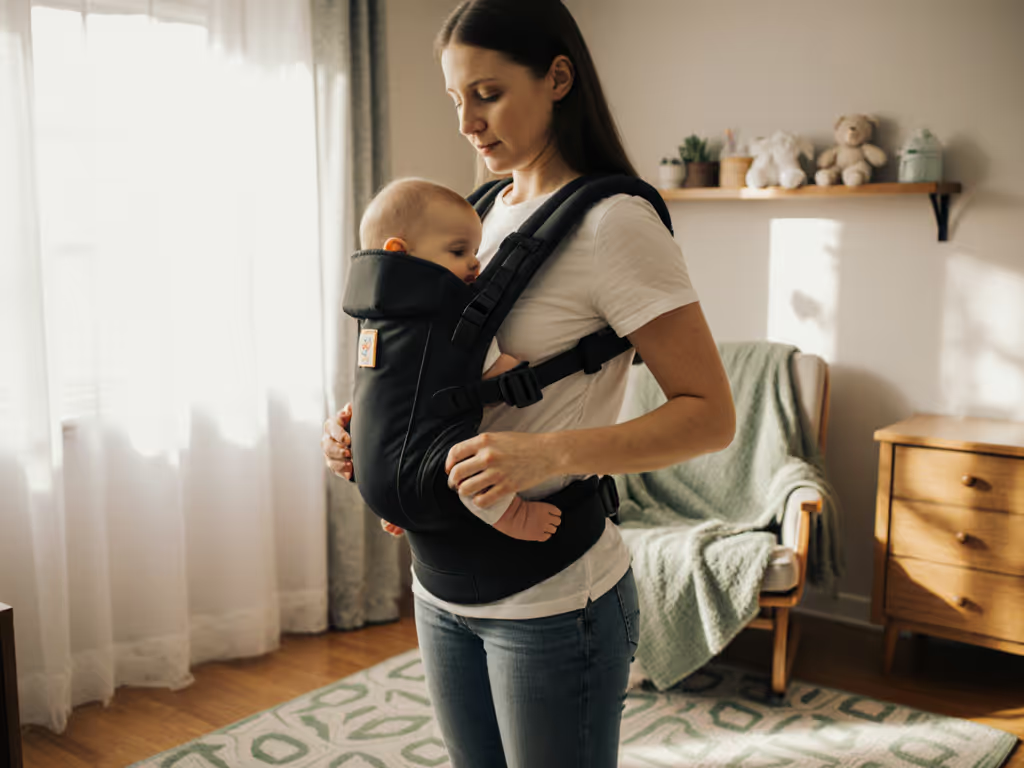
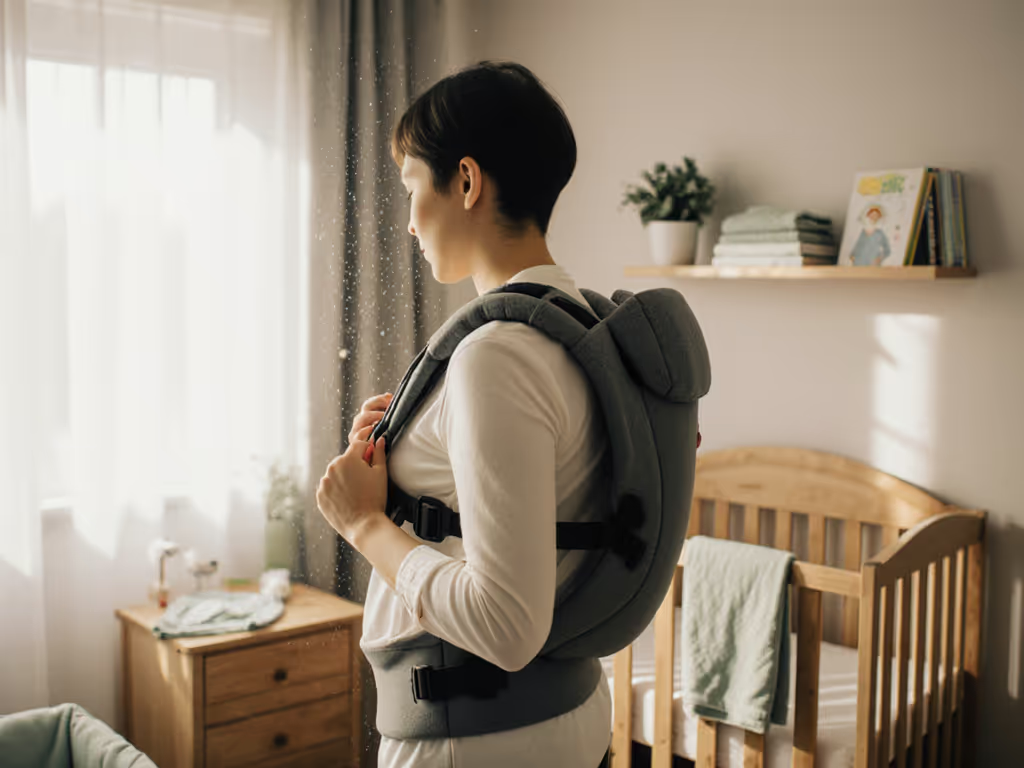
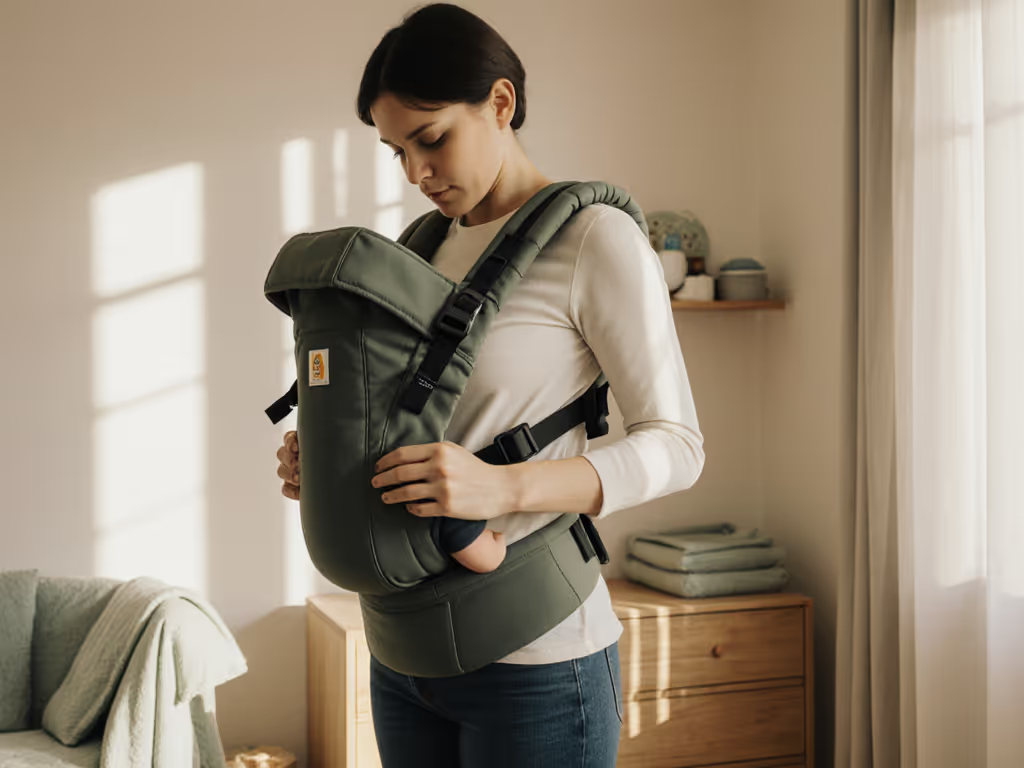
If you're searching for baby carriers for limb length discrepancy, you're probably not just shopping (you're troubleshooting). This leg discrepancy carriers comparison is designed to lower the noise, help you see your real options, and give you clear safety checkpoints so you can feel calmer every time you pick up the carrier.
Hands-free should feel stress-free.
This guide focuses on how to choose and adjust a carrier when:
- Your baby has a limb length difference, hip condition, brace, or cast, or
- You (the caregiver) have body asymmetry such as scoliosis, a pelvic tilt, or your own limb length difference.
I'll stay in my lane: this is not medical advice, and I won't tell you whether babywearing is medically appropriate in your specific case. Instead, I'll help you:
- Understand what features matter most
- Compare carrier types with limb/body asymmetry in mind
- Learn practical, repeatable fit checks you can use on tired days
--
--
FAQ 1: Is babywearing even safe with limb length discrepancy or asymmetry?
It can be, but the key word is "depends." It depends on:
- Your baby's specific diagnosis (and whether there is hip or spine involvement)
- Whether they wear a brace, splint, or cast
- Your own body (back, hips, joints)
- What your medical team says
Safety first: what this article can and can't do
This article can:
- Help you understand carrier features and positioning principles
- Offer checklists to spot a good (or poor) fit
- Suggest questions to ask your pediatrician, orthopedist, or physical therapist
This article can't:
- Clear you medically to babywear
- Tell you to ignore brace or cast instructions
If your baby has hip dysplasia, a brace, or recent surgery, always ask:
"Is it okay to use a baby carrier? If yes, are there positions or angles we should avoid?"
Write their guidance down, or ask them to email it so you can reference it while adjusting the carrier at home.
Universal babywearing safety checkpoints (for all bodies)
Every time you use a carrier, limb discrepancy or not, run through these:
- Airway & head
- Chin off chest; you can see baby's nose and mouth at a glance.
- No fabric tight against nostrils or mouth.
- Spine
- Natural gentle curve; not hyper-straight, not slumping.
- Pelvis & bum
- Baby's weight is on their bum, not on their feet.
- Bum lower than knees if hips allow (the classic "deep seat").
- Your comfort
- No sharp pinching at shoulders, ribs, or lower back.
- You can breathe and move your arms easily.
If any of these fail, fix those first, then fine-tune for asymmetry. For a step-by-step refresher on airway and positioning, follow the TICKS babywearing safety checklist.
--
FAQ 2: What features matter most in baby carriers for limb length discrepancy?
Think less in terms of brand names and more in terms of adjustability and support zones. With limb differences or braces, you want a carrier that lets you fine-tune each side of baby's body and your own.
High-priority features
- Independent side adjustment Helpful for: uneven leg length, hip braces, body asymmetry babywearing.
- Fabric or straps that can be tightened more on one side than the other.
- Examples: wraps, ring slings, many meh dais, and some soft structured carriers with dual adjusters.
- Soft, moldable seat For uneven leg length carriers, you want the seat to shape around your baby, not force both legs into the exact same position.
- Wide fabric base that supports from bum to knee pit on each side.
- No hard plastic that digs into a brace or cast.
- Hip height adjustment carriers For babies or caregivers with pelvic tilt, look for:
- A waistband that can sit higher or lower comfortably (not just one fixed spot).
- Shoulder straps that still work if the waist is shifted up/down a few cm.
- Supportive but not rigid panels
- Soft-structured carriers with lightly padded panels can stabilize a brace or cast without pressing too hard.
- Very stiff panels can sometimes fight against medically required positions.
- Wide adjustment range for caregivers
- Especially important for scoliosis-related limb length carriers where one shoulder or hip sits higher.
- Look for extra webbing length, crossable straps, and easy-to-reach buckles.
Lower-priority (nice-to-have) features
- Breathable mesh if you or baby run hot
- Quick on/off for appointments or diaper-change sprints
- Machine-washable fabric that dries fast (braces and casts can get sweaty)
--
FAQ 3: Which carrier types work best? A leg discrepancy carriers comparison
Below is a comparison of the main carrier types, specifically for limb length differences and body asymmetry.
1. Stretchy wrap
What it is: Long, stretchy fabric you tie around yourself.
Why it can work well:
- Maximum side-to-side adjustability. You can support one leg a bit higher or give more room for a cast.
- Spreads widely across your shoulders and back, which is kind to sore postpartum bodies.
Watch-outs:
- Best for newborns and smaller babies (usually up to ~15-18 lb depending on brand guidelines).
- Can feel like a lot of fabric and steps at first.
Setup time after practice: ~60-90 seconds.
2. Woven wrap
What it is: Similar to a stretchy wrap but with no stretch; lasts into toddler years.
Why it can work well:
- Most customizable option for uneven leg length carriers.
- You can fine-tune tension millimeter by millimeter around a brace or cast.
- Great for caregivers with asymmetry because you can place knots where your body prefers.
Watch-outs:
- Steeper learning curve; benefits from video tutorials or a virtual babywearing consult. If you're deciding between wrap fabrics, our stretchy vs woven wrap comparison breaks down support, learning curve, and best age ranges.
Setup time after practice: ~90-120 seconds.
3. Ring sling
What it is: One short piece of fabric threaded through two rings, worn over one shoulder.
Why it can work well:
- Very easy to make one side higher or lower, allowing for pelvic tilt or uneven limbs.
- Baby's legs can be positioned in front, to one side, or in a supported seated sideways position (if medically allowed).
- Quick on and off for short trips.
Watch-outs:
- All weight is on one shoulder, may not be ideal for caregivers with shoulder issues.
- Takes practice to get the fabric evenly spread under baby's thighs.
Setup time after practice: ~30-60 seconds.
4. Soft structured carrier (SSC) / buckle carrier
What it is: Padded waist belt + shoulder straps + panel that buckles.
Why it can work well:
- Faster to put on once adjusted.
- Many models now offer adjustable width and height to support baby from knee to knee.
- Good for longer walks, errands, and shared use between caregivers.
What to look for:
- Dual-adjust buckles (tighten from both directions) for better fine-tuning.
- Panel that can be narrowed or widened without forcing both legs into exactly the same angle.
- Option to cross straps on your back, which many caregivers with scoliosis find more comfortable.
Watch-outs:
- Less forgiving around bulky casts or certain hip braces.
- Some designs place a lot of pressure on the waist, which may be tricky with pelvic asymmetry or back pain.
Setup time after practice: ~30-45 seconds.
5. Meh dai / hybrid carriers
What it is: Fabric panel with four straps you tie (waist + shoulders). Some have buckles at the waist.
Why it can work well:
- Combines the shape of an SSC with the side-to-side adjustability of a wrap.
- You can angle the panel slightly to accommodate a brace while keeping baby's torso supported.
Watch-outs:
- Slightly more steps than a standard buckle carrier.
Setup time after practice: ~45-75 seconds.
--
FAQ 4: How should I position my baby if one leg is shorter, braced, or in a cast?
Every baby and brace is different, so check specifics with your medical team. These are general positioning principles to discuss with them:
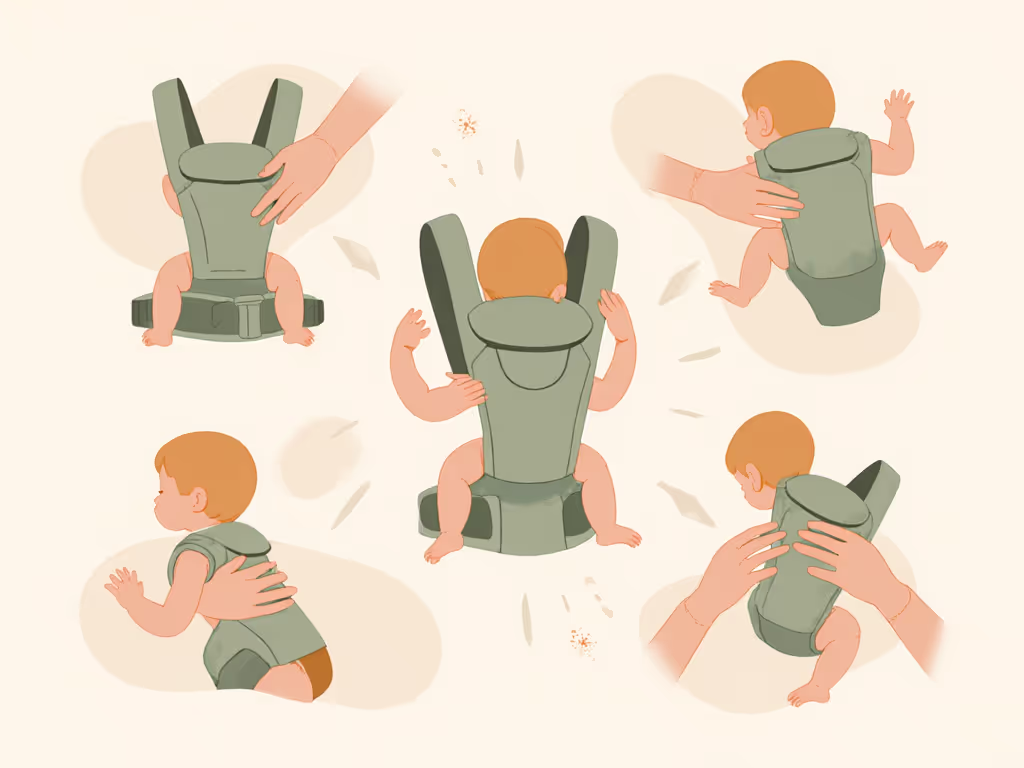
Goal #1: Pelvis centered, weight on the bum
- Imagine baby sitting on a small shelf created by the carrier.
- Their pelvis is centered on that shelf, even if one leg hangs differently.
- Avoid having baby lean or twist strongly toward one side just to "match" leg positions.
Goal #2: Thigh support to the knee pits (as much as allowed)
- The carrier should support each thigh separately from bum to knee.
- It's okay if one leg is more flexed or at a different angle because of a brace.
- Don't force legs wider than the brace or cast allows. For hip-healthy leg support basics, see our M-position babywearing guide.
Goal #3: Respect brace and cast limits
- Do not loosen straps so much that baby slumps to "work around" the brace.
- Also avoid cranking straps so tight that the brace is compressed.
If you're unsure, you can:
- Bring the carrier to your PT/orthopedist appointment.
- Ask them to watch you put baby in and say, "Can you show me small adjustments that would protect their hips and spine?"
Fast, calm setups turn chaos into competence you can feel.
That applies here: the more often you adjust with your PT's feedback fresh in your mind, the faster those safe micro-adjustments will become automatic.
--
FAQ 5: What if I have scoliosis or a limb length difference?
When we talk about body asymmetry babywearing, your comfort matters as much as baby's. You deserve a setup that doesn't punish your back or hips.
Tips for caregivers with scoliosis or pelvic tilt
- Play with waist height
- Try wearing the waist belt or waist tie slightly higher on the shorter-leg side or at the part of your spine that feels strongest.
- Many find that tilting the belt a little (not perfectly horizontal) feels more natural.
- Cross straps if possible
- In buckle carriers that allow it, crossing straps can spread weight more evenly across a curved spine.
- Use symmetrical carriers thoughtfully
- Fully symmetric designs (like some SSCs) can still work, just allow the carrier to shift a bit until your body feels balanced.
- Limit one-shoulder time
- Ring slings are wonderful but may be best for shorter wears if your spine or shoulders are sensitive. For model recommendations tested for uneven shoulders and spinal curves, see our scoliosis-friendly carrier comparison.
Tips if you have your own limb length discrepancy
- Consider hip height adjustment carriers (wraps, meh dais, SSCs with flexible belts) that let baby sit slightly higher on your shorter-leg side so you don't feel like you're leaning.
- Take breaks and switch sides regularly if that's comfortable and medically allowed.
Always listen to your body: discomfort that gets worse with each wear is a sign to change carrier type, adjustment, or wearing duration, and to check in with your own healthcare provider.
--
FAQ 6: How do I know if the fit is "right" each time?
Here's a quick, repeatable check you can run in under a minute.
30-60 second fit check
- Breath & view (5-10 seconds)
- Can you see baby's face without moving fabric?
- Are they close enough to kiss the top of their head?
- Seat & legs (10-15 seconds)
- Bum feels deeply seated in the fabric (not sliding straight down).
- Each thigh has its own hammock of fabric to the knee.
- If one leg is casted or shorter, you've supported it as fully as medically allowed without forcing symmetry.
- Torso & spine (10-15 seconds)
- Baby's spine follows its natural curve, not banana-shaped slumping.
- Panel or fabric is snug like a supportive T-shirt, not saggy.
- Your body (10-20 seconds)
- Shoulders: no knife-like pinches; straps lying flat.
- Back/hips: weight feels centered; if you're asymmetrical, carrier feels like it's helping, not exaggerating the tilt.
If something feels off, adjust one thing at a time: tighten the waist slightly, then reassess; lift baby a few centimeters higher, then reassess, and so on. Still stuck? Use our babywearing troubleshooting guide to fix common fit issues fast.
--
FAQ 7: I'm overwhelmed. How do I practice without melting down?
You're not alone. Setup friction is real, especially when you're already stretched thin.
One night, after a spectacular diaper leak, I ended up retesting three carriers half-asleep just to see which I could get on fastest without thinking. That little experiment, in the quiet chaos of 2 a.m., convinced me that setup time and simplicity really matter when your nerves are frayed.
Here's a gentle, time-stamped practice plan that respects your energy:
Day 1-2: No baby, 5 minutes
- Use a stuffed animal or rolled towel.
- Practice putting the carrier on and off 3 times in a row.
- Don't worry about speed; just notice the steps.
Day 3-4: Add the real baby, 5-10 minutes
- Try one short, awake carry inside the house.
- Set a soft goal: "Can I do this in under 2 minutes without rushing?"
- Run the safety checkpoints, then walk around the room.
Day 5+: Move toward "fast, calm setup"
- Once the motions feel familiar, time one setup.
- Aim gently toward 60-90 seconds for wraps and 30-60 seconds for buckles or ring slings.
If at any point your baby cries or your body protests, pause. Reset. Try again later. Progress over perfection. Fast, calm setups turn chaos into competence you can feel.
--
FAQ 8: How do I talk with our healthcare team about baby carriers?
Bringing your medical team into the conversation can turn guesswork into clarity.
Before the appointment
Write down:
- What carrier types you're considering (e.g., stretchy wrap, buckle carrier).
- How long you'd like to wear baby (e.g., 20-30 minutes for walks).
- Any specific worries: "I'm afraid I'll twist their hip," or "I'm worried the cast will press into their skin."
At the appointment
Ask focused questions like:
- "Is babywearing okay for our baby right now?"
- "Are there positions or angles we should avoid?"
- "Can I show you our carrier and get your opinion on how to support this leg/brace?"
If possible, bring the carrier (or photos of it). Put baby in while they watch, then invite micro-adjustments:
"Can you show me tiny changes that would make this safer or more comfortable?"
Take photos or a short video on your phone so you can replay what they showed you at home.
--
Putting it all together: your next actionable steps
To move from "overwhelmed" to "I've got a plan," try this three-step sequence:
- Choose a carrier type aligned with your needs
- Want maximum custom fit? Consider a woven or stretchy wrap.
- Need quicker on/off with solid support? Look at a soft structured carrier or meh dai.
- Need quick errands and flexible leg positions? A ring sling could shine (especially for shorter wears).
- Check with your medical team
- Bring your top carrier choice (or photos) to your next appointment.
- Confirm whether babywearing is OK, which positions are safest, and any time limits.
- Practice a calm, repeatable setup
- Start with 5 minutes a day, without pressure.
- Use the 30-60 second fit check every single time until it's second nature.
Remember: you're not trying to win "most perfect carry" on the internet. You're building a small routine that lets you move through your day with your baby close, supported in a way that respects both of your bodies.
Hands-free should feel stress-free, especially when bodies are a little asymmetrical. With the right carrier type, a few key adjustments, and partners in your care team, you can get there one calm, practiced carry at a time.
Related Articles