Best Baby Carriers for Limb Length Discrepancy: A Comparison
By Avery Sullivan • 10th Jun
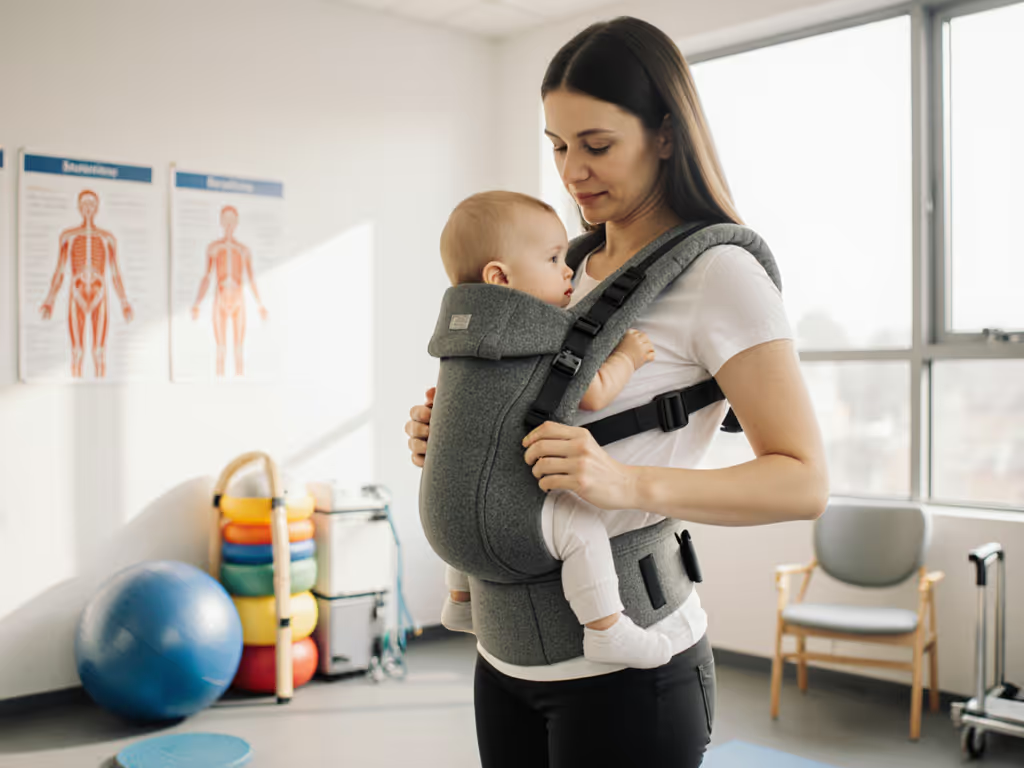
If you're searching for baby carriers for limb length discrepancy or a clear leg discrepancy carriers comparison, you've probably noticed something frustrating: most babywearing advice assumes a perfectly symmetrical body. Real bodies aren't like that, and your carrier should respect that.
This FAQ-style deep dive is here to help you sort options calmly, match them to your body, and build a repeatable setup routine that feels safe and doable on tired days.
FAQ 1: Is babywearing even possible with limb length discrepancy or scoliosis?
Often yes, with thoughtful carrier choice and careful adjustment. But you still need clearance from your own healthcare team, especially if you have:
- A significant limb length discrepancy (LLD)
- Scoliosis-related limb length differences
- Past hip, knee, or spine surgery
- Pain that worsens when you stand or walk
Most general babywearing guidelines focus on three safety pillars: clear airway, ergonomic hip position, and a secure, supported spine.[2][11][14] Those still apply when we talk about body asymmetry babywearing. For a quick safety refresher, follow the T.I.C.K.S. babywearing checklist.
Key safety checks every time:
- Airway: Baby's nose and mouth visible and uncovered; chin off chest.[2][11]
- Spine: Supported in a gentle curve (not slumped). Front carries keep them upright, which also helps with reflux.[11][14]
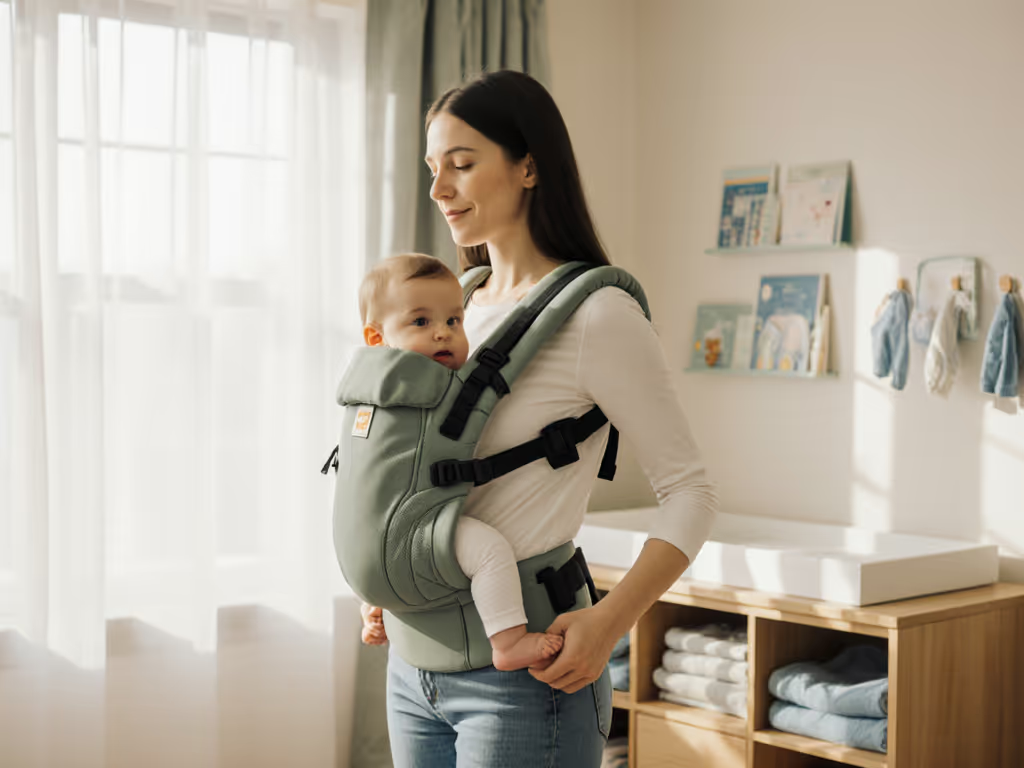
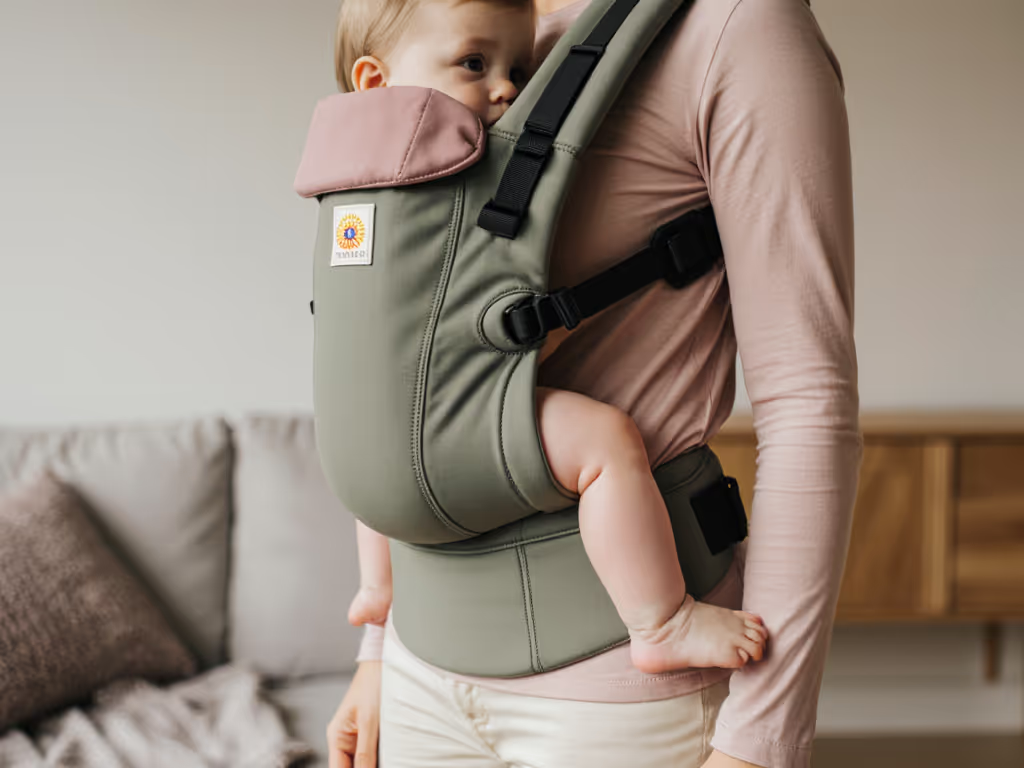
- Hips/legs: Thighs supported from knee to knee, knees higher than bum in an "M" shape (often called "hip-healthy M-position").[2][11]
Once those are met, the question becomes: How do we make this work on a body that isn't even side-to-side? That's where smart carrier choice and adjustment come in.
Fast, calm setups turn chaos into competence you can feel. If you hit snags, our babywearing troubleshooting guide walks through common fit fixes.
FAQ 2: What should I look for in baby carriers for limb length discrepancy?
Think of yourself as needing hip height adjustment carriers, you want gear that can adapt to your asymmetry instead of fighting it.
Here are the most helpful features, pulled from how top carriers are designed and tested for fit and comfort:[2][7][11][14]
- Multi-point adjustability
- Independent tightening on each shoulder strap.
- A waist belt that can shift slightly higher or lower on one side without digging.
- Webbing that glides smoothly and holds tension once tightened.[2][11]
- Wide, supportive waist belt (or no waist at all)
- A broad, padded belt can spread weight across your pelvis, which many caregivers with back or hip issues find more comfortable.[2][9][11]
- If waist belts are intolerable because of pelvic tilt or surgeries, look at wraps or ring slings, which can avoid hard waist structure altogether.[7][14]
- Shoulder strap options
- Straight backpack-style straps vs. crossed straps behind your back.[2][11]
- Ability to shorten one strap more than the other to accommodate uneven shoulders or scoliosis.
- Soft, flexible body panel
- Allows the carrier to mold around your curves and baby rather than forcing you into a rigid shape.[2][7]
- Multiple carry positions
- Front-inward carry for newborns and most everyday use.[11][14]
- Hip carry or back carry later on, so you can experiment with which position respects your LLD best.[2][10]
- Simple, repeatable setup
- Babywearing testers consistently highlight how ease of use and quick setup separate the most-loved carriers from the rest.[2][11][14]
- When your body has quirks, you do not want a fussy system.
When you read listings for uneven leg length carriers or general ergonomic carriers, scan for phrases like "highly adjustable," "crossable straps," "wide size range," and "lumbar support."[2][9][11] Those are good clues that the design can accommodate asymmetry. If back pain is part of your picture, compare options in our spine-healthy carrier guide.
FAQ 3: Leg discrepancy carriers comparison - which carrier types tend to work best?
There's no clinical "best," but we can compare common carrier types by how well they usually handle asymmetry, based on how they're built and tested.[2][7][11][14] For a broader overview of carrier categories, see our baby carrier types breakdown.
Carrier type snapshot
| Carrier type | Pros for limb length discrepancy / scoliosis | Watch-outs |
|---|---|---|
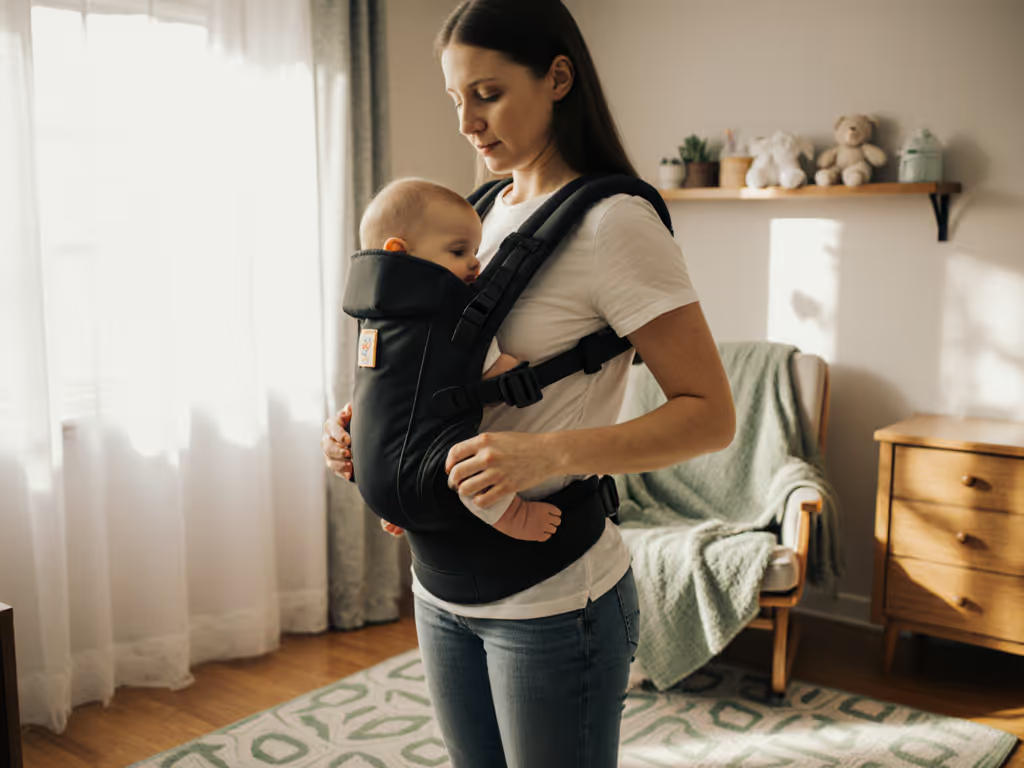
| Soft structured / buckle carrier | Very adjustable; padded waistband; good weight distribution; quick on/off; often best for longer walks.[2][11][14] | Belt can feel uneven if one hip is higher; back clip can be hard to reach with limited shoulder range.[2][11] |
| Stretchy or woven wrap | Fully custom fit; can angle passes to respect pelvic tilt; no fixed hardware; great for newborns.[2][7][14] | Steeper learning curve; longer setup; more fabric in hot climates.[2][7][14] |
| Ring sling | One-shoulder carry; micro-adjustable via rings; easy to favor more comfortable side; quick for short trips.[7][14] | All weight on one shoulder; can aggravate shoulder/neck pain if worn long.[7][14] |
| Meh dai / hybrid carrier | Panel with tie straps; some structure with wrap-like flexibility; can avoid stiff waist.[2][7] | Requires tying; not as fast as full buckle; support depends on how you tighten.[2][7] |
Below, we'll look at how each type behaves on an asymmetric body.
Soft structured / buckle carriers
Best for: caregivers who want speed, clear adjustments, and solid support for longer wearing windows.
Why they help:
- Most top-ranked buckle carriers have padded waist belts, lumbar support pads, and adjustable shoulder straps to fine-tune fit across different torso lengths and sizes.[2][9][11]
- The panel keeps baby in that hip-healthy "M" position with knees higher than bum, as long as the seat is appropriately adjusted.[2][11]
How to adapt for limb length discrepancy:
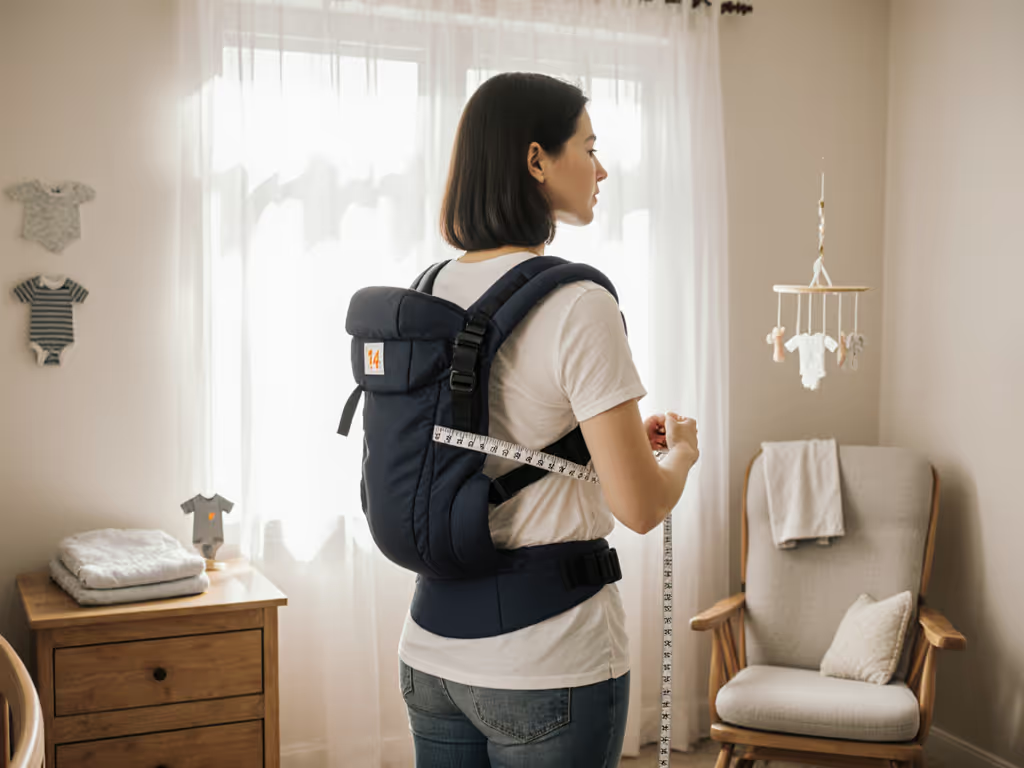
- Shift the belt slightly higher on your shorter leg side or lower on the longer-leg side until your hips feel more level.
- Tighten one shoulder strap more if needed to prevent baby listing to one side.
- If reaching the back clip is hard due to shoulder limits, choose carriers that allow front-clipping or side-clipping straps and then rotate them into place, a feature some brands now highlight for accessibility.[2][11]
Stretchy or woven wraps
Best for: newborn phase, sensitive bodies, and those who want maximum adjustability.
Why they help:
- Wraps are essentially a long piece of fabric you tie around you and baby, giving a fully customizable fit around your torso, hips, and shoulders.[2][7][14]
- You can angle fabric passes slightly to accommodate pelvic tilt without digging where your body curves.[7]
Watch for:
- They take practice; reviewers and educators note wraps can feel intimidating at first and slower for quick, in-and-out errands.[2][7][14]
- In very hot climates, all that fabric can feel warm; lighter, breathable fabrics help.[2][14]
Ring slings
Best for: asymmetric hips when you can only tolerate weight more on one side, and quick "up and down" carries.
Why they help:
- Ring slings are worn over one shoulder with fabric threaded through rings, allowing fine-grained adjustment along baby's back and seat.[7][14]
- You can place the rings on your stronger side and adjust how much weight sits on your shoulder vs. your torso.
Watch for:
- Because all the load is on one shoulder, babywearing educators often recommend ring slings more for shorter wearing sessions, especially if you already have shoulder or neck concerns.[7][14]
Meh dai / hybrid carriers
Best for: caregivers who like the feel of wraps but want a more defined "seat" and less fabric.
Why they help:
- A meh dai has a fabric panel plus long straps that you tie; it can distribute weight widely and can sometimes bypass the need for a very rigid waist.[2][7]
- The tying method lets you adapt to mild asymmetry.
Watch for:
- There's still a learning curve to getting the knots snug and even.
FAQ 4: How do I adjust a carrier for uneven hip height or leg length in practice?
Let's walk through a gentle, time-stamped steps routine using a front buckle carrier as an example. Adapt the ideas to other carrier types.
0:00-0:20 - Set your baseline
- Stand in front of a mirror in socks or bare feet.
- Notice which hip feels higher or which leg feels longer.
- Decide which side will tolerate more weight today (this can change day to day).
0:20-0:40 - Position the waist belt
- Clip the belt around your natural waist or slightly higher.[2][11]
- Slide the buckle a touch higher on the shorter leg side or lower on the longer side.
- Tighten until the belt is snug but you can slide two fingers under it.
0:40-1:10 - Place baby and close the panel
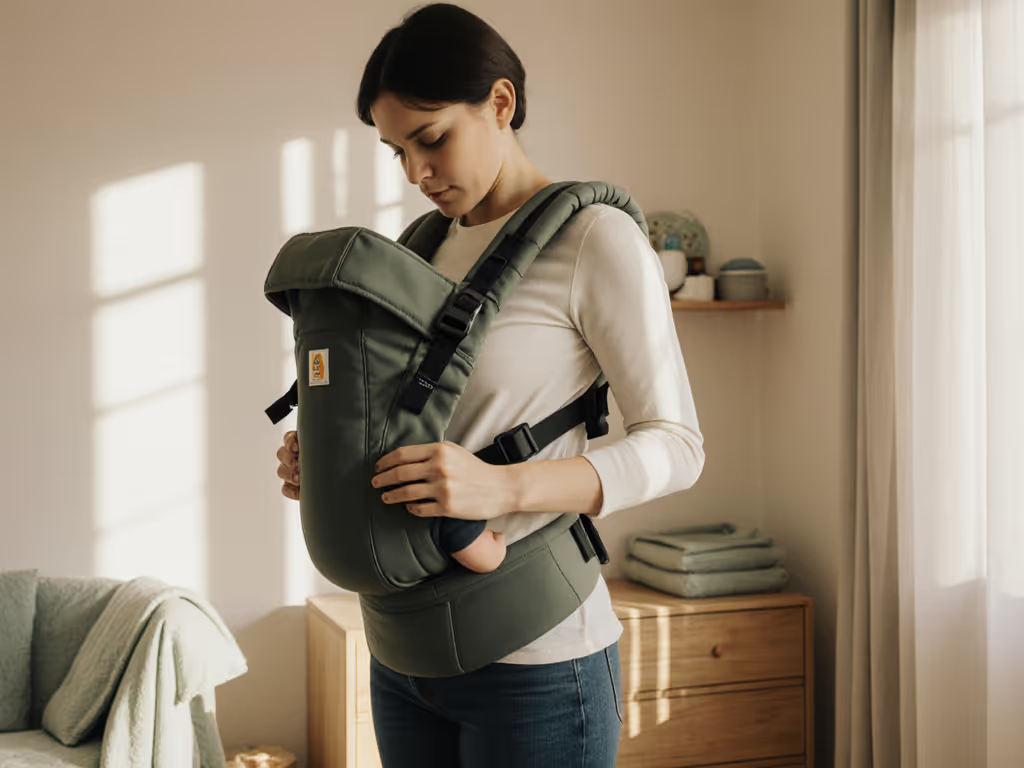
- Hold baby high on your chest ("close enough to kiss").[11]
- Bring the panel up over their back.
- Clip the shoulder straps to the panel or waistband as your carrier style requires.
1:10-1:50 - Fine-tune shoulder straps
- Tighten one shoulder strap a bit more if baby is leaning toward your lower hip side.
- Alternate: loosen slightly on the higher-hip side to let your body stack more comfortably.
- Use a mirror or front camera to check baby is centered on your torso, even if you aren't perfectly symmetrical.
1:50-2:10 - Safety checkpoint
- Check baby's airway: nose and mouth fully visible.
- Check "M" position: bum deep in the panel, knees higher than hips, thighs supported.[2][11]
- Check for any red-pressure spots on you - belt digging, strap cutting in.
At this point, repeat my favorite line to clients: Check airway, then carry on.
You can do a similar process with wraps and ring slings by intentionally placing more fabric support under the hip that needs extra backup and experimenting with which side you carry baby on.
FAQ 5: What if my baby has limb length discrepancy or hip issues?
This is where we stay firmly in the "information, not medical advice" lane.
If your baby has uneven leg length, hip dysplasia, or is in a brace or harness, always:
- Follow your pediatrician or pediatric orthopedist's guidance first.
- Ask explicitly, "Are there any restrictions on babywearing, and what positions are safest?"
From a carrier standpoint, here's what general ergonomic guidance and product testing emphasize:
- Many carriers are designed to support a spread-squat "M" position, which is also what hip-health organizations recommend to protect developing hip joints.[2][11]
- Some brands seek recognition from hip-focused medical organizations when their carriers maintain healthy hip angles.[2][11]
- Wraps and soft-structured carriers that support thigh-to-knee and avoid forcing the legs straight are usually preferred.[2][11][14]
If your baby is in a brace:
- You may need a wider seat area or a wrap that can go fully around the brace.
- Aim for no extra squeeze on the brace itself.
- Short practice sessions with a second adult spotting you can help you find a secure and comfortable setup.
Always check that any straps, fabric edges, or rings are well away from devices, surgical sites, or sensitive skin.
FAQ 6: How can I reduce my own pain and fatigue while babywearing with asymmetry?
Here are evidence-aligned comfort strategies, adapted for scoliosis-related limb length carriers and other asymmetries:[2][7][11]
- Prioritize waist and shoulder comfort
- Choose carriers with padded waist belts and lumbar support if your back tolerates waist pressure.[2][9][11]
- If your lower body is more sensitive, consider wraps or meh dais that let you shift load higher onto the torso.[2][7]
- Alternate sides and positions
- If you hip carry in a ring sling, alternate which hip and shoulder you use across the day.
- Once baby is developmentally ready and your provider approves, adding back carries in a well-fitted carrier can share the load differently across your spine.[2][10]
- Keep wear windows realistic
- Test when discomfort (not just normal muscle work) starts - maybe 20 minutes at first.
- Build up slowly instead of pushing through pain.
- Use movement breaks
- Short breaks to stretch, bend your knees, or gently sway without walking can reset your posture.
- Layer thoughtfully
- In heat, choose breathable fabrics; testers repeatedly note that mesh panels and lighter materials are more comfortable in hot/humid climates.[2][11][14]
- In cold, put your coat over the carrier, not between you and baby, so fit and safety checks stay clear.
If anything causes sharp pain, numbness, or major imbalance, stop and talk with your healthcare team or a physical therapist familiar with your LLD.
FAQ 7: How do I build confidence and speed so I'm not fumbling when baby's upset?
When I once had to change a soaked diaper at 2 a.m. and re-wrap a crying baby half-asleep, I ended up timing three different carrier types. The fastest one wasn't "the best" on paper; it was the one my hands knew by heart.
That's why I coach caregivers to build muscle memory, not perfection. Here's a simple 10-minute practice plan to make your carrier work with your asymmetry under real-life stress.
0:00-1:00 - Dry run without baby
- Put the carrier on over clothes.
- Practice clipping/unclipping, tightening/loosening, and shifting the belt to find your hip-friendly position.
- Note: Which direction of tilt feels best? Write it down or snap a photo.
1:00-3:00 - Add a "baby" substitute
- Use a rolled blanket or pillow as a stand-in.
- Go through your full carry routine: belt, panel, straps, safety check.
- Focus on the path your hands take; adjust so you're not overreaching with your most limited shoulder.
3:00-6:00 - Short real-baby practice (when they're calm)
- Choose a calm, fed moment, ideally when you have another adult nearby.
- Do your carry from start to finish while counting in your head.
- Aim for smooth rather than fast.
6:00-8:00 - Micro-adjust for asymmetry
- Look in the mirror: is baby centered even if your hips aren't?
- Adjust one shoulder strap or belt height until your body feels more balanced.
- Repeat your safety check: airway, spine, hips.
8:00-10:00 - One more repetition
- Put baby down safely.
- Do the whole sequence again, watching the clock.
- Most caregivers see a noticeable time drop between first and second real-baby attempts.
Fast, calm setups turn chaos into competence you can feel. When your hands know the pattern, your brain has more room to notice little things, like whether this particular position is friendly to your limb length discrepancy today.
FAQ 8: What's my best actionable next step from here?
Instead of trying to solve everything at once, give yourself a short, doable experiment for the next few days.
Step 1 - Choose your primary style (today)
Pick the one style that sounds most promising for your body right now:
- Buckle carrier if you want structure, speed, and clearer adjustments.
- Wrap if you want full customization and can tolerate a learning curve.
- Ring sling if you need a one-shoulder, quick on/off tool for short carries.
Use product descriptions and size charts that highlight adjustability, hip support, and inclusive fit ranges (details reviewers and guides consistently call out as crucial for comfort).[2][11][14]
Step 2 - Plan two practice windows (tomorrow)
- One 10-minute session during the day following the practice plan above.
- One "stress simulation" where you time yourself starting from baby fussing (with another adult nearby to help).
Step 3 - Note what your body tells you
Jot down:
- Where the belt felt best relative to your hips.
- Which shoulder felt better carrying more load.
- How long you stayed comfortable before wanting a break.
Those notes become your personal manual, the difference between generic advice and a truly customized body asymmetry babywearing setup.
If you can, consider a virtual session with a trained babywearing educator; many are familiar with adapting carriers for uneven leg length, scoliosis, and other asymmetries, even though formal research is limited. Combine their practical tricks with your medical team's guidance, and you'll build a carrying routine that fits your real body and your real life.
Related Articles