Best Baby Carriers for Short Torso: Comparison
By Avery Sullivan • 6th May
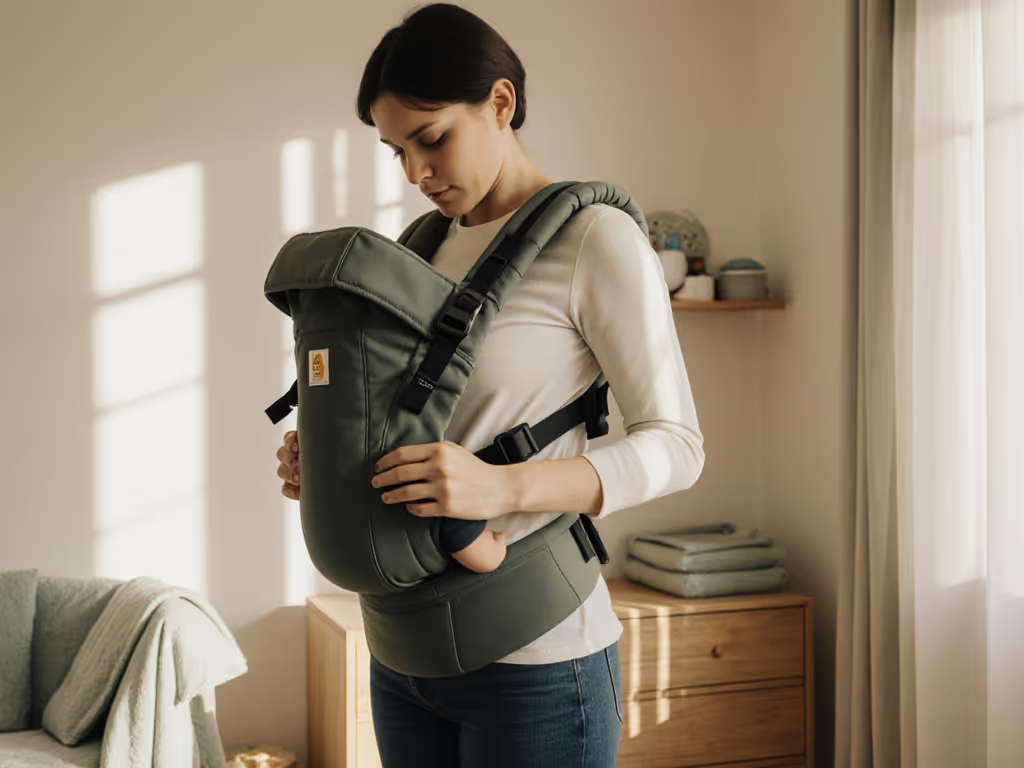
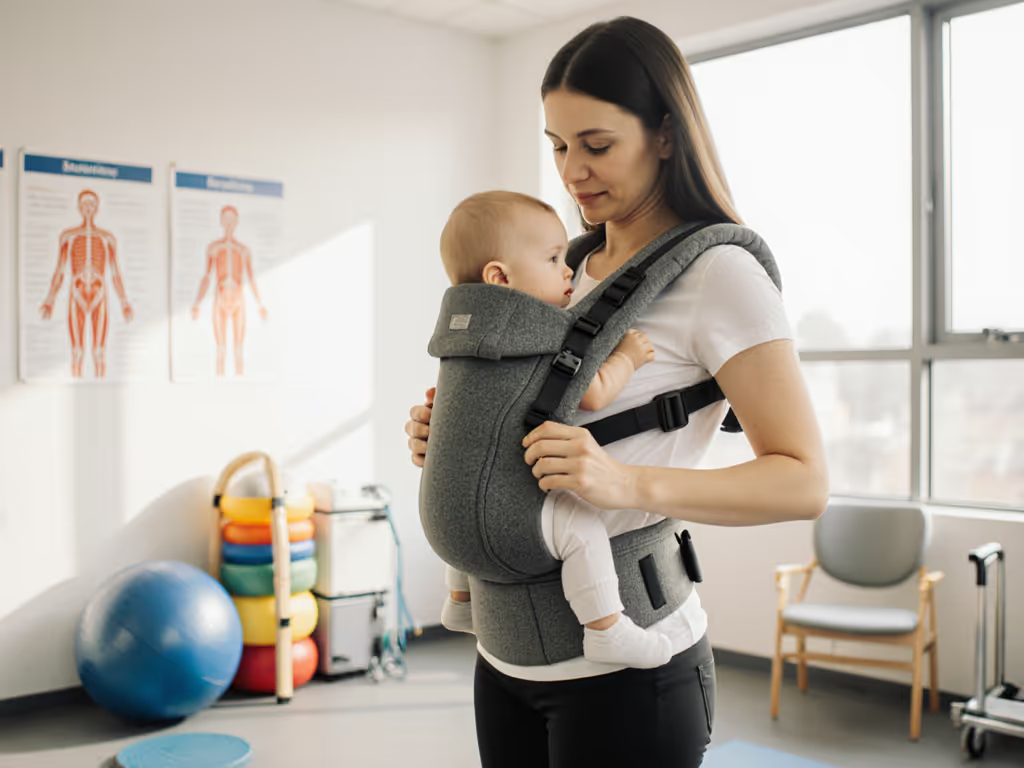
If you've ever felt a carrier's straps slip off your shoulders, its back panel ride up toward your neck, or its waistband dig into your ribs, you know the frustration of a misfit. For parents and caregivers with baby carriers for short torso needs, that struggle isn't about being too petite, it is about finding gear engineered to fit your frame. This article breaks down which very short torso baby carriers genuinely work, how to spot true adjustability, and what setup speed means when every second counts. We'll skip the vague promises and focus on carriers that fit, feel safe, and work during the foggy moments when you need them most.
Why Short Torso Fit Matters (And Why It's Often Overlooked)
Most carrier sizing assumes a "standard" frame, which leaves petite and short-torso parents hunting for answers. A typical soft-structured carrier's back panel might be 10-11 inches tall and designed for a shoulder-to-hip drop of 20-24 inches. If your torso is 14-17 inches, that panel bunches, pulls, or rides too high. Similarly, straps that are too long or can't shorten enough slip inward, compromising both comfort and baby's positioning. For frame-specific adjustments, see our petite babywearing guide.
This isn't a vanity issue, it is a safety and functionality one. A poorly fitting carrier can leave you in pain after 20 minutes, make micro-adjustments fiddly during setup, and undermine the very things a carrier is meant to deliver: hands-free bonding and calm.
The Safety Checkpoint
Before comparing carriers, confirm three non-negotiables:
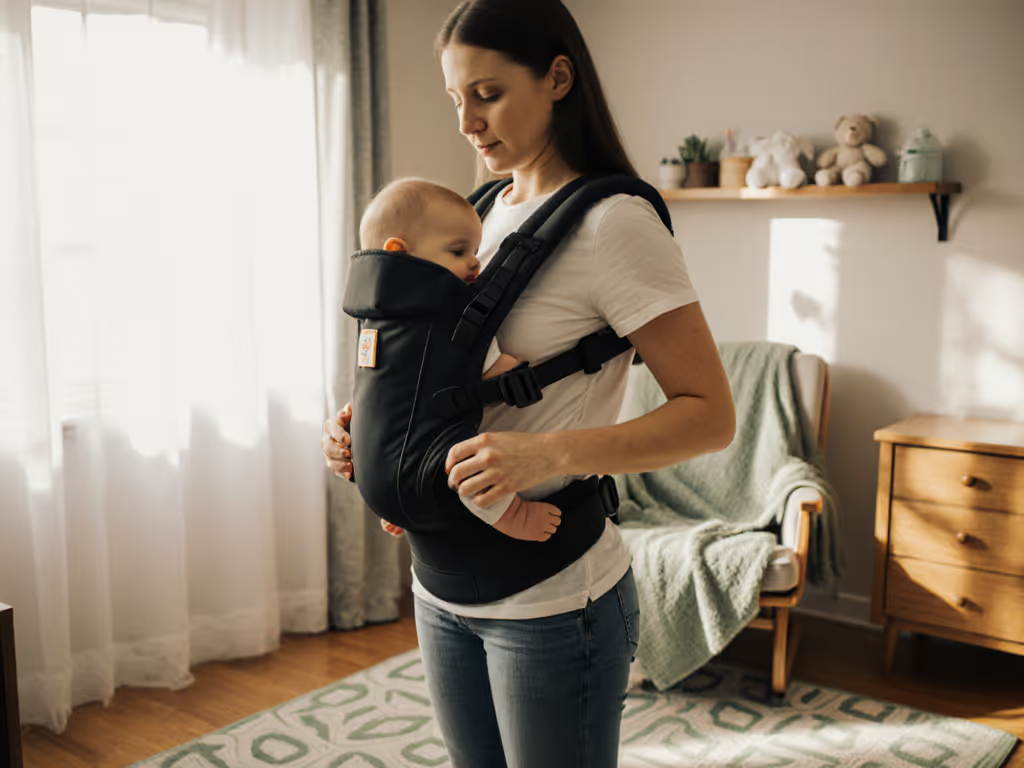
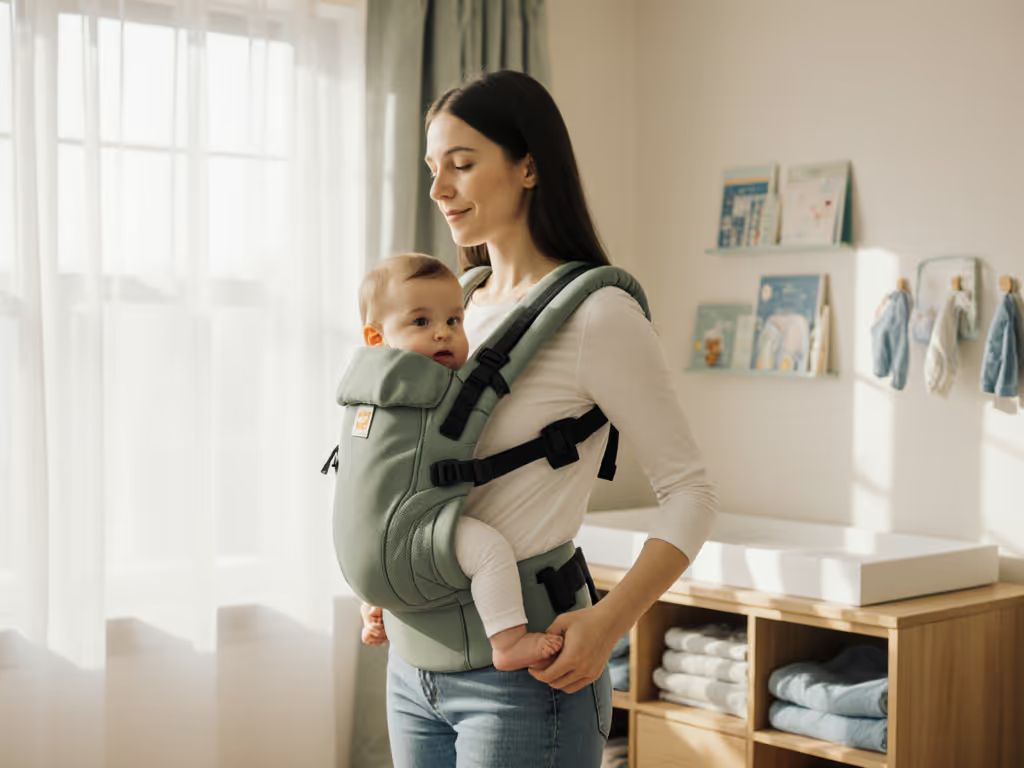
- Baby's airway is clear: When you look down, you see the top of baby's head, not the back of it. Chin clears chest by at least two fingers' width.
- Baby sits in an "M" or "C" position: Bum is lower than knees; legs splay naturally, not forced upward.
- Your shoulders and back feel supported: Straps don't pinch, ride inward, or slip. You should feel weight distributed across your entire back, not just the tops of your shoulders.
FAQ: Which Carriers Work Best for Short Torsos?
Q1: What's the Key Difference Between Carriers for Short vs. Standard Torsos?
The critical measurement is torso depth (shoulder to hip) and strap adjustment range. Carriers designed with short-torso users in mind typically offer:
- Shorter back panels: 9-10 inches instead of 11-12 inches, so they sit flush on your spine rather than climbing toward your neck.
- Multiple sizing options or buckle adjustments: "Perfect Fit" style adjusters let you shorten the panel and reposition straps independently, accommodating a range of torso lengths.
- Narrower or more tapered panel widths: Especially helpful if you have a narrow frame or shorter shoulder width.
- Shorter strap lengths: Some carriers max out too long and can't tighten enough for petite builds.
A carrier might say "newborn to toddler," but without adjustability across both dimensions, it won't fit everyone comfortably.
Q2: How Do I Know If a Carrier's Adjustments Will Actually Work for a 14-Inch Torso?
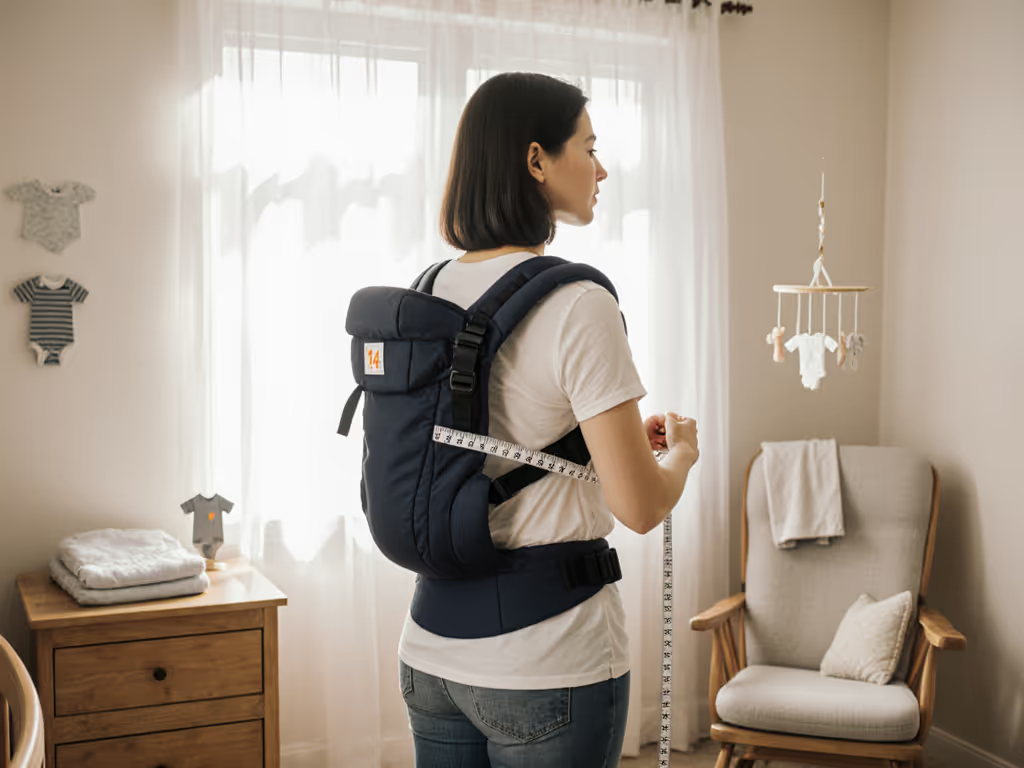
Before buying, gather three measurements:
- Your torso length: Measure from the top of your shoulder (where the strap sits) down to the lowest rib. This is your "torso depth."
- Your strap length needs: Wrap a soft measuring tape around one shoulder, under your opposite armpit, and back. This tells you the minimum strap circumference required.
- Your waistband fit: Most carriers have a cinch belt 28-42 inches. Measure your narrowest point (usually just above hip bones) and add 2 inches for comfort.
Then, cross-reference the carrier's spec sheet. Look for phrases like "perfect fit adjusters," "strap circumference: 24-50 inches," or "torso panel heights." If the brand doesn't publish these, email them before purchase. Reputable carriers answer this.
Q3: What Does "Low Torso Height Carriers" Mean, and Which Options Fit That Bill?
Low torso height carriers are structured carriers with back panels under 10 inches, short enough that they won't bunch or ride up on a compact frame. A few benchmarks:
- Carriers with fixed smaller panels: Some brands offer "petite" or "short torso" versions as separate SKUs. These are engineered for you from day one. For a real-world fit example, read our LennyLight short-torso review—a lightweight option that stays low on the torso without riding up.
- Carriers with adjustable/removable panels: Hybrid or modular designs let you downsize the back support piece or use a narrower panel.
- Ring slings and wraps: These naturally adapt to any torso size because there's no fixed back panel. They do require a learning curve for safe wrapping, but setup speed improves with practice. If you're choosing between fabrics, our stretchy vs woven wraps comparison highlights support and best age ranges.
- Soft wraps or stretchy wraps sized for petite bodies: Designed to fit snugly on smaller frames without extra bulk.
Fast, calm setups turn chaos into competence you can feel (and that starts with a carrier that fits your body the first time).
Q4: How Important Is Setup Speed for Short-Torso Users?
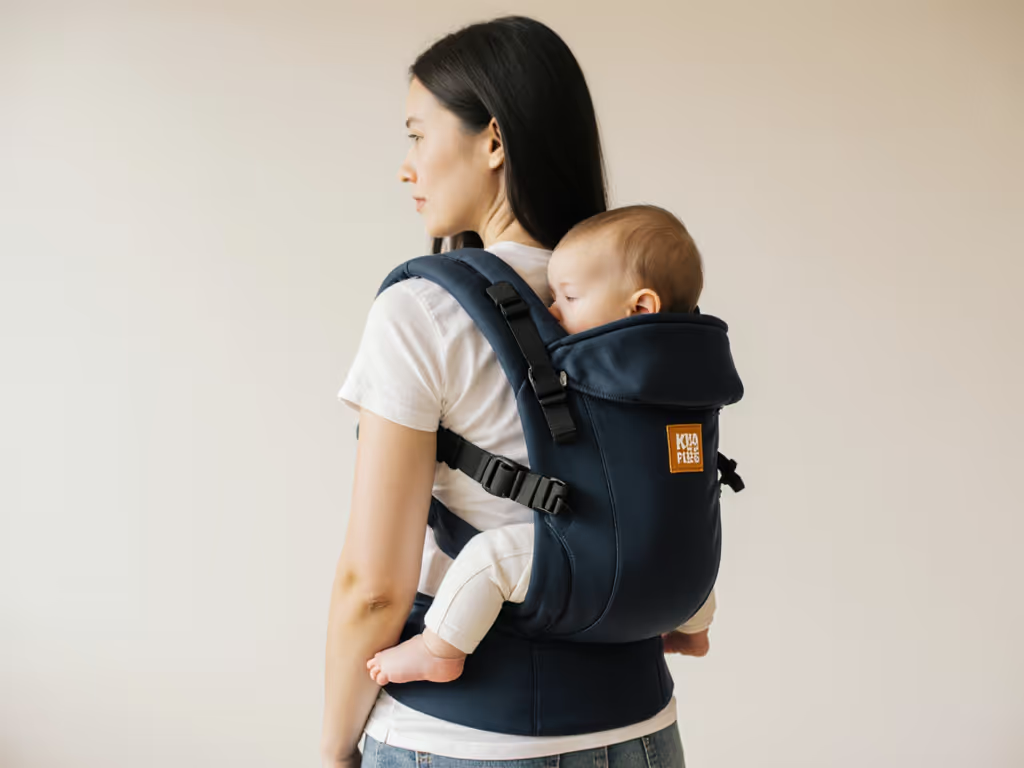
Setup speed matters for everyone, but it's especially critical when you're managing a short-torso fit. Why? Because petite parent carrier adjustments often involve multiple micro-tweaks, shortening straps, repositioning buckles, or cinching waistbands, before baby goes in. If the carrier requires 15+ steps or fiddly re-adjustments each use, you'll dread it, especially at 2 a.m. or during daycare drop-off.
Ideal setup speed:
- Clip carriers or pre-sized wraps: 45-90 seconds once muscle memory kicks in.
- Soft-structured carriers with pre-set adjusters: 60-120 seconds.
- Ring slings or traditional wraps: 2-4 minutes, but a one-time adjustment for your size.
During my foggiest early mornings, I learned that slow is smooth; smooth becomes fast. A carrier that fits your torso well won't require constant re-fitting, which means faster, calmer setups and less second-guessing.
Q5: Can I Share a Short-Torso Carrier With a Partner or Caregiver of a Different Size?
This is one of the most common pain points, and the answer is: it depends on the adjustability.
Carriers that adapt well across sizes:
- Those with perfect fit adjusters on straps and panel height: You can physically shorten or lengthen the back support and strap length. Resets take 1-2 minutes.
- Ring slings and wraps: They adjust to whoever is wearing them; no resizing needed.
- Some hybrid carriers: Modular back support or convertible strap systems allow quick swaps.
Carriers with limited multi-user flexibility:
- Fixed-size structured carriers: If one person has a 15-inch torso and the other a 22-inch, a carrier optimized for the standard (20-inch) frame will misfit for both.
- Pre-sized wraps: If ordered for a petite frame, they may be too short for a taller partner.
The workaround: If sharing is essential and your torsos differ significantly, consider a two-carrier strategy: a quick-on clip carrier for short errands (worn by anyone) and a fitted wrap or adjustable structured carrier for longer carries (kept in one person's "preset").
Q6: What Fabrics and Features Ease Long Wear for Short-Torso Bodies?
Once you've found a well-fitting carrier, comfort on your frame depends on fabric and design:
- Breathable panels: Linen, cotton, or hybrid blends reduce sweat and heat buildup on compressed torsos, especially in humid climates.
- Padded waistbands that sit below the rib cage: Narrow or long carriers can push the belt upward, causing rib discomfort. Look for "hip-sit" designs that anchor lower.
- Shorter, contoured shoulder straps: Oversized padding can chafe a narrow frame; look for proportional cushioning.
- Convertible back panels or optional inserts: Some carriers let you remove back panel bulk if you're doing a contact nap or a super-quick errand, reducing pressure on your shoulders.
Quick Comparison: Carrier Types for Short Torsos
| Carrier Type | Setup Time | Torso Adjustability | Best For |
|---|---|---|---|
| Soft-Structured (SSC) with Perfect Fit | 60-90 sec | High (if adjuster-equipped) | Longer walks, daycare, versatility |
| Hybrid/Clip Carrier | 45-60 sec | Medium to High | Quick errands, one-handed setup |
| Stretchy Wrap (Petite) | 2-3 min | High (custom to your size) | Newborns, contact naps, boutique feel |
| Ring Sling | 2-4 min | Very High | Petite builds, minimalist aesthetic |
| Woven Wrap (Short Torso Friendly) | 3-5 min | Very High | Hiking, cold-weather layering, long-term fit |
Safety Checkpoints Before and After Purchase
Before Buying
- ✓ Confirm the brand publishes torso panel height and strap circumference range.
- ✓ Read reviews from verified short-torso users (check Facebook groups or community forums).
- ✓ Check the return policy, minimum 30 days, bonus if try-before-you-buy is available.
- ✓ Verify baby weight and age range match your child's current and projected size.
After Arrival
- ✓ Do a dry run with baby before leaving the house. Practice the setup 2-3 times.
- ✓ Use the airway, M-position, and strap-slip checklist (see earlier). If any fail, readjust or contact customer support. Before each outing, review the T.I.C.K.S. safety checklist to double-check airway and positioning.
- ✓ Wear it for 10-15 minutes solo (no baby) to feel weight distribution and identify pinch points.
- ✓ Test with baby in a safe space (couch nearby) before a full outing.
Actionable Next Steps
Finding the right carrier fit for short torso needs doesn't require trial-and-error or expensive returns:
-
Measure your torso, strap circumference, and waistband size this week. Write them down and keep them handy when researching or emailing brands.
-
Narrow your carrier type based on your lifestyle: Quick-on clip carriers for busy errand days, structured carriers with adjusters for versatility, or wraps if you love minimal bulk and customization.
-
Reach out to one carrier brand with your measurements and ask: "Does this carrier work for a [X-inch] torso?" Reputable brands answer within 48 hours and often direct you to returning customers with similar builds.
-
Join a parent or babywearing community (online or local). Real users with short torsos share honest reviews, fit tips, and can often answer "Will this work for me?" faster than marketing copy.
-
Commit to one trial with a solid return policy. Order, test the setup and fit checklist, and decide within 14 days. One well-fitting carrier beats three mediocre ones.
Confidence is built through repeatable steps and clear safety checks, and it starts with gear that's engineered for your frame. A carrier that fits your torso well won't need constant fiddling; it'll feel intuitive, safe, and fast from day one. That calm, competent feeling? It's worth the effort to get right.
Related Articles