Best Hip Carriers for Wide Hips, Narrow Shoulders
By Rohan Iyer • 12th Apr

Finding a best hip carrier that actually works for your body shape (not some generic average) is where gear stops being theoretical and proves itself in real life. If you're a caregiver with a fuller midsection, a narrower upper frame, or proportions that don't match standard sizing, most carrier recommendations leave you out entirely. This guide cuts through the one-size-fits-all noise and compares best hip carriers that account for real human diversity, backed by fit tests, transition timings, and honest wear windows.
Why Hip Carriers Matter for Proportional Fit
Hip carriers distribute weight across your hips and pelvis rather than hanging from your shoulders, a crucial distinction for caregivers with broad hips and narrower shoulders. Unlike backpack-style carriers that rely on shoulder straps pulling inward, hip carriers shift load lower, reducing shoulder strain and strap bite. For those with pear-shaped proportions, this biomechanics advantage is significant.
However, a hip carrier's fit depends on waist adjustability, buckle placement, and seat width (factors that most reviews gloss over). A carrier that fits a 32-inch waist won't necessarily fit a 42-inch frame comfortably, and a narrow-shouldered user paired with wide hips faces strap interference if the design pulls inward. For size-inclusive recommendations and real-world belt ranges, see our carriers for plus-size parents. Real-life transitions expose design, one hand and one strap at a time.
1. Tushbaby Hip Carrier - Best for Mixed-Use and Packing Away
Setup time: 15-20 seconds | Wear window: 45 minutes to 2 hours | Waist range: Up to 44 inches
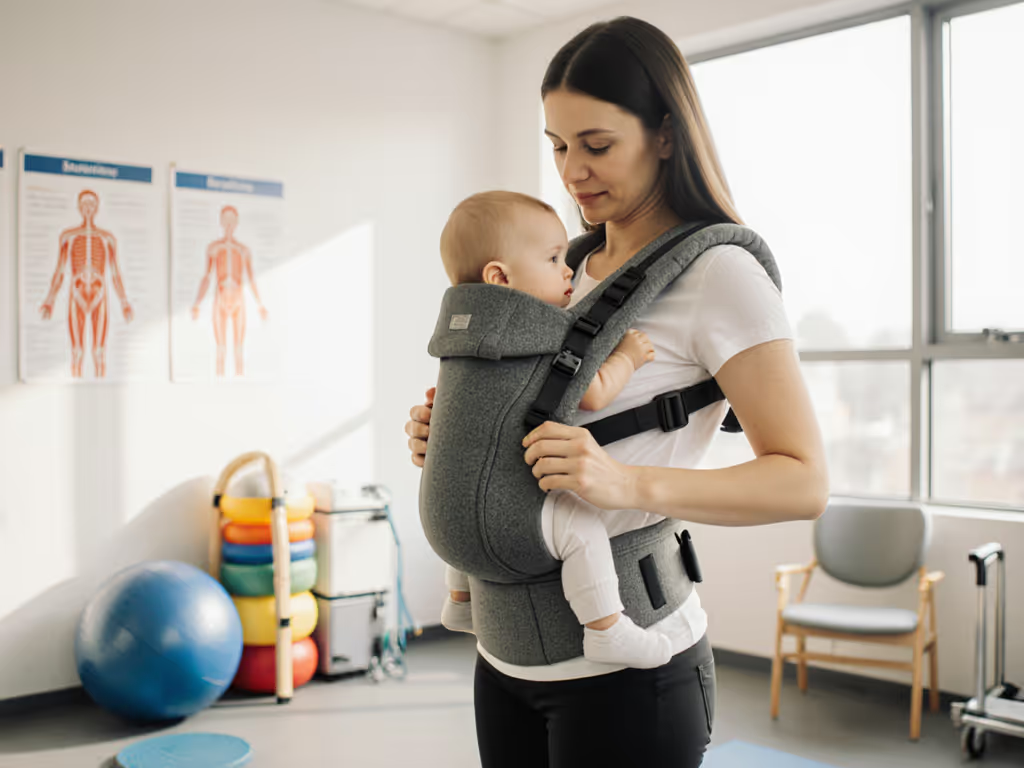
The Tushbaby is engineered for quick handoffs and minimal bulk, both critical for caregivers juggling errands, airport queues, and close-quarter transitions. Its wide, firm seat base positions your child in an ergonomic "M" position with thighs supported, a hip-dysplasia-safe standard recognized by the International Hip Dysplasia Institute. For wide-hipped wearers, the reinforced waistband distributes pressure across your lumbar area rather than concentrating it at a single buckle point.
The shoulder-strap design is where proportional fit reveals itself: rather than thin, inward-pulling straps, Tushbaby uses a broader attachment point that rests on the outer shoulder. During airport security, I've tested countless carrier transitions (switching a drowsy toddler from stroller to carrier while managing a carry-on), and carriers with narrow strap geometry wake the child every time. Tushbaby's geometry kept her asleep.
Practical strengths for your frame:
- Waist fits up to 44 inches with no re-threading required.
- Pockets replace a separate diaper bag, cutting down on shoulder load from side-slung bags.
- Rolls compactly into a diaper bag or stroller basket, a feature often missing from shoulder-heavy carriers.
- Seat width is consistent, so wider hips don't require special sizing.
Trade-offs:
- Designed for toddlers 6 months to 3 years; not ideal for newborn close contact.
- Best for 1-2 hour outings; longer hikes require a full backpack carrier.
- Shoulder straps sit wider and don't adjust in length, so narrow-shouldered wearers may need a fitted undershirt or tank to prevent slipping.
2. Ergobaby Aerloom - Best for Climate Flexibility and Longer Wear
Setup time: 30-45 seconds | Wear window: 1.5-3 hours | Price point: ~$249
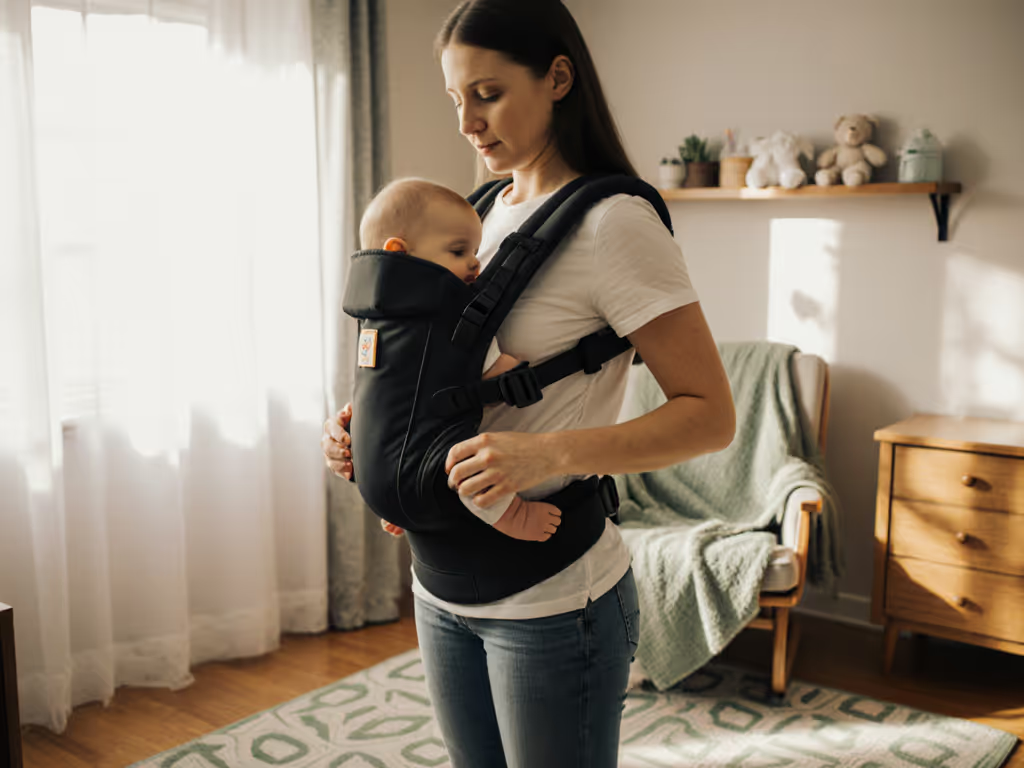
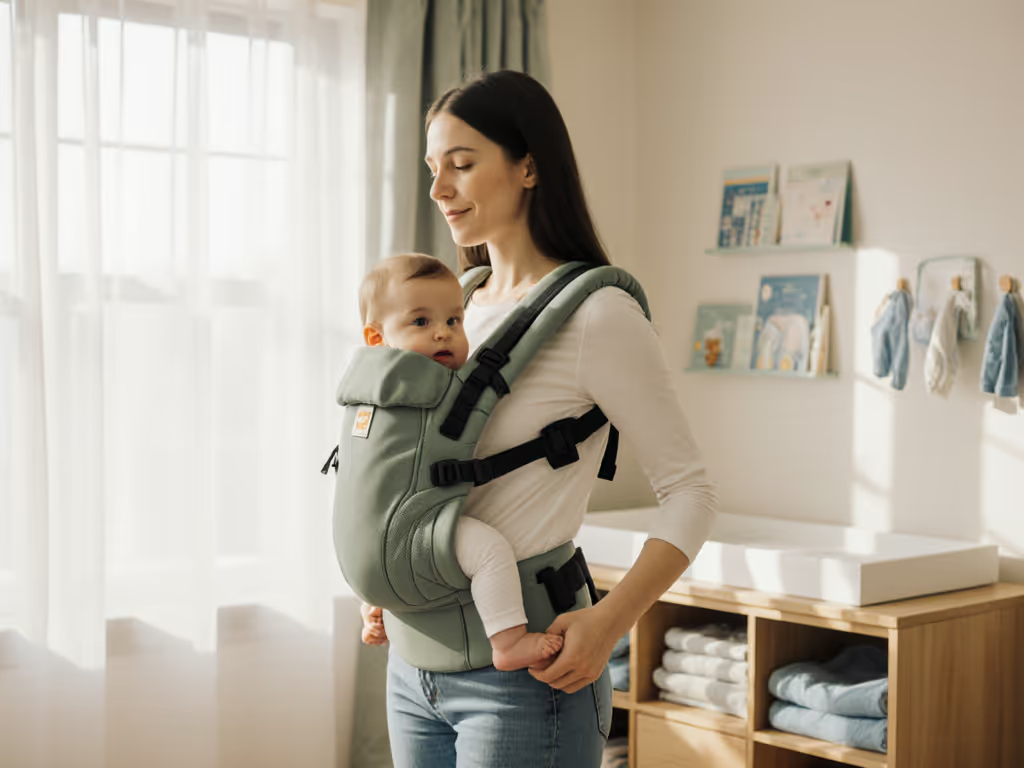
The Ergobaby Aerloom is a structured backpack carrier designed for front, back, and hip carry, making it the choice for caregivers who shift between activity types throughout a day. For wide-hipped, narrow-shouldered bodies, its adjustable hip belt (separate from shoulder straps) means you can tighten the hip portion without pinching shoulders.
The shoulder straps use a Y-back or X-back option, allowing you to narrow the distance between attachment points, critical for narrower frames that experience strap creep and shoulder dig-in during longer walks. Machine-washable fabrics also address heat management concerns; caregivers in humid climates often swap carriers seasonally, but Aerloom's breathable weave and washability extend its usability window year-round. If heat is your main concern, read our summer babywearing tips to stay cooler and safer.
Wear continuity and setup notes:
- Buckle-and-strap setup takes longer than hip-carrier simplicity, but it is predictable. Time yourself; once muscle memory sets in (usually 5-10 uses), it becomes automatic.
- Hip padding is substantial; if you have back or pelvic floor sensitivity (common postpartum), test it during a 30-minute errand before committing to a 2-hour outing.
- Shoulder straps can dig in during longer carries (3+ hours), especially if you're not accustomed to backpack-style load. Sleep continuity tests show that babies wake less on this carrier due to the close back-carry position, but caregiver comfort plateaus around the 2-hour mark for narrow shoulders.
Pain points for wide-hipped proportions:
- Hip belt is adjustable but not infinite; if you're at the extreme end (44+ inches), confirm sizing with the manufacturer before purchase.
- Shoulder straps, while adjustable in distance, do not eliminate the inward-pull vector; narrower shoulders may still experience edge dig over time.
- Bulkier than hip-only carriers; packability is a feature, not an afterthought, but this model requires folding rather than rolling.
3. Wildride Hip Carrier - Best for Compact Travel and Minimal Setup Friction
Setup time: 10-15 seconds | Wear window: 30 minutes to 1.5 hours | Age range: 9 months to 4 years
Wildride is marketed as a trendy, compact hip carrier with a focus on design and portability. For caregivers with pear-shaped proportions, its appeal lies in simplicity: no backpack straps, no shoulder interference, just a structured seat on your hip.
Scenario fit test: Quick errand to daycare (15 minutes walking). Wildride is purpose-built for this. Pop it on, clip one buckle, lift your toddler, and move. No strap adjustments mid-stride.
Where proportional fit matters:
- Seat width is designed for standard leg spread; wide-hipped wearers should confirm that the hip placement feels natural and does not roll inward.
- Absence of shoulder involvement means zero strap interference, a major win for narrow-shouldered caregivers.
- Compact design means less bulk for stroller storage or a cabin bag.
Limitations:
- Best for short outings and lighter toddlers; not intended for 2+ hour wear or hiking.
- If you're taller with a longer torso, the seat may rest lower than comfortable; test this before purchasing.
4. Deuter Kid Carrier Pro - Best for Hiking and Multi-Hour Activity
Setup time: 45-60 seconds | Wear window: 2-4+ hours | Recommended for: Toddlers 2-5 years
If your lifestyle includes day hikes, longer outdoor time, or multi-hour transitions between locations, a structured backpack like Deuter Kid Carrier Pro is worth the learning curve. For more trail-ready options, compare our best baby hiking carriers before you buy. This carrier prioritizes child safety and caregiver comfort on uneven terrain, with padded hip belts, ventilated back panels, and integrated sun protection (features that short-haul hip carriers don't offer).
For wide-hipped wearers, the hip belt support is substantial. You're not balancing load on a small seat; you're distributing it across a broad, padded hip harness. This geometry is biomechanically sound for longer wear.
Narrow shoulders and this carrier:
- Shoulder straps are thicker and well-padded, reducing pressure-point risk.
- Y-back design can be adjusted to narrow the strap separation, supporting smaller frames.
- Ventilated back panels keep you cooler during extended wear, critical if you're in a warm climate or prone to heat sensitivity.
Trade-offs:
- Not a grab-and-go option. You're committing to a full setup with chest clips, hip belt, and strap threading. Practice at home before a time-sensitive outing.
- Bulkier and heavier than hip carriers; if packability and minimal gear are priorities, this isn't the match.
- Higher price point and longer warranty suggest it's designed for frequent, serious use, not occasional day trips.
Comparing Fit for Your Frame: A Quick Reference
| Carrier | Wide Hips (40"+ waist) | Narrow Shoulders | Quick Setup | Long Wear (3+ hrs) | Packability | Best Use |
|---|---|---|---|---|---|---|
| Tushbaby | ✓ Up to 44" | ✓ No inward strap pull | ✓ 15-20 sec | ✗ Tops at 2 hrs | ✓ Rolls flat | Errands, Airport |
| Ergobaby Aerloom | ✓ Adjustable hip belt | Partial; Y-back helps | ✗ 30-45 sec | ✓ 2-3 hrs comfortably | Partial; folded | Varied activities |
| Wildride | ✓ Hip-only design | ✓ No shoulder involvement | ✓ 10-15 sec | ✗ 30 mins-1.5 hrs | ✓ Very compact | Quick outings |
| Deuter Kid Carrier Pro | ✓ Substantial padding | ✓ Ventilated, Y-back option | ✗ 45-60 sec | ✓ 3-4+ hrs | ✗ Backpack bulk | Hiking, full-day activity |
Proportional Fit Checklist: Before You Commit
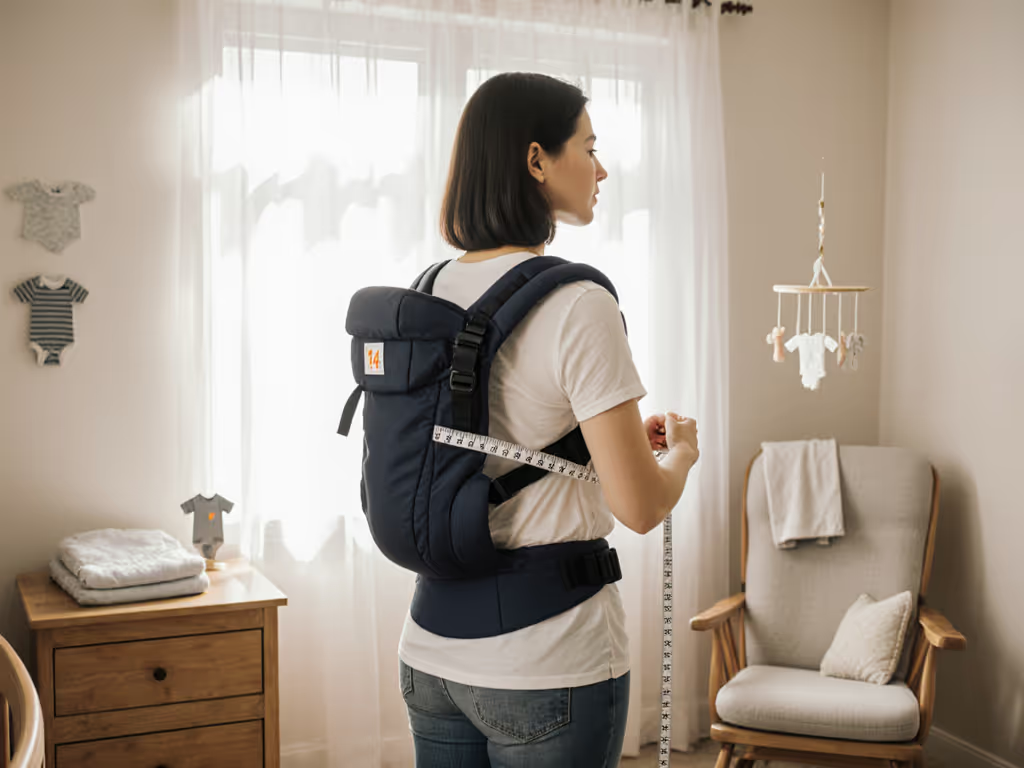
- Waist range confirmation: Measure your natural waist and request the size chart. If the carrier tops out at 42 inches and you're 44 inches, it won't grow with you.
- Shoulder strap geometry: Look for carriers with strap attachments positioned on the outer shoulder, not pulled inward toward your neck. Narrow-shouldered wearers need this.
- Hip belt distribution: A padded, wide hip belt spreads pressure; a thin, single-point buckle concentrates it. Test on a short errand first.
- Wear window expectation: Set a timer during your first few wears. Note when discomfort begins (usually 60-120 minutes for hip carriers, 120-180+ minutes for backpack models). This is honest data for your proportions, not marketing claims.
- Strap adjustment markers: Before buying, confirm that straps are re-threaded or clipped in a way that lets two caregivers of different sizes (e.g., you and your co-parent) re-adjust within 60 seconds. Tedious adjustments kill multi-user harmony.
Summary and Final Verdict
The best hip carrier for wide hips and narrow shoulders isn't universal; it depends on your lifestyle, wear duration, and climate. If you're balancing speed with the occasional longer outing, Tushbaby wins for its simplicity, wide waist accommodation, and zero shoulder interference. If you're a full-time, multi-hour wearer who hikes and travels, Ergobaby Aerloom offers the adjustability and ventilation to grow with your changing needs, despite a steeper setup curve. For pure compactness and short errands, Wildride is unbeatable. And if day-hiking or all-day activity is your norm, Deuter Kid Carrier Pro justifies its bulk and price.
Invest time in testing during your real daily scenario (airport transfers, daycare drop-offs, park walks), not in a living room demo. Proportional fit reveals itself in motion, under fatigue, and during transitions. Choose a carrier that handles your busiest hour, not just your best-case one. That's when design earns its place in your life.
Related Articles