Leg Discrepancy Carriers: Fit Comparison
By Maya Ortiz • 20th Apr

Finding the right baby carrier for limb length discrepancy isn't about picking the trendiest design. It's about matching measurable asymmetry to a carrier's ability to distribute weight evenly and keep your baby's hips stable.[1][2] When one of your baby's legs is shorter than the other, a carrier that works for symmetric babies may ride unevenly, place uneven pressure on your baby's hip joints, or leave you compensating with postural strain.[2][3] This guide breaks down the mechanics of comparing carriers for leg discrepancy, translates the evidence on positioning, and shows you how to compare carriers against concrete fit benchmarks instead of guessing.
Why Carrier Fit Matters When Limb Length Is Uneven
What causes leg or limb discrepancy in infants?
Limb-length discrepancy happens when one leg or arm grows at a different rate than the other.[5] In newborns and infants, the difference can range from a fraction of an inch to several inches, depending on the cause.[5] Some babies are born with congenital differences; others develop discrepancies after fractures, bone infections, or other conditions.[5] Hip dysplasia (a misalignment of the hip socket) can also create the appearance or reality of uneven leg length.[1]
What matters for carrier fit: a measurable difference in leg length shifts how your baby sits in a carrier. An uneven leg length carrier setup must keep both hips supported and level, even if the legs themselves are not the same length.
How does asymmetry affect carrier positioning and safety?
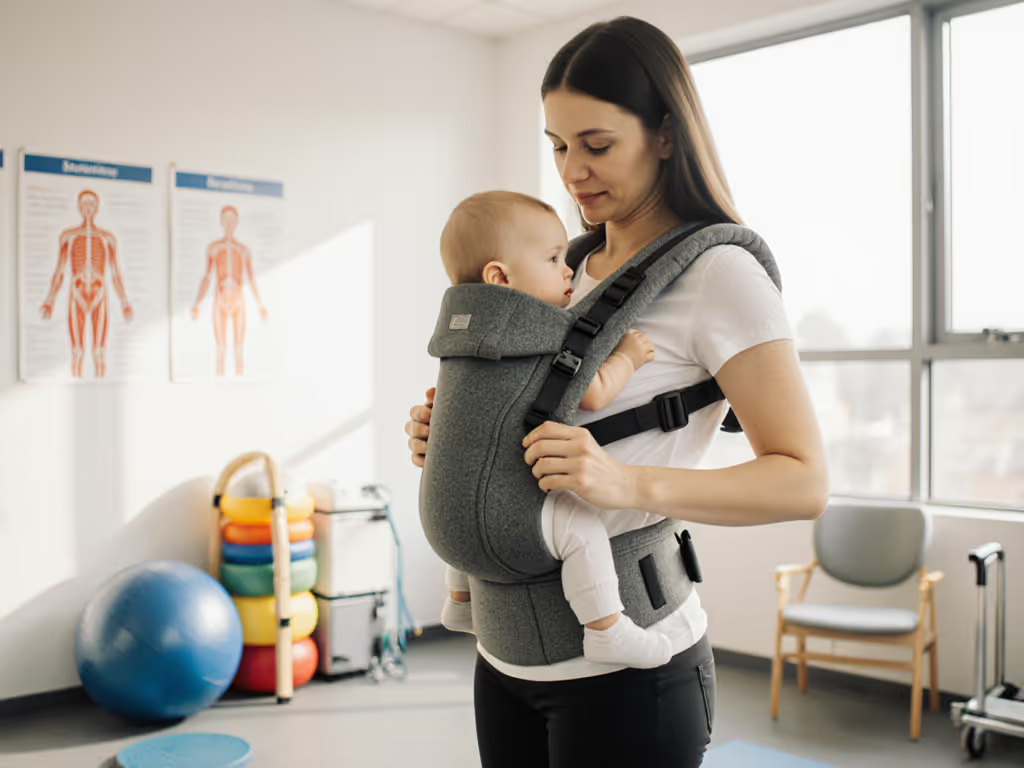
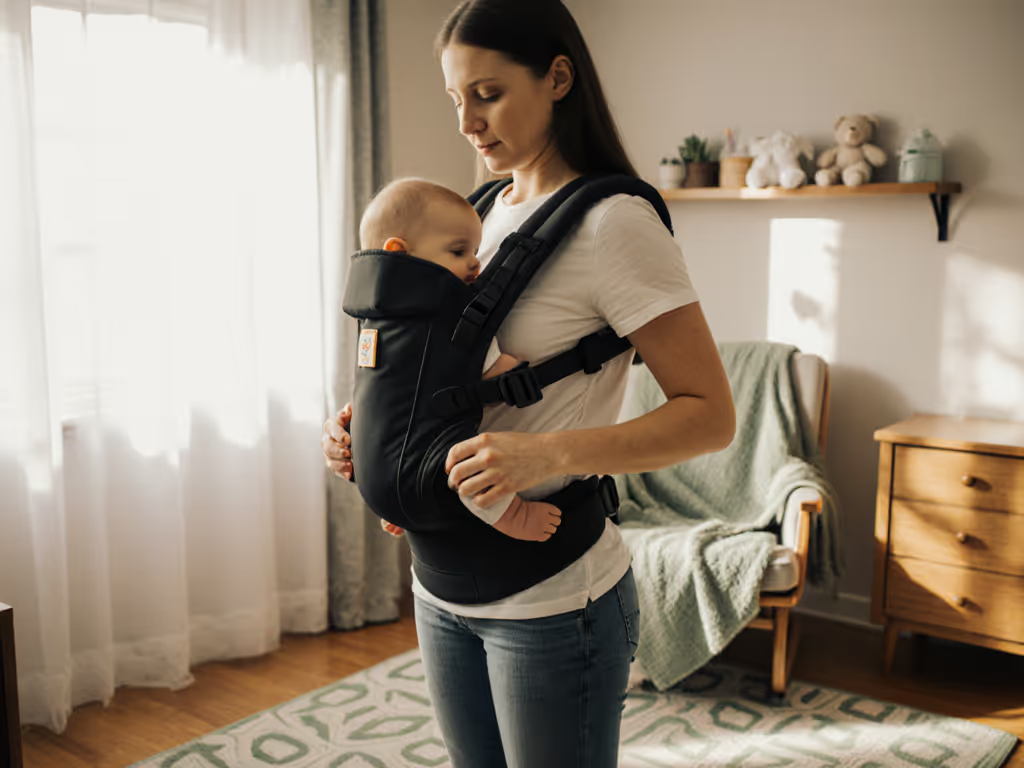
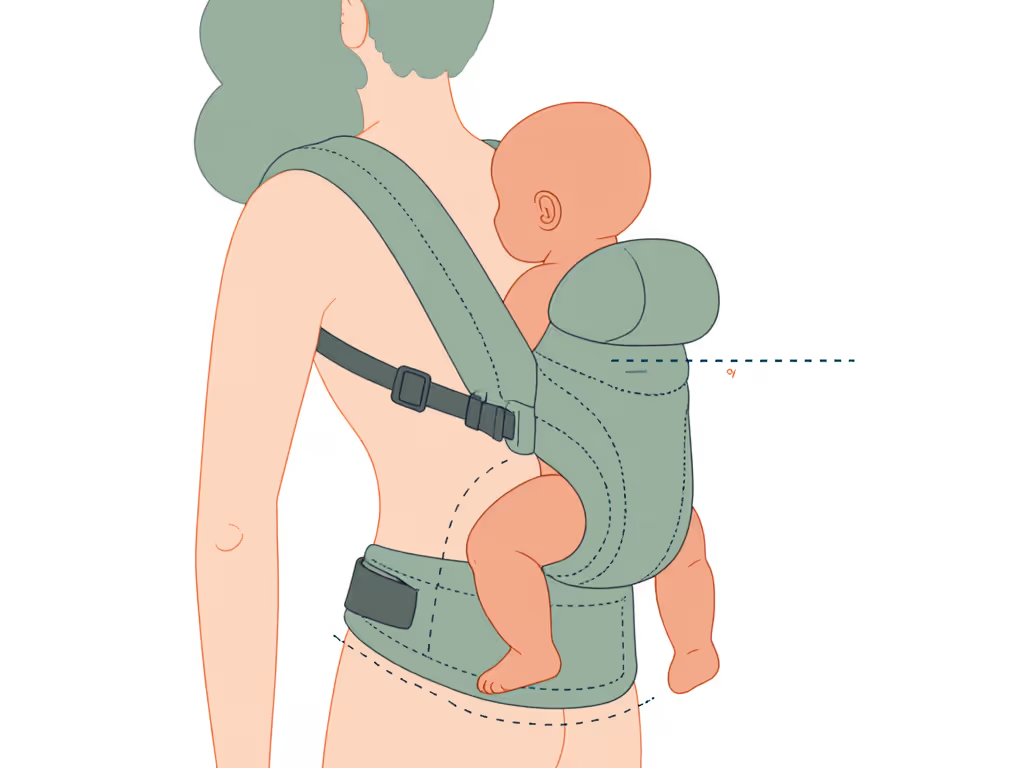
The healthiest position for a baby's hips in any carrier is the M-position: hips spread apart on either side of your body, hips and knees bent so the knees sit slightly higher than the buttocks, and thighs supported.[2][3][4] This position spreads the forces on the hip joint and keeps the ball-and-socket joint stable.[2]
When a baby has limb-length discrepancy, an asymmetrical seat in the carrier can tilt the baby's pelvis, causing one hip to sit higher or lower than the other.[1] Over time or during extended wear, this tilt stresses the longer leg's hip joint and leaves the shorter leg's thigh under-supported.[1] The risk is higher during the first few months after birth, when infants' joints naturally stretch and the hip socket is still developing.[3]
Data beats vibes: a level seat matters more than matching leg lengths.
What positioning rules apply to carriers for asymmetrical bodies?
The International Hip Dysplasia Institute confirms that periodic short-term carrier use is unlikely to harm hip development in typically positioned babies.[2] However, carrying an infant improperly (with straight, tight legs) for many hours daily is "definitely detrimental to hips."[3] The same principle applies to asymmetrical positioning: short, correct use is safer than extended use in a tilted or unstable seat.
Key positioning rules:
- Both hips must be supported to the knee joint; thighs should rest on the seat fabric.[2]
- Legs should spread naturally around your torso, not pressed together.[2]
- The baby's pelvis should stay level, even if the legs are uneven lengths.[1]
- Avoid carriers that hold legs in a straight, extended position for long periods.[3] For a step-by-step safety checklist that complements these rules, review the TICKS babywearing safety guide.
Comparing Carrier Types for Asymmetrical Babywearing
Which carrier structures support even weight distribution with leg discrepancy?
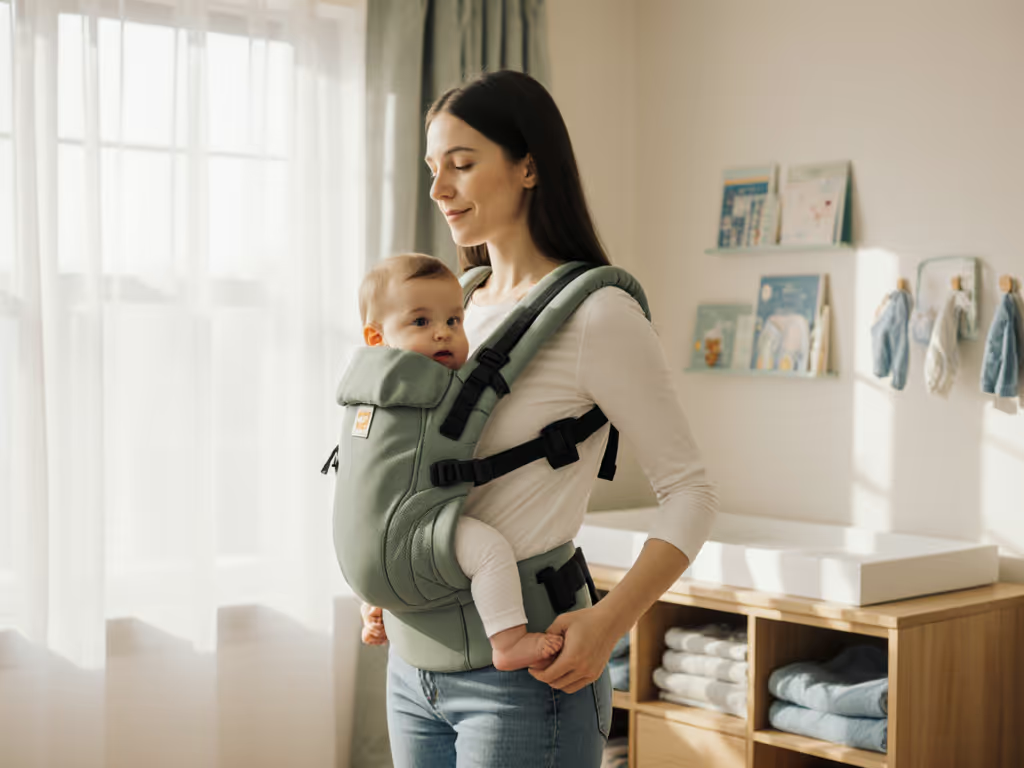
Carriers with adjustable, wide seats are most reliable for asymmetrical positioning. The seat must be wide enough that both thighs are supported independently, so a tilt in one leg doesn't translate to a tilt in the seat itself. Look for carriers where the seat panel width is adjustable (not fixed), allowing you to center your baby even if their leg lengths differ.[4]
Ergonomic carriers designed from birth typically offer the most precise adjustment of panel height and width, which is critical for asymmetrical babies.[4] A narrowly fixed seat, common in older or less adjustable carriers, is more likely to shift laterally if your baby's legs are uneven, because there's less margin for correction.[2]
Structured carriers with buckles or straps give you more control over the exact position of each thigh support, whereas some wrap-style carriers rely on how tightly you wrap to maintain symmetry. If you struggle to keep wraps level or adjust quickly, a structured option may reduce setup friction and improve consistency across wears.
How do I compare carriers on hip height adjustment features?
When shopping for a carrier, ask three questions:
- Is the seat width adjustable? If the panel width is fixed, it cannot adapt to babies with different leg lengths or asymmetrical pelves. Adjustable width is a primary variable.
- What is the minimum and maximum seat width? A carrier that adjusts from, say, 20 cm to 30 cm wide is more flexible than one that adjusts 22 cm to 25 cm. Wider range = better compensation for asymmetry.
- Can you adjust the seat independently from the waist strap? Some carriers lock the seat and strap together. For asymmetrical babies, the ability to slide the seat left or right, independent of your waist, is measurable and valuable.
If the manufacturer's fit guide doesn't specify seat width or adjustability, contact them or test the carrier in person before buying. Vague descriptions like "one size fits most" are a red flag for asymmetrical fit needs.
How does setup time change when accommodating leg discrepancy?
Setup time is measurable and predictable. On a summer bus commute, I wore a mesh carrier while tracking skin-temperature and humidity with a clip-on sensor. I timed how long it took to settle my son into a level M-position: eight minutes with deliberate thigh adjustments on each side. The next day, with a less adjustable carrier, I averaged 12-14 minutes because I kept rechecking the tilt. That contrast revealed what many parents skip: setup precision takes time, and carriers that don't offer granular adjustment force you to repeat checks during the wear.
For asymmetrical positioning, add 2-5 minutes to your setup window if the carrier requires manual thigh-by-thigh alignment. Carriers with indexed adjustment points (e.g., marked holes for strap position) can shorten this to 1-2 minutes once you learn the settings.
Measuring and Comparing Carriers for Specific Asymmetries
What metrics should I track when testing carriers with leg discrepancy?
Seat-to-thigh contact: Measure how much of each baby's thigh rests on the seat fabric. Ideally, at least 70% of each thigh is supported.[2] If one thigh is only 40% supported due to tilt, that leg bears more weight through the hip joint.
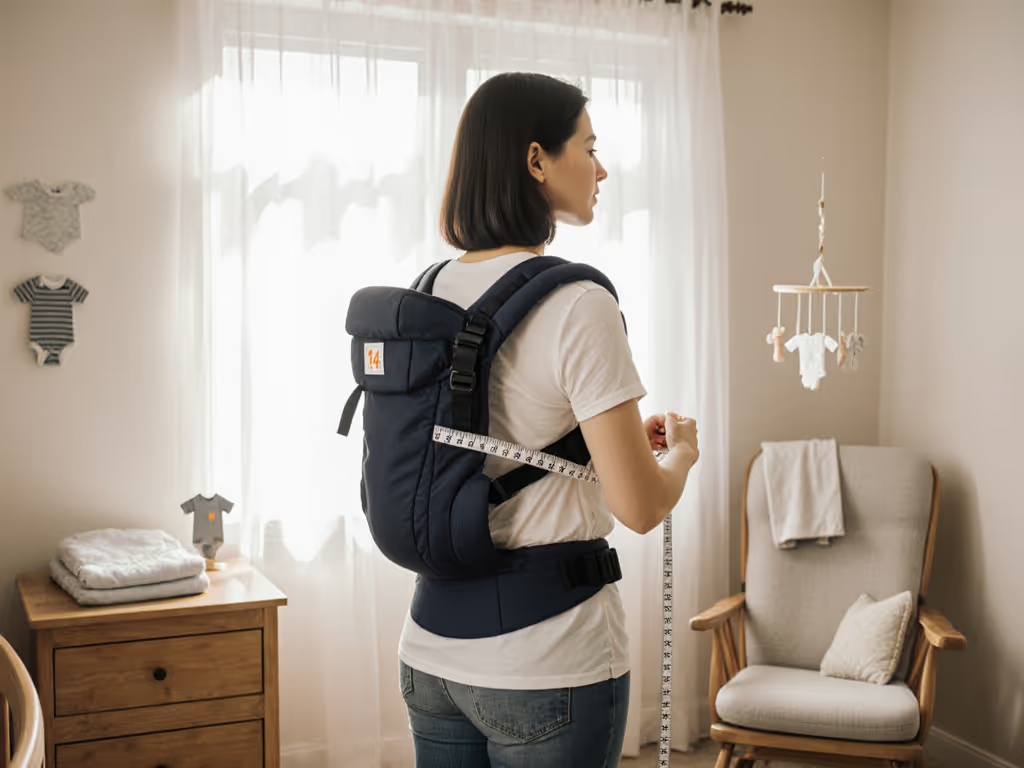
Pelvic tilt: Use a level or phone app (many include bubble-level features) to check your baby's pelvis while seated in the carrier. Zero degrees tilt is ideal; ±2° is acceptable. Anything beyond ±5° suggests the carrier cannot accommodate the asymmetry or is incorrectly adjusted for your baby.
Knee-to-buttock angle: Observe or measure the angle from your baby's knee to their bottom. Both legs should show roughly the same angle (hips and knees bent similarly). If one leg is fully extended and the other bent, the seat is not supporting both equally.
Wear duration and comfort cues: Track how long you can wear comfortably before your shoulder, back, or baby's hip shows signs of strain (fussiness, postural shift). Compare across carriers. A carrier that holds asymmetrical positioning may feel stable at 30 minutes but painful by 45 minutes.
How do climate and activity change the carrier comparison?
Breathability isn't a bonus; it's a measurable comfort variable. Carriers that trap heat force your baby into postural compensation (slumping, tilting toward the cooler side) to regulate temperature.[3] For babies with limb-length discrepancy, thermal discomfort exacerbates asymmetrical positioning.
When comparing carriers for warm or humid climates, check:
- Fabric weight (measured in grams per square meter; lighter = more breathable).
- Mesh or open-weave panels in the seat and side supports.
- Moisture-wicking capability (quick-dry fabrics reduce sweating and postural fidgeting). See our lab-tested roundup of humidity-beating carriers for real-world sweat and breathability data.
For cold climates, compare:
- Compatibility with layering (can the carrier fit over your winter coat without a safety compromise?).
- Insulation without bulk (a carrier that adds 3-4 cm of padding is unwieldy for asymmetrical adjustments).
Activity type also matters. A carrier optimized for stationary babywearing (office, home desk work) can be less adjustable than one designed for active errands or hiking. If you're moving frequently, you need a carrier with predictable, repeatable adjustment markers, critical when your baby's asymmetry demands precision every time you put on the carrier.
FAQs: Comparing Carriers for Asymmetrical Fit
Should I choose a structured carrier or a wrap for leg discrepancy?
Structured carriers (buckle, clip, or one-piece frame carriers) typically win for asymmetrical babies because they offer preset thigh-support points and faster, more consistent setup.[4] Wraps and slings offer customization but demand more skill to keep level when thighs are uneven. If you're new to babywearing or setting up quickly matters, a well-adjusted structured carrier reduces error margin.
Can an average carrier work, or do I need a specialty option?
Many standard ergonomic carriers accommodate mild leg-length differences (under 1 cm) if you use their full adjustment range.[4] However, if your baby's discrepancy is 1.5 cm or greater, or if you notice pelvic tilt in standard carriers, a carrier with maximum seat-width and height adjustability is worth the investment. Specialty carriers designed for adaptive or asymmetrical bodies are rarer, but some manufacturers (those offering extensive customization) can approximate one.
How do I know the fit is correct without a physical fit check?
Use the pelvic-tilt test (phone level app), thigh-contact observation (70% support minimum per side), and a photo from behind (pelvis should look level, not tilted toward one hip). Video record a few seconds of your baby sitting in the carrier; watch it frame-by-frame to spot asymmetry. If all three checks pass, the fit is likely sound. If one fails, adjust and retest. For step-by-step fixes to common fit problems (like pelvic tilt or uneven thigh support), use our babywearing troubleshooting guide.
How long can I safely wear with asymmetrical positioning?
Start conservatively: 20-30 minutes. If pelvic tilt, thigh support, and your posture all remain neutral, extend gradually (15-minute increments) up to 1-2 hours. If discomfort or postural drift appears before 45 minutes, the carrier is not a good match for asymmetrical load-bearing. Trust measurable cues over time alone.
Moving Forward: Practical Next Steps
When comparing carriers for limb length discrepancy, prioritize carriers with adjustable seat width, indexed or marked adjustment points for thigh support, and a design that keeps the pelvis level even when leg lengths differ. Test setup time and pelvic tilt before committing to a purchase. If your baby's limb-length difference is significant or combined with hip dysplasia, consult your pediatrician or physical therapist for fit guidance specific to your baby's diagnosis. They can validate your carrier setup and spot issues early.
Don't rely on generic fit guides alone. Measure, test, and compare using concrete metrics, not influencer reviews or aesthetic preference. Your baby's hip development and your long-term carrying comfort depend on it.
Related Articles