Manduca Baby Carrier Review: Comfort, Fit & Real-Life Use
By Avery Sullivan • 14th Jun
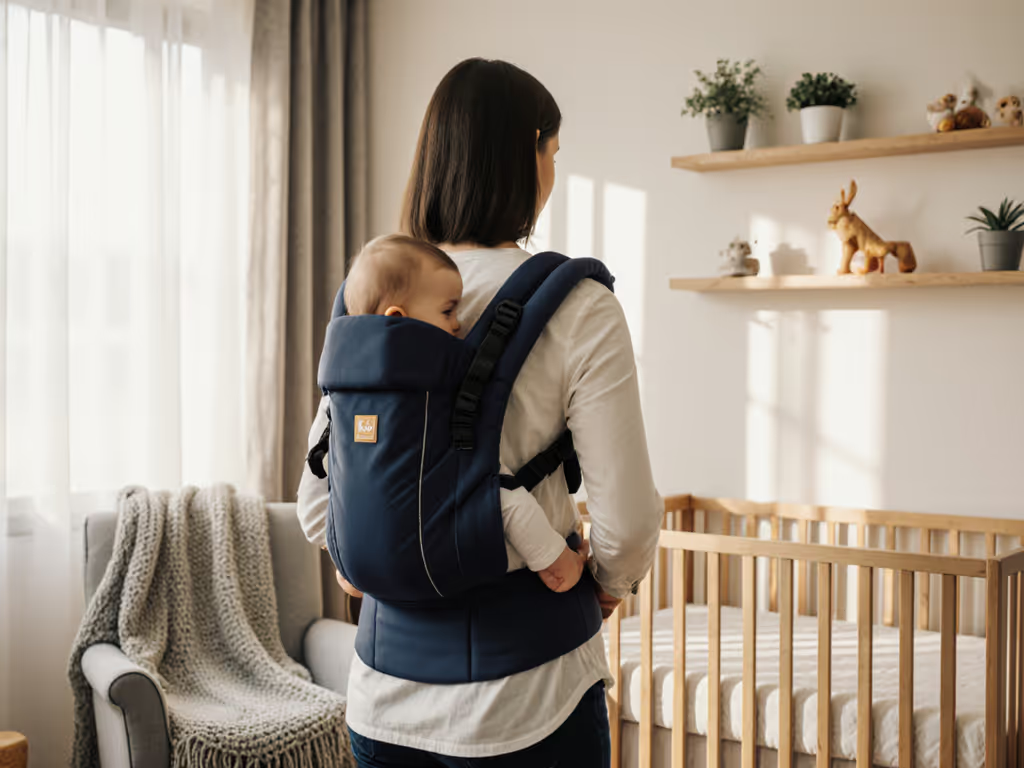
If you're trying to decide whether the Manduca is your "one-and-done" carrier, this Manduca Baby Carrier review and Manduca carrier detailed review walks you through comfort, fit, and real-life use with newborns through toddlers, without the overwhelm.
You'll find clear pros and cons, a practical Manduca carrier sizing guide, and honest notes on Manduca features for newborns, so you can confidently answer your own big question: is Manduca worth it for your body, climate, and routines?
Manduca at a Glance: What Type of Carrier Is This?
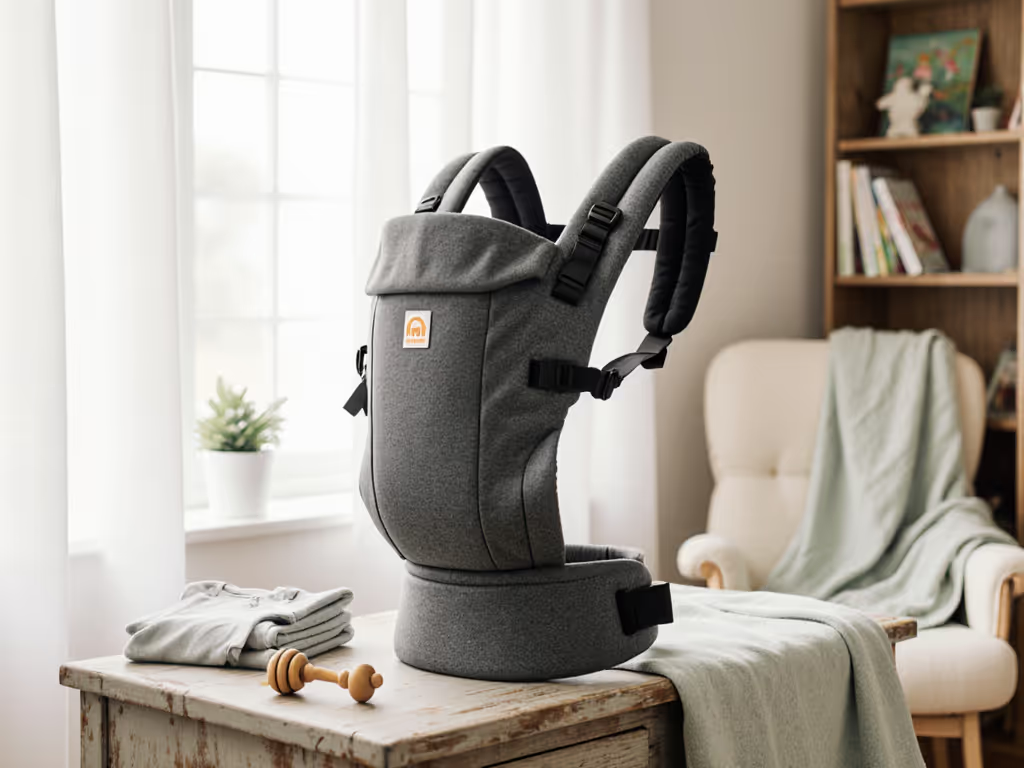
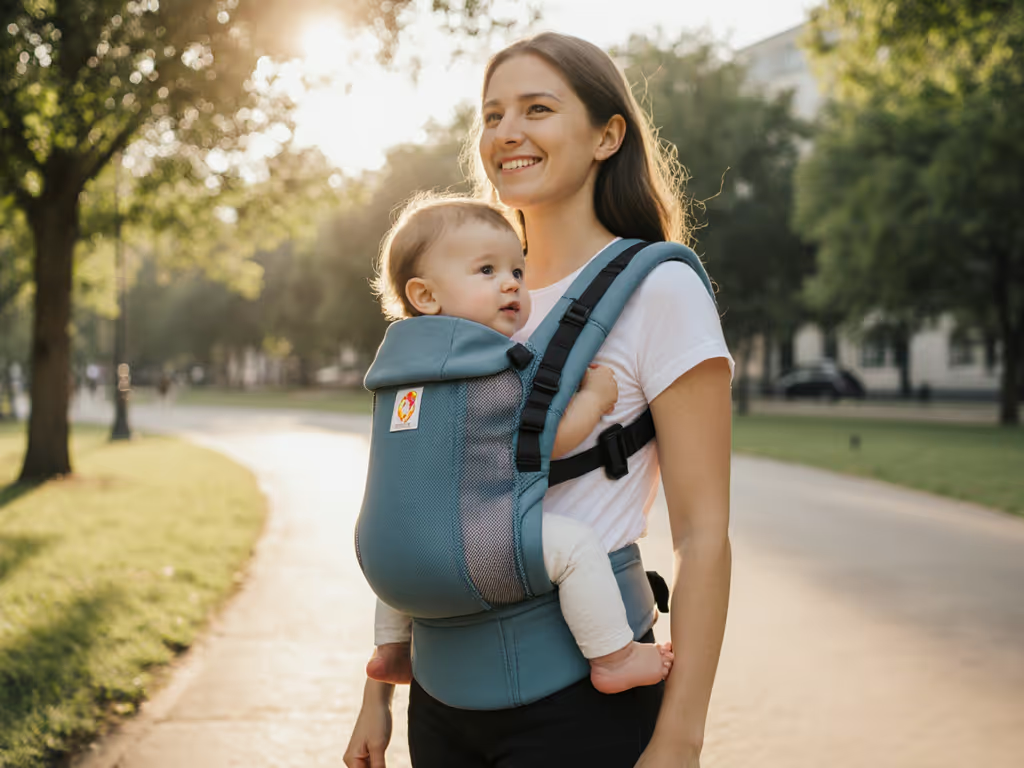
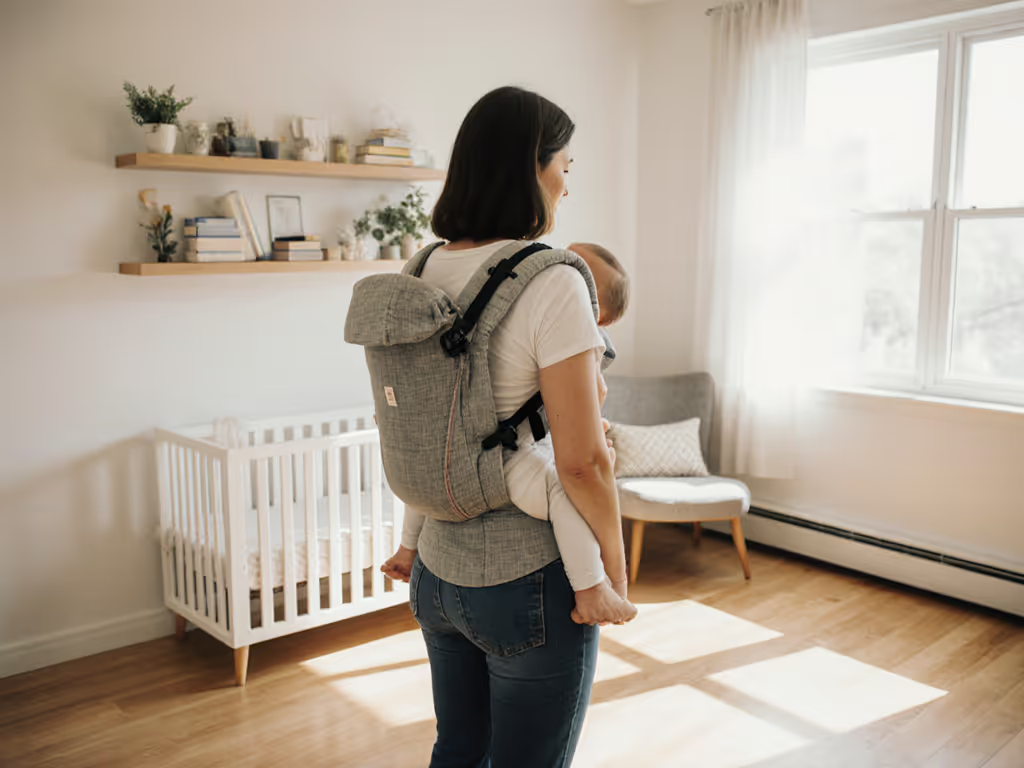
Manduca soft-structured carriers (SSCs) are buckle carriers designed to work from the newborn stage up into toddlerhood, using an ergonomic "M-position" seat that supports healthy hip development. They offer front (inward-facing), hip, and back carries, but no forward-facing option.
Most parents will encounter two main models:
- Manduca First / Classic (often just called "Manduca Baby Carrier")
- Manduca XT (the more adjustable, "grows-with-baby" version)
Both are:
- Rated from about 3.5 kg to 20 kg (roughly 7-44 lb).
- Built around a wide, padded waistband and padded shoulder straps to spread baby's weight.
- Designed to last from the first months through at least age 3-4 for many children, depending on build.
Hands-free should feel stress-free.
If you've had carriers that dug into your shoulders, slipped on your waist, or mysteriously never felt "quite right" on your torso, Manduca's structure and adjustability can be a big reset.
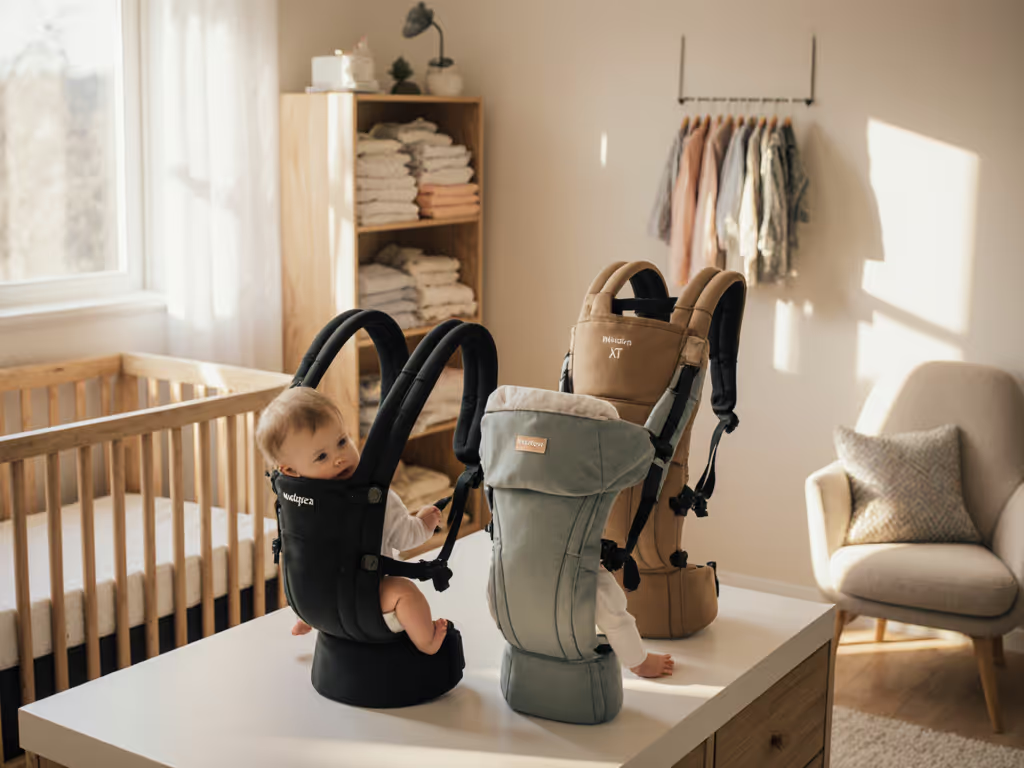
Manduca Models Compared: First vs XT
To give this Manduca carrier detailed review structure, I'll treat this as a multi-product comparison between the two main models you'll see.
High-Level Comparison
| Feature | Manduca First / Classic | Manduca XT |
|---|---|---|
| Baby weight range | 3.5-20 kg (7-44 lb) | 3.5-20 kg (7-44 lb) |
| Newborn solution | Built-in infant insert | Cinchable seat + adjustable panel width/height (no insert) |
| Panel adjustability | Fixed width; extendable height by ~7 cm | Multiple width and height settings; highly adjustable |
| Approx. use-span in practice | Newborn (with insert) to ~3-4 years (depending on child) | Newborn (~4 weeks) to ~3-4 years for many kids |
| Waist belt length | Up to ~140 cm, fits wide range of body types | Similar generous range; designed for a wide size spectrum |
| Carry positions | Front (inward), hip, back | Front (inward), hip, back |
| Overall vibe | Classic, slightly more structured newborn setup | More "grow-with-me" and tweakable; no infant insert to fuss with |
In real life: Manduca First is great if you like a clear "newborn mode" baked in, while Manduca XT shines if you want one carrier that smoothly grows with your baby without an insert.
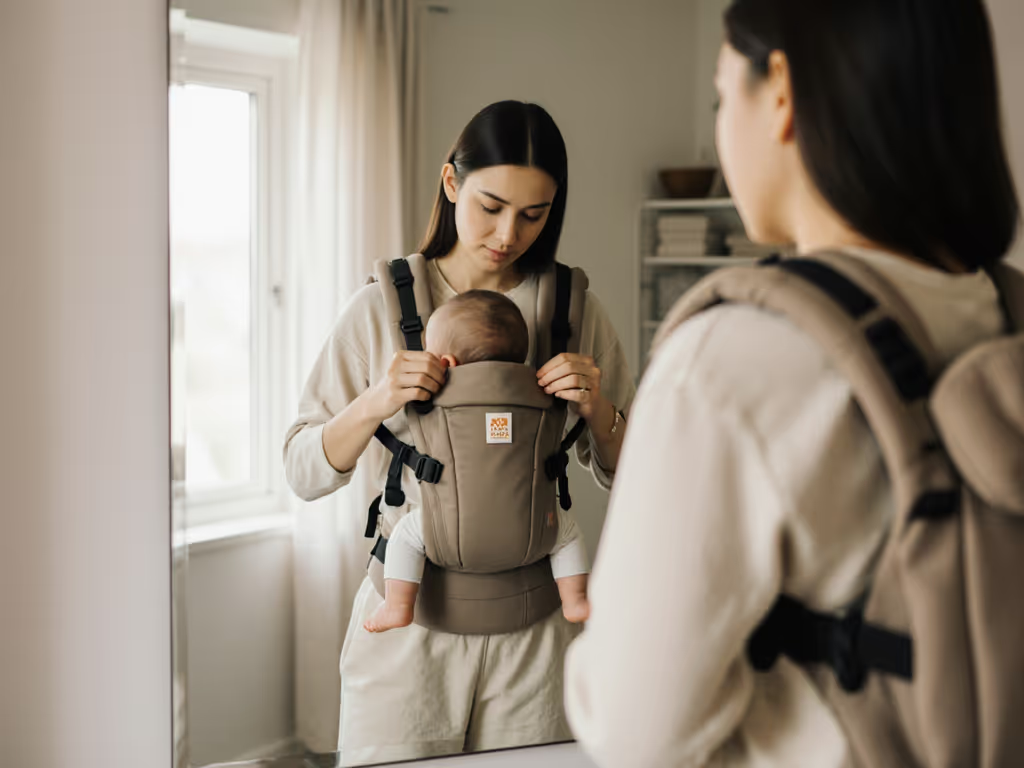
Comfort & Fit in Real Life
Manduca's big promise is comfort, for both baby and caregiver, across a wide range of body types.
For the Caregiver
Support & weight distribution
- The wide, padded waistband is designed to take pressure off your shoulders by putting most of baby's weight on your hips.
- The padded shoulder straps spread the load and can be adjusted to fit different torso lengths.
This design helps many caregivers wear comfortably for 1-2 hours or more, especially once you've dialed in the fit and baby is solidly in the 5-10 kg range.
Body diversity & sizing
- The Manduca First's waist belt can extend to around 140 cm, which allows use across a wide range of clothing sizes and body shapes.
- Babywearing educators note that the Manduca XT tends to fit caregivers roughly from UK size 6 to 24 comfortably, including many dads. If you're plus-size and comparing options, see our real fit test for plus-size parents for more size-inclusive picks.
That makes Manduca friendlier than many carriers for:
- Plus-size caregivers
- Caregivers with broader shoulders or larger chests
- Shorter or taller torsos sharing the same carrier
Postpartum-sensitive fit
If you're healing from birth or dealing with core/pelvic floor issues, waistband placement matters.
- You can wear the waistband higher on the waist (above a tender lower-belly area) or slightly lower on the hips, depending on what feels better.
- The wide band helps spread pressure instead of creating a narrow "dig-in" line.
If you have significant pain or specific medical concerns (like a hernia or serious back problems), checking with a healthcare professional before babywearing is wise.
Limited shoulder mobility & back clips
One common friction point: the chest/back clip.
- Like many buckle carriers, Manduca's straps usually meet between your shoulder blades in front carries, which can be tough if your shoulder range of motion is limited.
- Some caregivers manage this by clipping the strap first, then putting the carrier on like a T-shirt, but this can depend on body shape and flexibility.
If you know reaching behind you is a barrier, plan on a little practice or assistance at first, or consider whether a wrap or ring sling might be easier for your shoulders.
For the Baby
Ergonomic seat & hips
Manduca carriers are designed to support the "M-position", where baby's knees are higher than their bottom, and the thighs are supported to the knee joint.
- The fixed or cinchable base (depending on model) helps maintain a deep seat.
- This is widely recommended for supporting healthy hip development and is often considered appropriate for babies with or at risk of hip dysplasia, though any specific medical case should be discussed with a specialist.
Back and head support
- Manduca carriers have a tall back panel, especially once you extend the panel (Manduca First can gain roughly 7 cm in height).
- For newborns, the insert (First) or narrowed panel (XT) plus the structured fabric keep the spine supported in a gentle curve.
- A built-in sleep hood can offer extra head support for naps, particularly in back carries.
For contact naps and reflux babies who need to stay upright, the snug panel and upright carry can be a game changer, letting you support baby's airway while freeing your hands.
Manduca Features for Newborns (First vs XT)
Manduca First / Classic: Built-In Infant Insert
The Manduca First uses an integrated newborn insert so you can carry a small baby from birth.
- Manufacturer guidance typically lists use from 3.5 kg.
- The insert lifts baby higher in the panel and narrows the effective seat so tiny legs aren't over-splayed.
- Around 3 months, many babies are ready to use the carrier without the insert, depending on size and leg spread.
Newborn advantages
- Very clear "newborn mode" with visible, sewn-in structure.
- No extra purchase required for a separate insert.
- Good for caregivers who like obvious, labeled steps: insert snapped → baby placed → panel up.
Newborn drawbacks
- Extra layers around baby can feel warmer, especially in hot/humid climates.
- Some caregivers find inserts slightly fiddly or bulky once baby is at the upper end of newborn sizing.
Manduca XT: Adjustable From the Start
The Manduca XT is designed to skip the infant insert entirely, relying instead on clever adjusters.
Key newborn-friendly features:
- Adjustable seat width: You can slide adjusters to narrow the base for small babies and widen it as they grow, keeping the thighs supported but not over-stretched.
- Adjustable panel height: The body panel can be shortened for newborns and lengthened later for bigger babies and toddlers.
Babywearing educators report the Manduca XT working well from around 7 lb (3.5 kg), i.e., typical full-term newborns, and continuing comfortably into toddlerhood.
Newborn advantages
- No insert: fewer layers, often cooler and less bulky.
- Very precise fit as baby grows; great for long-term use.
- Fewer "parts" to remember, everything is built into the fabric.
Newborn drawbacks
- The sliding cinchers and snaps can feel like "a lot" the first time you set them up.
- You'll likely want one or two dedicated practice sessions (without a crying baby) to lock in your preferred settings.
Fast, calm setups turn chaos into competence you can feel.
In both models, once you've dialed in the newborn fit, you can usually get baby in and out in under a minute with practice. Early on, give yourself extra time, speed comes from repetition, not rushing.
Manduca Carrier Sizing Guide (Caregiver & Baby)
Because usability uncertainty is such a common pain point, let's turn this into a practical, body-aware Manduca carrier sizing guide.
1. Does Manduca Fit Your Body?
Waist & clothing size
- Manduca waist belts extend to around 140 cm, which typically covers many bodies from straight sizes through plus-size ranges.
- The Manduca XT is a go-to recommendation for caregivers from UK size 6 to 24.
Checkpoints:
- Measure around the spot you'd prefer to wear the waistband (high waist vs hips).
- If your waist measurement is under ~130-135 cm, you will likely have room to spare on the default belt.
- If you're near that upper range, check whether your local retailer offers a try-on or fit consult to confirm.
Torso length & shoulders
- Shorter caregivers often appreciate the XT's adjustability because you can shorten the panel and straps.
- Broader shoulders and larger chests usually do well because of the wide strap-attachment angles and generous webbing.
If multiple caregivers share the carrier, consider marking your strap settings with a tiny piece of thread or washable marker, so you can quickly return to your "home" settings.
2. Is Your Baby in the Safe Use Range?
Weight and age
- Manduca First and Manduca XT are both rated from 3.5 kg to 20 kg (roughly 7-44 lb).
- Many families find practical use from the first few weeks up to at least age 3, sometimes longer depending on child size and tolerance.
Clothing size as a clue
- Newborns in the 50-56 cm clothing range usually use newborn settings/insert.
- Around 62-68 cm, many babies transition to the next seat width or out of the insert, depending on model.
Use your baby's knee-to-knee span as the real guide: the fabric should support from one knee to the other, without pushing the knees uncomfortably wide.
3. Quick Fit-Check List (Every Time You Wear)
Think of this as your repeatable safety checkpoint: For a deeper refresher, follow the TICKS babywearing safety checklist.
- Airway: Baby's nose and mouth are visible and unobstructed; chin is off chest.
- Height: You can easily kiss the top of baby's head without slouching.
- Seat: Bottom is in a deep "bucket," knees higher than bum, fabric from knee to knee.
- Tightness: No gapping, if you lean forward, baby stays snug to your chest.
- Comfort: No digging on shoulders or waist; you can breathe and move easily.
Repeat this checklist until it lives in your muscle memory. Confidence builds from clear, consistent checks.
Setup-Time & Learning Curve (With Gentle, Time-Stamped Steps)
Manduca is not the fastest first-day carrier, but it can become a sub-60-second grab-and-go once you've practiced.
Here's a realistic front carry learning sequence, assuming you've already adjusted the seat width/insert for your baby.
Phase 1: First Ever Try (Plan 5-8 Minutes)
00:00-01:00 – Waist setup
- Buckle the waistband around your preferred spot (high waist for smaller babies, lower for older ones).
- Tighten until snug, but you can still slide a couple of fingers inside.
01:00-03:00 – Shoulder straps
- Put the panel against your torso.
- Slip on one shoulder strap at a time.
- Clip the chest/back strap (you may need a mirror or a helper the first times).
03:00-05:00 – Adding baby
- Unbuckle and lower the panel without changing straps.
- Pick up baby, high on your chest, in an upright position.
- Bring the panel up over baby's back; secure buckles.
- Tighten until snug, then do your safety checklist.
Phase 2: After a Few Days (90-120 Seconds)
With practice, you'll likely:
- Buckle the waist, scoop baby up, bring the panel over, then slip straps on in one smooth sequence.
- Adjust only minor slack.
Phase 3: Muscle Memory (30-60 Seconds)
Once your hands "know the path," Manduca can feel nearly as fast as a clip-and-go stroller harness. This is when having a reliable, repeatable sequence pays off, especially during fussy evenings or 2 a.m. outfit changes.
Fast, calm setups turn chaos into competence you can feel.
If a previous carrier left you flustered, consider scheduling 2-3 five-minute practice sessions with a doll or rolled-up towel before trying with a hungry or overtired baby.
Climate & Activity: How Manduca Handles Real Life
Heat & Humidity
Manduca carriers are typically made from sturdy cotton or organic cotton blends.
Pros in warm weather:
- Natural fibers often feel softer and less plasticky than some heavily synthetic carriers.
Cons in warm weather:
- The structured panel and insert (in the First) can feel warm in high heat or humidity, especially during close contact. Get practical hot-weather adjustments in our summer babywearing tips to keep you both cooler.
Tips for hot climates:
- Dress baby in one light layer (think: one fewer layer than you're wearing).
- Use a lightweight sunhat with a brim but open sides.
- Take breaks indoors or in the shade when either of you feels sweaty or flushed.
Cold, Wind & Rain Layers
Manduca works well under a roomy coat or with a dedicated babywearing cover.
- Keep the carrier close to your body; layer over both of you when possible.
- Avoid bulky snowsuits in the carrier, use thin, warm layers instead so straps can still fit snugly.
Errands, Walks & Travel
Parents often choose Manduca for:
- Daily walks and daycare runs, thanks to the supportive waistband and back panel.
- Travel and airports, where hands-free boarding and naps on the go matter.
- Housework and contact naps, especially for refluxy babies who need to stay upright.
For longer hikes or several-hour wear, the structured support and broad waist can be more comfortable than a simple fabric wrap, especially once baby is heavier.
Manduca Carrier Pros and Cons
This Manduca carrier pros and cons breakdown blends published reviews with real-life use patterns.
Pros
- Long use range: Works from roughly 3.5-20 kg, spanning newborn to toddler for many families.
- Ergonomic, hip-friendly seat: Supports the M-position with knee-to-knee support.
- Strong, supportive waistband: Shifts weight to hips; comfortable for many with back sensitivity.
- Body-diverse fit: Generous waist and strap lengths; fits a wide range of clothing sizes and shapes.
- Multiple carry positions: Front (inward), hip, and back once baby has sufficient head control.
- Newborn-ready: Either via built-in insert (First) or adjustable panel/seat (XT).
- Organic/natural materials: Many Manduca models use organic cotton, which appeals to sustainability-minded families.
Cons
- Can run warm: Structured cotton plus inserts may feel hot in summer or tropical climates.
- Learning curve on back clip: Some caregivers struggle with the behind-the-shoulder-blade clip, particularly with limited shoulder mobility.
- No forward-facing position: Inward-facing only; if you're set on outward-facing, this may feel limiting.
- Bulk compared with minimalist wraps: Heavier and more structured than a thin wrap or ring sling, slightly less packable.
- Newborn complexity: The insert (First) or adjusters (XT) can feel fussy at first, especially with an unsettled newborn.
Is Manduca Worth It?
Let's tackle is Manduca worth it by scenario.
Manduca Is Likely Worth It If…
- You want one main carrier to last from newborn through at least age 2-3.
- You value ergonomic positioning and a supportive waistband over ultra-minimalist looks.
- Multiple caregivers with different body types will share the carrier.
- You mostly carry inward-facing and don't mind skipping forward-facing.
- You live with mixed seasons. Manduca is particularly comfortable in spring, autumn, and cooler days.
The Manduca XT is especially worth considering if you want a highly adjustable, future-proof carrier that grows smoothly with baby without inserts.
Manduca May Not Be Your Best Match If…
- You live in very hot, humid weather most of the year and run warm yourself.
- You have severely limited shoulder mobility and know back clips are a deal-breaker.
- You absolutely want forward-facing carries.
- You prefer extremely low-profile, stretchy wraps and don't need long-term toddler support.
In those cases, pairing a cooler wrap or mesh carrier for summer with a more structured carrier for cooler months may be a better strategy.
How to Choose Your Manduca Model (and Your Next Step)
If Manduca is on your short list, here's a simple decision path.
Step 1: Pick Your Model by Baby's Age & Your Brain Style
-
You love clear "modes" and labels; baby is a true newborn:
- Manduca First / Classic gives you an obvious newborn insert and then a clear transition when baby is bigger.
-
You prefer one adaptable setup from day one to toddler:
- Manduca XT lets you dial in width and height as you go, avoiding inserts and extra pieces.
Step 2: Match to Your Body & Climate
- Take a soft tape and measure your preferred waistband spot.
- Compare with Manduca's generous ~140 cm belt range.
- Consider your climate:
- If you're in a temperate/cool region, Manduca's cotton structure is a strength.
- In hot/humid climates, plan on light layering and strategic shade, or consider pairing Manduca with a lighter, mesh-style carrier for peak summer months.
Step 3: Plan Your Practice Window
Before you're desperate for a contact nap:
- Schedule two 10-minute practice blocks with a doll or rolled blanket.
- Practice buckling the waist, bringing the panel up, and clipping the back strap until the sequence feels smoother.
- Do your safety checklist out loud, airway, height, seat, tightness, comfort, until it's routine.
Step 4: Get a Fit Check
- If possible, visit a local babywearing consultant or community group for in-person tweaks.
- Many retailers and educators worldwide offer virtual fit checks using video calls, ideal if you can't get to a meetup.
Even a 15-minute fit check can dramatically improve comfort and confidence.
Actionable Next Step
If Manduca sounds like it might be your match, your next best move is simple:
- Decide your model (First vs XT) based on how you want to handle the newborn stage.
- Measure your waist and note your climate, write both down.
- Book or plan a fit session (with a professional, a trusted friend who babywears, or a mirror + phone camera) within the next week.
Once you've tried the carrier on your own body with your own baby, and run through a few calm, repeatable steps, you'll know if Manduca truly earns a place as your everyday, hands-free helper.
Hands-free should feel stress-free, and with the right setup, Manduca can get you there.
Related Articles