Manduca Baby Carrier: Complete Fit & Safety Review
By Maya Ortiz • 24th Apr
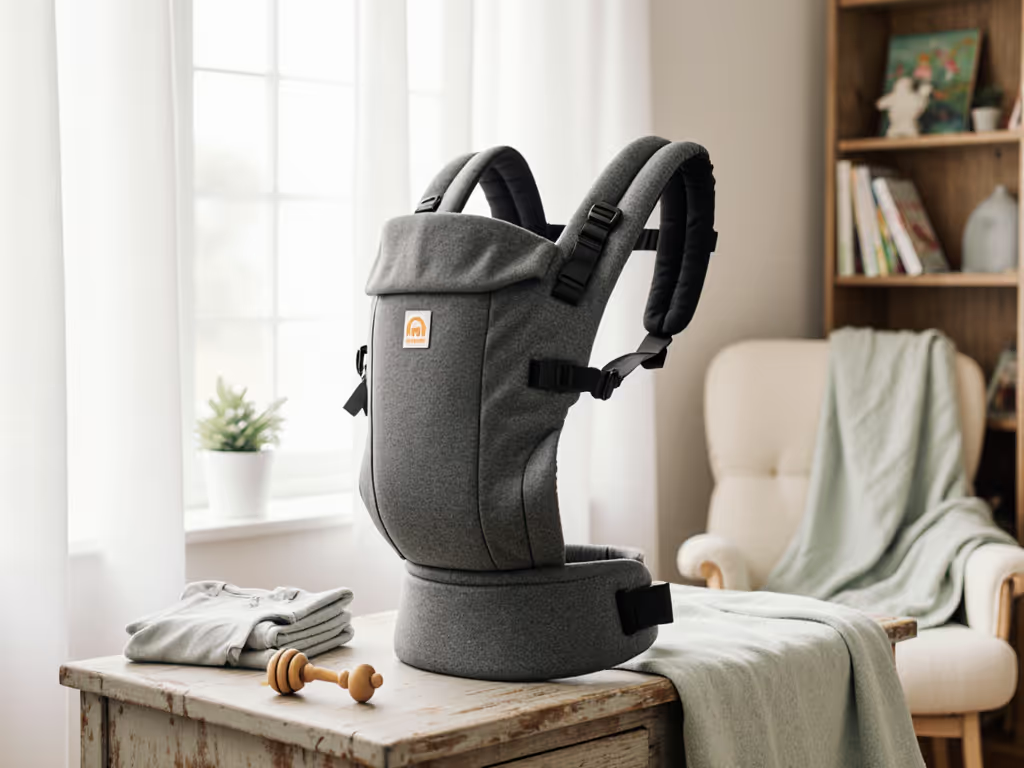
The Manduca baby carrier review represents a practical starting point for caregivers weighing a structured, multi-position option. This detailed review examines fit architecture, standardized comfort metrics, safety positioning, and real-world usability across body types and climate conditions, because carrier selection shouldn't hinge on marketing alone. For a step-by-step safety checklist, see our TICKS positioning guide.
Does the Manduca Fit From Newborn to Toddler?
Yes. The Manduca (standard model) accommodates 3.5kg (7 lbs) to approximately 20kg (44 lbs), spanning roughly newborn to age four[3]. The XT model achieves the same range without requiring a separate newborn insert; instead, you adjust the seat width from 16cm to 50cm using a sliding Velcro panel[1]. This design choice eliminates a common friction point: many carriers require a fiddly, easy-to-lose insert that parents forget or lose mid-trip. For newborn-specific safety checks on head and hip support, see our Newborn Carrier Safety guide.
The adjustment mechanism uses a "bucket-shaped" panel[4]. As seat width narrows for a newborn, the height simultaneously adjusts, meaning the carrier proportionally fits small babies without floating or slumping. Soft cushioning runs under the legs at every width setting[1], preventing pressure lines that signal poor thigh support (a measurable indicator of ergonomic positioning).
What Does "Hip-Healthy Position" Actually Mean Here?
The carrier positions baby's bum lower than the knees (the M-position), with legs supported by padding[4]. This geometry distributes weight across the posterior chain rather than concentrating load on the femoral head, which is the alignment pediatric guidelines recommend for hip development. The extending height adjustment follows the same principle: as your child grows taller, the backrest grows proportionally, maintaining that supported profile[4].
How Long Does Setup Take?
Front carrying in the Manduca requires a learning curve. You thread shoulder straps through a pulley system, cinch the waistband (which feeds via side-mounted adjustment rather than shoulder-blade tugging), and clip the waist buckle[5]. Reviewers report that once the carrier is sized for your body, subsequent put-ons are straightforward[4]. However, if two caregivers of different builds share it, re-adjustments add 5 to 10 minutes per swap.
The waist buckle is a 3-point design that requires two hands to open, a safety feature that prevents accidental release but also means you cannot undo it one-handed if, for example, you have a shoulder injury or are managing a toddler simultaneously[3].
For back carries, the learning curve steepens. Most parents take several practice runs before the positioning feels stable. Hip carries are possible but described by users as a "compromise" rather than optimally comfortable[1].
Manduca Carrier Pros and Cons
Strengths
-
Weight distribution architecture: The carrier uses a hiking-pack concept, routing baby's mass across your hips and lower torso rather than concentrating it on shoulders[2]. This architecture is measurable; parents report a "weightless" sensation when the hip pad is thick and fully padded around the waistband[2].
-
Adjustable shoulder straps and waistband: Accommodates caregivers from petite frames to XXL+, with a pulley strap system that avoids shoulder-blade pinching[5].
-
Portable and lightweight: 600 grams (1.3 lbs) means it's feasible for travel or as a secondary carrier[5].
-
Longevity: Built to withstand newborn-to-preschooler wear. Users report multi-year durability, and the carrier qualifies for a three-year warranty when registered[5].
-
M-position seating: The bucket design and leg cushioning maintain hip-healthy positioning across the full size range[4].
Weaknesses
-
Steep back-carry learning curve: Hip and back carrying positions require practice, and some parents never feel confident with them[3].
-
No front-facing outward option: The carrier does not support front-facing outward carry. Arms-out positioning (from 4 to 5 months+) is offered as a non-restrictive alternative, but some caregivers specifically want face-out capability[1].
-
Sunshade design: The integrated sunshade is noted to enclose the baby considerably, which some parents find restrictive during hot weather[3].
-
Two-handed waist-buckle release: The safety feature prevents accidental undoing but complicates rapid adjustments or single-handed use if you have mobility constraints or are managing another child[3].
-
Strap-feeding system mastery: Unlike simpler carriers, the pulley-fed shoulder straps require a brief tutorial to avoid tangling or feeding straps on the wrong side[5].
Is Manduca Worth It?
That depends on your use case and body profile.
If you are a caregiver who plans to wear your child for extended windows (2 to 4 hours on errands, park trips, or daycare commutes), the hip-load distribution is measurably worth the investment. The warranty and multi-year durability mean this is a "buy once, keep" item for many families[4].
If your torso is short, your shoulders are broad, or you're plus-size, the adjustability range is a genuine differentiator, and the XT model's 16 to 50 cm seat width and extended strap options fit bodies that standard carriers miss[1][4].
If you want a quick-deploy carrier for sub-10-minute errands, the learning curve may frustrate you. Data beats vibes, and setup friction is a quantifiable cost. Pair the Manduca with a faster alternative (a ring sling or quick-clip carrier) if speed matters.
Manduca Carrier Sizing Guide
Baby Size
-
Newborn (3.5 to 6 kg): Adjust the seat width to the narrowest setting (16cm). The height automatically narrows. Leg padding ensures thighs stay cushioned.
-
4 to 12 months (6 to 10 kg): Gradually widen the seat as your baby grows. The sliding Velcro makes incremental adjustments painless.
-
Toddler (12 to 20 kg): Maximum width (50cm). At this size, the backrest height is at full extension, supporting a taller child's full torso.
Caregiver Body Sizing
The pulley straps adjust independently, so one caregiver may lengthen shoulders while another shortens them. The waistband cinches via side-slide adjustment and is designed to fit hips from petite (approx. 24" waist) to 4XL+ (approx. 48" waist).
Related Articles