BabyBjorn Mini Review: Babywearing for Quick Errands
By Linh Pham • 23rd Feb

You're standing at the grocery store entrance with a newborn and a diaper bag, realizing you left the stroller in the car. The errand will take fifteen minutes. You need your hands free, but your current carrier (oversized, bulky, with a complex strap system) feels like overkill for a quick trip. The setup alone would eat up half your shopping time. This moment, repeated across a hundred small daily errands, reveals a gap most caregivers face: babywearing for quick errands requires a carrier designed for speed, not complexity. For other fast-on options, see our errand-ready carrier comparison.
The reality of modern caregiving is fragmented. You're not hiking remote trails on Saturdays or traveling internationally every month. Instead, you're managing the micro-moments: grocery runs, coffee outings, dropping an older sibling at school, walking to the park, or moving around the house during contact naps. A carrier optimized for these scenarios exists, but only if it prioritizes ease of setup and lightweight portability without sacrificing the support your body and baby both deserve.
The BabyBjorn Mini addresses this directly. The Mini's specific design choices answer the quick-errand problem, with clear strengths and genuine limits.
The Quick-Errand Problem: Why Gear Mismatch Matters
When a carrier fits the caregiver, babies settle faster. That's not just comfort, it's mutual. A parent wearing a bulky, poorly adjusted carrier develops postural strain within minutes; the baby senses that tension and fusses. The errand stalls. You return home defeated, swearing you'll "just use the stroller next time."
Three weeks postpartum, my own back ached after a grocery run in a soft wrap. I'd measured panel height and seat width at home, then repeated the trip in a structured carrier with micro-adjust straps. Ten minutes in, pain eased and posture improved. That single experience shaped how I evaluate any carrier: Does the fit process itself teach you something? Can you adjust on the fly without removing the baby? Does the physical design encourage good spinal alignment, or does it demand you hunch to see your infant?
The search for a quick-errand carrier often becomes an agitation spiral. New parents test one bulky structured carrier, find it takes four minutes to strap on, discover it won't fit in a diaper bag, and give up on babywearing for errands altogether. Others grab a stretchy wrap, love the coziness for newborns, then watch it absorb sweat, take hours to dry, and accumulate pet hair. Comfort is a posture achieved, not a promise on packaging. A carrier that feels soft must also deliver the micro-adjustability and setup speed that real life demands.
BabyBjorn Mini: Design for Simplicity
The BabyBjorn Mini approaches the quick-errand problem with deliberate constraint. It is not a "do everything" carrier. Instead, it is engineered for a specific job: keeping newborns and small infants close with minimal friction.
Core Specifications
Ultra-lightness is the first marker. At approximately 1 pound, the Mini weighs 50% less than other BabyBjorn structured carriers. This single fact changes the ergonomic calculus. A caregiver with shoulder sensitivity, postpartum back tenderness, or chronic pain can wear the Mini for a one-hour errand without the cumulative strain that heavier carriers impose. The lighter load means less load on your supporting muscles and joints (a practical accommodation that rarely appears in carrier marketing but should).
Dimensions matter equally. The Mini is 30% smaller in overall footprint than BabyBjorn's larger structured models. This translates to real-world portability: it actually fits in a diaper bag. It folds compactly enough for a suitcase. It doesn't bulge awkwardly under a lightweight jacket. For caregivers who resent the visual and physical bulk of "gear," the Mini's minimal silhouette is an inclusive design choice.
Size range is inclusive by necessity. The adjustable straps accommodate caregivers from XS to XXL. This means a petite parent and a broad-shouldered partner can both wear the same carrier without lengthy re-rigging. For shared-parenting households, foster parents, or grandparents stepping in, this flexibility eliminates a common frustration: watching a carrier "fit" one caregiver but create shoulder-blade gaps or waist pressure on another.
Weight Limits and Positioning
The Mini supports 7-25 pounds, with a caveat: babies under 10 pounds can be worn in leg-loop positions for additional support. Once a baby reaches approximately 10 pounds and demonstrates neck control, the leg loops can be opened, allowing greater hip freedom. This graduated design honors the reality that a 7-pound newborn and a 20-pound infant have different postural needs.
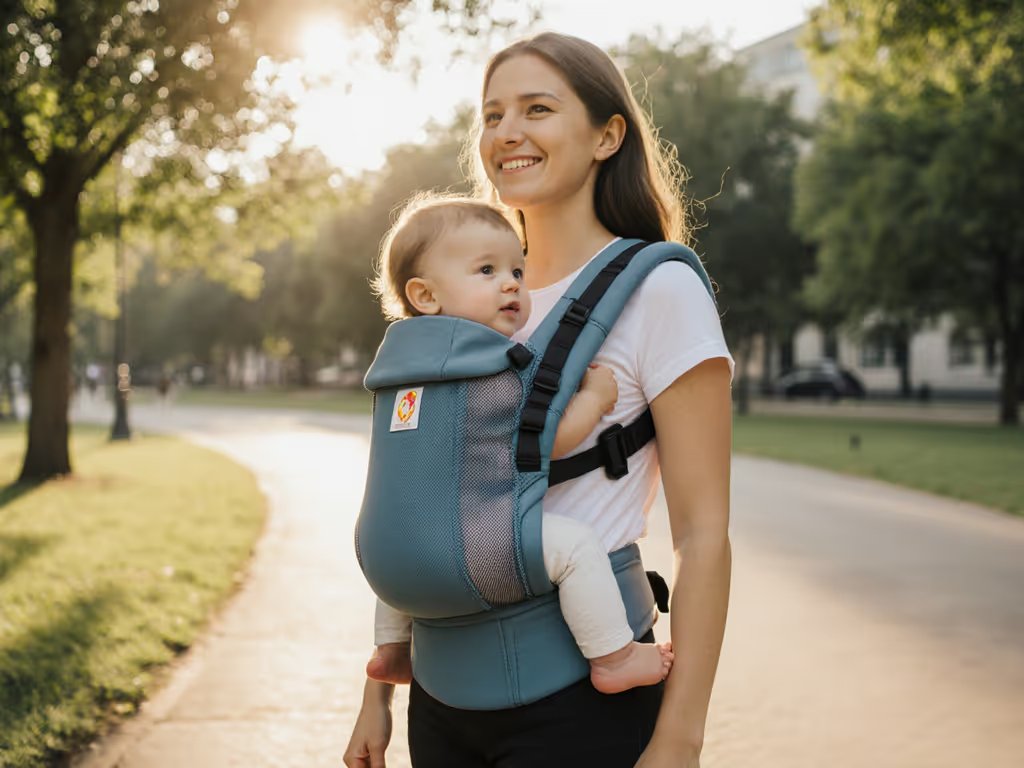
Three front-carrying positions address different caregiving moments: high inward (for newborns who need upright heads and chest support), low inward (for slightly older infants who benefit from a lower, more autonomous position), and outward facing (typically around 5 months, when babies gain neck control and want environmental engagement). Each position requires a simple strap adjustment, not a structural reconfiguration.
Critically, the Mini does not offer back-carry capability. If you need back carry and year-round comfort, our Lillebaby Complete All Seasons review covers a better fit for that use case. This is constraint by design. If your routine includes hiking, long trail walks, or sustained heavy-load carrying, the Mini is not the solution. Acknowledging this boundary upfront is honest; it prevents wasted money and mismatched expectations. Instead, back-carry capacity signals that a different carrier (a structured multi-position model) is a better fit for that particular use case.
Materials and Heat Management
BabyBjorn offers multiple fabric options, each tuned for different climates and sensitivities. The Jersey fabric is "snugly soft," designed to feel like your baby's clothing (stretchy, breathable, and gentle on skin). For caregivers managing heat sensitivity, humidity, or a baby prone to heat rash, this cotton blend dries quickly and allows air circulation.
The 3D Mesh variant is engineered for humid or very warm climates, with moisture-wicking properties that prevent the clammy feeling some caregivers report in stretchy wraps. For hot-weather strategies beyond fabric choice, read our summer babywearing tips. The Cotton Satin option, BSI-certified and featuring a thinner middle layer, balances softness with structure, appealing to caregivers seeking a middle-ground aesthetic.
This material diversity matters. A "one-size-fits-all" carrier often becomes a "one-that-works-in-spring-only" reality. The Mini's fabric options respect that caregivers live in different climates, and thermal comfort affects long-term carrier use.
Real-World Usability: The Quick-Errand Test
Setup Speed and Confidence
The highest praise the Mini receives is paradoxically the simplest: it is genuinely easy to put on and take off, even with a sleeping baby in your arms. No complex buckle sequences. No over-the-shoulder threading. The straps fasten securely, and the whole process takes seconds.
This speed is not incidental. When you have a fussy newborn who has finally dozed off, and you need to transfer to the car for a quick appointment, a carrier that can be donned without waking the infant is not a luxury, it's foundational to usability. One reviewer noted that the carrier's front-opening design allows you to "lift out your baby" without disturbing their sleep, then slip them back in with minimal repositioning. This is the difference between babywearing becoming routine and babywearing feeling like a burden.
Setup Checklist for Proper Positioning
Even with a user-friendly design, proper positioning requires intentional micro-adjustments. Use this checklist each time you wear the Mini: Before you start, review our newborn carrier safety guide for neck and hip support basics.
- Chin-to-chest rule: Your baby's chin should rest off your chest, with their airway clear and visible. Never allow the chin to dip into the soft fabric, which restricts breathing.
- Head support check: For newborns, ensure the fabric supports the back and sides of the head. If your baby's head lolls unsupported, tighten the upper straps or adjust to a higher inward position.
- Seat depth: Your baby's bottom should sit comfortably in the fabric "seat," with thighs supported from knee to bottom, not dangling through leg holes. If the fabric gaps around the hips, lower the baby slightly or increase strap tension.
- Strap tension: The straps should feel snug enough that you cannot slip a finger underneath at the shoulders, but not so tight that they leave marks or restrict your breathing.
- Micro-adjust, then breathe. After fastening, take a deep breath. If your rib cage feels compressed, loosen the straps by half an inch. Comfort is mutual, your airflow matters as much as your baby's.
Activity Suitability
The Mini excels in specific contexts:
Quick errands (15-45 minutes). Grocery runs, coffee outings, and short walks are where the Mini shines. The lightweight design and compact fold make it the pragmatic choice for "I need to pop out for twenty minutes without the stroller."
Household circulation. During contact naps or clingy phases, the Mini allows you to move between rooms, prepare meals, and manage older siblings without strapping into a multi-minute setup. Its minimal bulk means you're not overheating or banging into doorways.
Travel and air transit. The narrow profile fits comfortably in airplane seats, and the compact fold stashes easily in overhead compartments or under the seat. For caregivers who travel regularly with babies under 25 pounds, this is a genuine advantage over bulkier structured carriers.
Late-night feeding sessions. During cluster-feeding phases, the ease of one-handed adjustment and sleeping-baby transfer reduces nighttime friction. You can keep your baby napping against your chest between feedings without the stimulation of being moved to a crib and back.
BabyBjorn Mini Pros and Cons: Honest Trade-Offs
Strengths
- True portability. Unlike most structured carriers, it genuinely folds small enough for a diaper bag.
- Minimal learning curve. A first-time parent can be wearing their baby confidently in under five minutes.
- Lightweight design reduces caregiver strain, particularly for parents with shoulder, neck, or postpartum back sensitivity.
- Inclusive size range (XS-XXL) accommodates body diversity without expensive custom orders.
- Soft, breathable fabrics come in climate-appropriate options (Jersey, 3D Mesh, Cotton Satin).
- Head and neck support for newborns is built into the strap height and fabric design.
- Easy one-handed adjustments allow you to shift your baby's position without removing them.
- Front-opening design enables zero-disturbance transfers to and from sleep.
Limitations
- Weight and age cap at 25 pounds. Once your baby exceeds this, you must transition to a different carrier. For families with larger infants or toddlers, this limits the Mini's "all-in-one" utility.
- No back-carry capability. Hiking, sustained outdoor walks, or hands-free outdoor activities for longer periods require a different solution.
- Less cozy for newborns than a stretchy wrap. The structured fabric, while supportive, doesn't offer the swaddled, enveloped sensation that some newborns crave. If your baby is soothed by deep cocoon-like pressure, a soft wrap may feel more natural during the first weeks.
- Slightly warmer than 3D Mesh alternatives in very hot climates, though still more breathable than many other carriers.
- Straps and padding (though minimal) make it less packable than an unstructured wrap.
- Not designed for tandem or back-and-front carrying, which some larger families need.
How the Mini Fits Your Real Life
Consider the Mini the specialized tool for a specific job, not the "perfect carrier for everything." A two-carrier strategy often emerges as optimal:
- Quick-errand carrier: The BabyBjorn Mini (setup: under 60 seconds; weight: 1 lb; portability: excellent).
- Longer-wear or growth-stage carrier: A structured model with back-carry capability, higher weight limits, and more padding for multi-hour use or transition to toddlerhood.
This two-carrier approach eliminates the compromise of choosing a single "average" carrier that does everything adequately but nothing well. Instead, you invest in precision: one carrier that excels at the everyday errand and another that handles the longer journey or later stage.
For caregivers committed to minimalism, the Mini's extended age range (newborn to approximately 18-24 months) may stretch its utility long enough to be a practical single investment, but honest reflection on your actual routines (Do you hike? Do you do long walks? Will back-carry matter?) should guide that decision.
Size and Fit Validation: Building Confidence
Measurable fit confidence reduces the anxiety of babywearing. Before purchasing or donning the Mini for the first time, validate these markers:
- Torso measurement: Measure from the base of your neck to your natural waist. If your torso is shorter (under 20 inches) or very long (over 24 inches), ensure the carrier's panel height aligns with your proportions. Contact BabyBjorn's support for confirmation if uncertain.
- Strap length: With the straps fully loosened, can you slip them over your shoulders? With fully tightened, do they restrict your breathing or create shoulder-blade gaps? The XS-XXL range typically accommodates this, but body-atypical proportions (very broad shoulders, very narrow hips, or significant scoliosis) may need clarification.
- Baby's seat depth: For newborns, ensure the fabric supports the entire bottom-to-knee span without gapping. As your baby grows, adjust leg-loop opening and strap tension to maintain proper thigh support.
- Trial errand test: Once received, do a 15-minute trial during a short, low-stress outing (a walk around your neighborhood, not a busy mall). Notice if any pressure points emerge, if your posture feels neutral, and if your baby settles within the fabric.
Actionable Next Steps
If the quick-errand babywearing problem resonates with you, and the BabyBjorn Mini's strengths align with your lifestyle, move forward with intention:
Step 1: Clarify your actual use case. Over the next week, note your typical outings: duration, activity type, climate. Does the Mini's 7-25-pound range and 15-45-minute optimal window match? If half your outings are multi-hour hikes, reassess.
Step 2: Measure your fit markers. Torso length, shoulder width, and strap-reach capability. Cross-reference with BabyBjorn's size guide or contact their support team. Fit validation before purchase prevents costly returns.
Step 3: Choose your fabric intentionally. Research your climate: Jersey for temperate or varied weather, 3D Mesh for heat and humidity, Cotton Satin for a balance. One reviewer noted the Jersey's breathability and quick-dry time were decisive for her hot-climate home.
Step 4: Plan your two-carrier strategy (optional but recommended). Identify which carrier will handle longer outings, growth stages, or back-carry needs. This positions the Mini as an expert tool, not a failed "all-in-one."
Step 5: Practice positioning during a calm moment at home. Review the chin-to-chest, head-support, and seat-depth checklist before your first outing. Micro-adjust, then breathe. Familiarity builds confidence.
Step 6: Join communities for fit validation. Many babywearing forums and local groups offer fit checks via photo or virtual meetup. Seeing your carrier worn correctly by experienced caregivers reduces doubt.
The BabyBjorn Mini is not the answer to every babywearing question, but it is a precise answer to the quick-errand problem. When a carrier fits the caregiver (in size, in weight, in setup time, in honest capability boundaries) both parent and baby settle. Your errands become seamless, not stressful. That calm is worth the intentionality of choosing right.
Related Articles