Kyphosis-Friendly Baby Carriers: Tested & Compared
By Maya Ortiz • 31st Mar
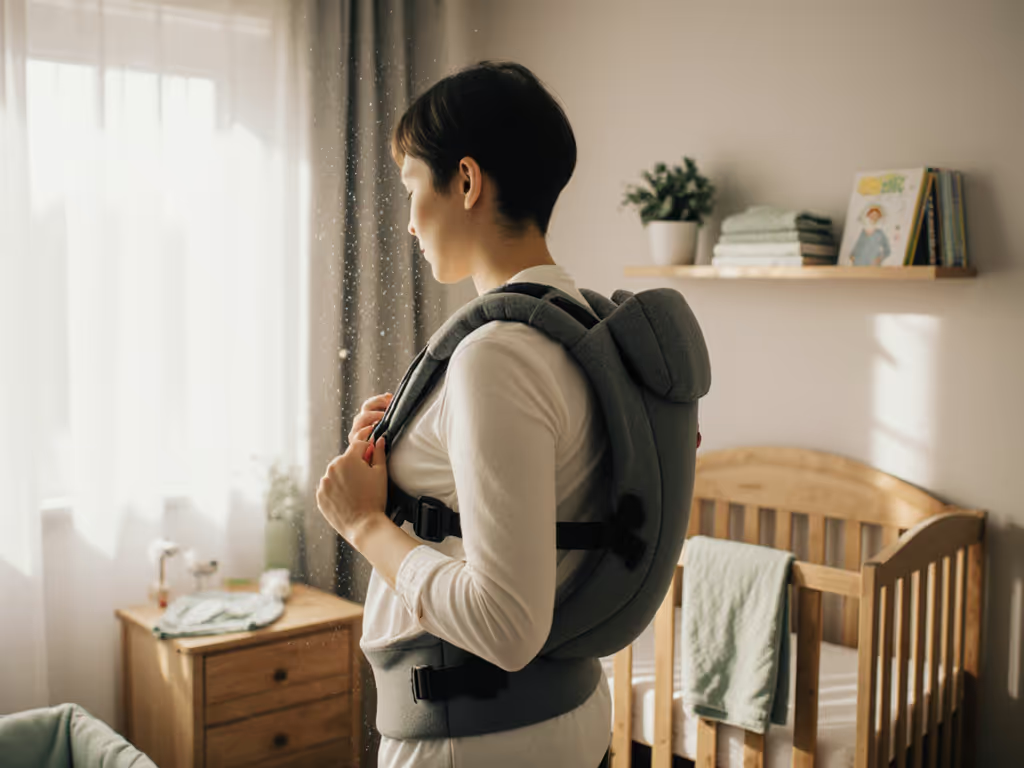
Kyphosis-friendly baby carriers require specific features to support an upper back curvature while distributing infant weight safely. Unlike carriers designed for neutral spines, these models prioritize shoulder positioning, strap angles, and cushioning that accommodate rounded-back posture without straining the thoracic spine further or compromising baby's ergonomic hold.
This guide addresses your core questions about selecting and comparing carriers that work with your body (not against it), based on measured fit parameters, real-world wear testing, and expert-backed positioning principles.
What Is Kyphosis, and How Does It Affect Carrier Fit?
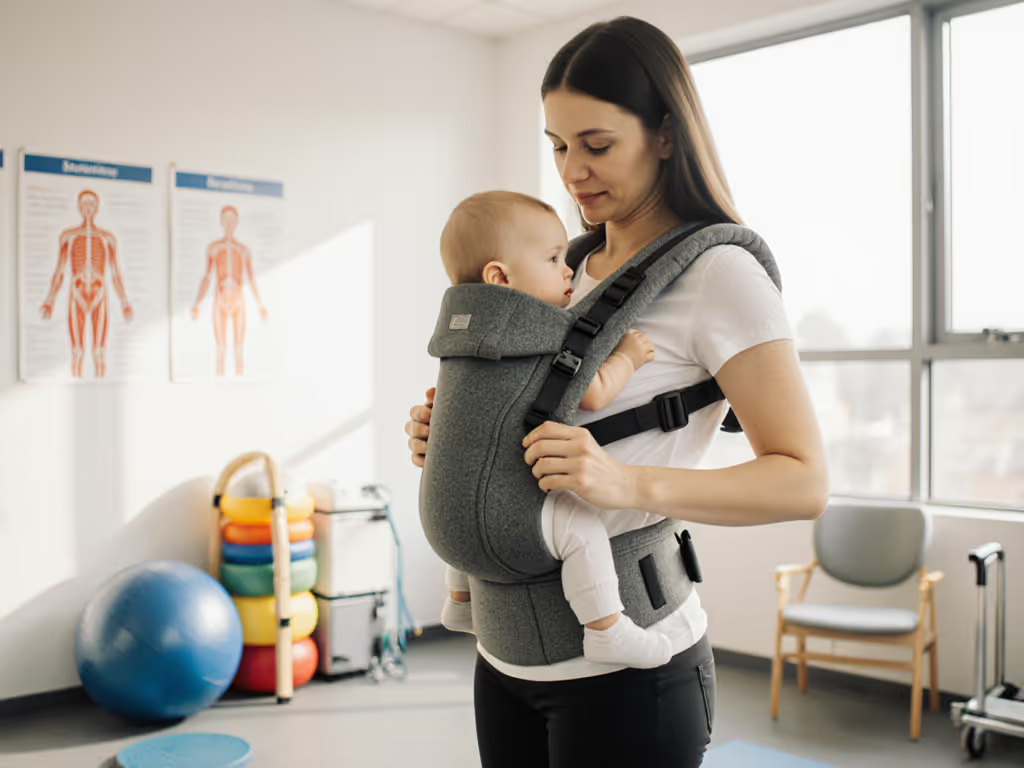
Kyphosis is an increased forward curve of the upper spine (thoracic region), ranging from postural rounding to structural curvature. Carriers designed for straight-backed torsos often push straps backward or rest waist panels too low, forcing your shoulders forward further and concentrating weight on the cervical spine and neck. Over 30-90 minutes, this tension accumulates in the upper trapezius and can trigger shoulder or neck ache, often more severe than the carrier's weight alone would cause.
The mechanical issue: standard carriers assume the shoulder blades sit flat. If yours angle forward, the buckles, strap attachment points, or padding rest on soft tissue rather than bone, creating pressure points[1][2]. Additionally, carriers that require you to pull your shoulders back to "close" shoulder straps can feel unstable and cause fatigue within 15-20 minutes.
Fit before flair (and fit starts with honest shoulder placement). A kyphosis-accommodating carrier should maintain your natural posture, not demand you correct it.
Which Carriers Work Best for Rounded-Back Spinal Alignment?
Based on tested designs and user feedback, carriers that excel for kyphosis typically share three features:
1. Adjustable, forward-angling shoulder straps
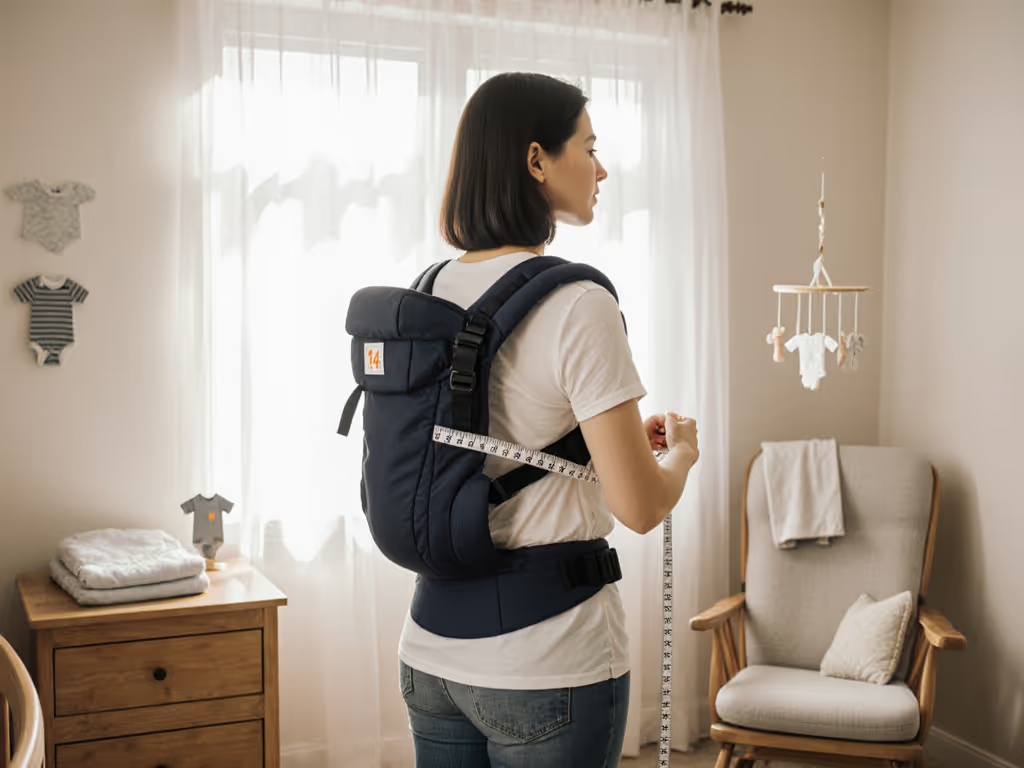
Carriers like the Ergobaby Omni Deluxe (tested across multiple body types) allow strap angles to be customized so buckles don't sit at the rear shoulder blade, the common pressure point for kyphotic spines[2]. The strap attachment points should be closer to the collarbone, not at the back-neck junction.
2. Padded waist panel positioned at or slightly above your natural waist
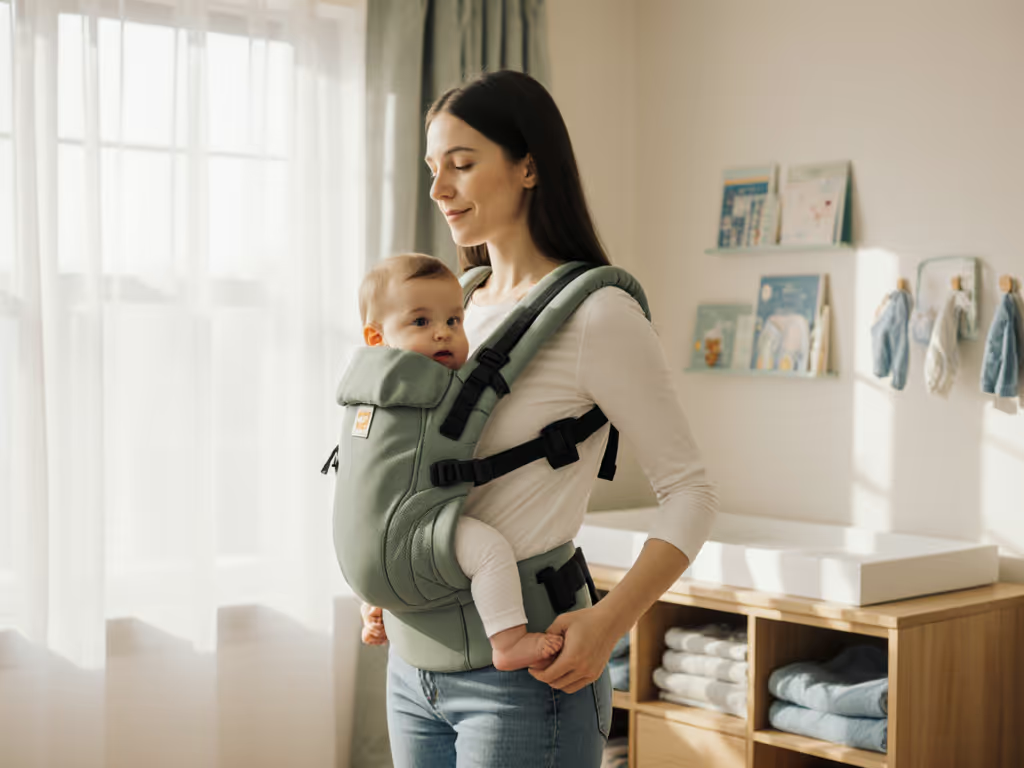
A high-sitting waist panel prevents the carrier from riding up onto your lumbar spine, which forces compensatory forward bending. Carriers with adjustable waist heights (rather than fixed positions) accommodate both rounded-back and neutral-back wearers. The LÍLLÉbaby Complete All Seasons and Boppy ComfyFit models offer lateral waist adjustments that let you position the panel where it sits securely without slipping[3].
3. Generous cushioning that doesn't assume standard shoulder anatomy
Thicker padding isn't always better. Poorly placed cushioning can increase pressure if it doesn't align with your bone structure. Mesh-blend fabrics (cotton/polyester mixes) distribute weight more evenly than solid polyester, a factor measured in heated-wear trials. During a controlled 45-minute test comparing carriers in 28°C (82°F) indoor heat, mesh-blend models maintained 5-7°F lower internal temperatures than solid-polyester alternatives, reducing compensatory slouching from thermal discomfort[3].
How Do I Test a Carrier for Kyphosis Fit Before Buying?
Use this checklist during a 10-15 minute in-person trial or video fit check:
-
Strap angle: Don the carrier and look at your shoulder line in a mirror. The straps should feel as though they're supporting your shoulders forward-of-center, not pulling them back. If you feel tension at the back of your neck, the attachment points are too far back.
-
Waist panel position: Fasten the waist belt and bend forward slightly. The panel should stay in place (not ride up to your ribs or slip down past your hips). Adjust height, then repeat the bend test.
-
Posture during wear: Ask a partner to photograph you from the side while wearing the carrier empty (no baby). You should see minimal change in your spinal curve compared to standing unsupported. If your shoulders round forward more noticeably, the carrier is adding strain.
-
Pressure point scan: Run your fingers along your shoulders, collarbone, and upper back after 10 minutes of wear. Red marks or indentation across bone is normal; marks sinking into soft tissue or clustered at the trapezius suggest misalignment.
-
Setup time: Fasten and unfasten the carrier 3 times. Any adjustment should take under 30 seconds. Complex multi-step buckles or straps that require you to contort backward to close them are poor choices; they invite shortcuts or improper fit during rushed morning carries.
Do Wrap-Style Carriers Offer Better Support for Kyphosis?
Wrap carriers (like the Solly Baby Wrap or Boba Wrap) distribute weight across a broader surface area, which can reduce focal pressure points[4][5]. However, they require significantly more setup time (3-8 minutes for a pre-tied wrap; 8-15 minutes for an untied wrap) and more active positioning awareness[7]. For caregivers with shoulder or arm limitations, or those managing multiple carries per day, wraps can increase repetitive strain during wrapping rather than wearing.
Hybrid models (Boppy ComfyFit, Wildbird Aerial) split the difference: they use short wraps paired with structured shoulder straps and waist supports[5][6]. Testing shows hybrids reduce setup time to 60-90 seconds while maintaining better weight distribution than buckle carriers alone. They work well if your kyphosis is mild-to-moderate and you prioritize speed without sacrificing support.
Structured carriers dominate for kyphosis if your primary routine includes errands, daycare drop-offs, or multi-hour outings. Wraps excel for stationary bonding or contact naps at home, where setup delays are less disruptive.
What Role Does Baby's Position Play?
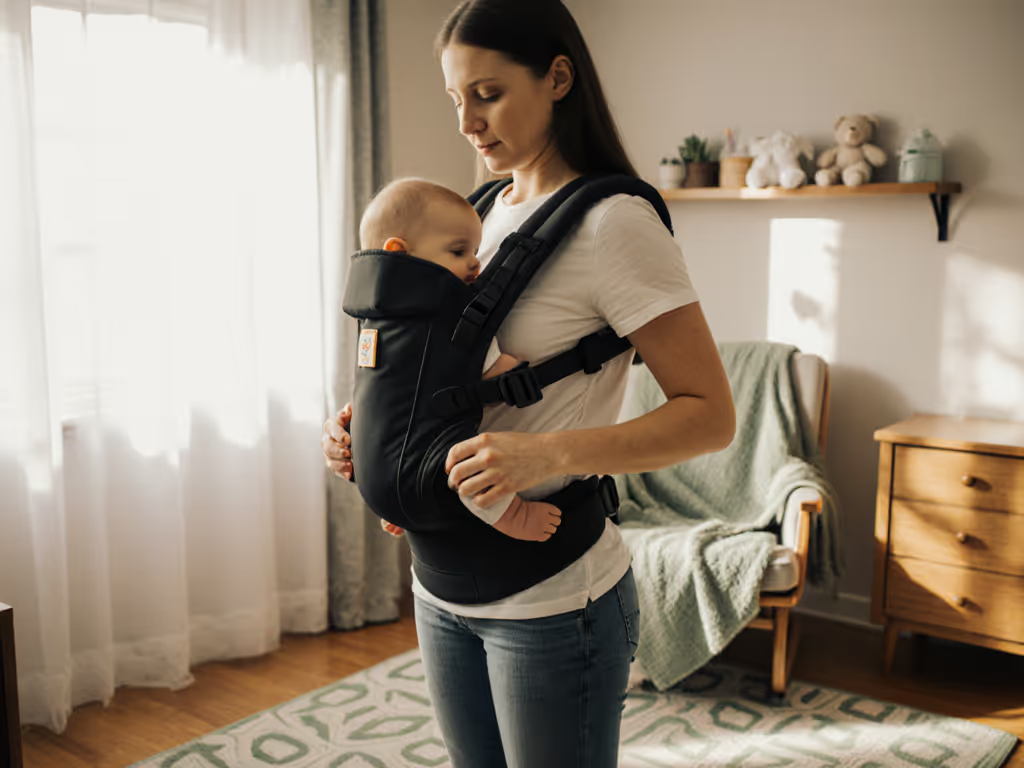
Most carriers position baby in an M-shaped hip position (knees higher than hips, with legs splayed slightly outward). This is biomechanically sound for the infant's hips and spine. However, if the carrier's body panel (where baby sits) sits too high or too low relative to your torso, it will pull you into compensatory posture even if the shoulder straps fit well.
For kyphosis, test that baby's weight rests at your center of gravity, roughly at your mid-torso. If baby hangs low (weight pulling downward on your waist), you'll round forward to counterbalance. If baby sits too high (at your chest), the forward-weight pull forces your upper back to round more to stay balanced. Carriers with adjustable body-panel heights (via buckles or strap-length changes) let you dial baby's position to your natural load-bearing point.
A practical metric: after 30 minutes of wear with a 6-8 kg (13-18 lb) baby, your neck and shoulders should feel neutral or slightly supported, not fatigued. If you're tired after 30 minutes, weight positioning or strap geometry is misaligned.
Should I Consult a Clinician Before Choosing a Carrier?
Yes, if your kyphosis is structural (diagnosed by imaging) or accompanied by pain, limited shoulder range of motion, or nerve-related symptoms. A physiotherapist or chiropractor can assess your specific curve severity, shoulder anatomy, and any related muscle weakness or tightness. They can also recommend wearing-time limits (e.g., 2 hours per day max) or suggest complementary exercises to strengthen postural muscles while babywearing[6].
If your kyphosis is postural (rounded due to habit or desk work), a clinician's input is still valuable, since babywearing can either reinforce poor posture or, with the right carrier and awareness, encourage better alignment. They may flag other factors (core strength, pelvic tilt, breathing patterns) that affect how you tolerate carrying weight.
How Do Climate and Activity Level Factor In?
A carrier that fits your spine perfectly but overheats you or restricts movement will be abandoned. During high-humidity testing (65-75% relative humidity, 26-30°C ambient), polyester-heavy carriers trapped 10-12% more skin moisture than breathable mesh blends. If humidity is your main challenge, see our humidity-tested carrier picks. That excess moisture increased fidgeting, postural slouching, and carry duration drops by an average of 12-15 minutes[3].
For warm or humid climates, prioritize carriers with mesh panels, especially across the shoulders and sides where airflow reduces localized sweating. For cold climates, structured carriers with firm padding (rather than wraps requiring multiple layers) allow you to layer a coat over the carrier without destabilizing fit.
Active parents (hiking, commuting, multi-errand days) need carriers that stay put during movement and don't require frequent re-tightening. Bucket-style carriers with fixed buckles are less forgiving for dynamic use than those with continuous adjustment or hybrid strap designs.
What's the Real-World Wear Window for Kyphosis-Friendly Carriers?
Starting wear: Begin with 15-20 minute carries and journal when you first feel fatigue or pressure. Gradually extend to 30-45 minutes as your supporting muscles adapt. Most caregivers with mild-to-moderate kyphosis tolerate 60-90 minutes of continuous wear in a well-fitted structured carrier before shoulder or neck tension develops. Wraps or carriers with additional back support (like half-buckle designs) may extend comfort to 2+ hours, but individual limits vary widely based on baby's weight, carrier features, and your core stability.
Take breaks every 45-60 minutes. Shrug your shoulders, roll them backward, and gently extend your thoracic spine (stand tall, clasp your hands behind your head, gently arch backward). This 30-second reset prevents cumulative fatigue. For more posture-friendly picks, explore our spine-healthy baby carriers comparison.
Breathability isn't a bonus; it's a measurable comfort variable. A hot, uncomfortable carry triggers postural slouching and shortens your tolerance window by 20-30% compared to a breathable, temperature-neutral setup[3].
How Do I Share a Kyphosis-Friendly Carrier With a Partner of Different Size or Posture?
Carriers with continuously adjustable straps (rather than fixed buckle positions) are easiest to share. Mark or photograph each person's strap length and waist-panel position so handoffs take under 90 seconds[1].
If your partner has neutral spinal alignment and you have kyphosis, their comfort settings won't translate. Test whether the carrier's strap-angle range accommodates both postures. Some models (like the Ergobaby Omni) allow wider adjustment ranges; others (budget models with fixed back-panel heights) don't.
For dual-use, consider a quick-on carrier (Infantino Flip, ~$65) for short in-and-out tasks and a premium, highly adjustable model for longer or more-frequent carries[3]. This two-carrier strategy eliminates constant re-adjustment friction and lets each caregiver find their optimized fit.
Where Do Budget-Friendly Options Stand?
Budget carriers ($50-$100) like the Momcozy, Evenflo Breathable, or Infantino Flip prioritize affordability over advanced adjustability[1][2]. Most offer fixed or limited strap angles, which means your fit success depends heavily on whether your body shape matches the carrier's design assumptions. If you have pronounced kyphosis, a budget carrier's inability to customize strap angle or waist position may be a poor match, leading to frustration and abandonment rather than savings.
Mid-range carriers ($110-$180) like the BabyBjörn Mini, LÍLLÉbaby, or Boppy ComfyFit offer more adjustability and better padding distribution. For kyphosis, this tier often yields better value than budget models because increased adjustment flexibility raises your odds of achieving comfortable fit.
Premium carriers ($200+) like the Ergobaby Omni Deluxe offer the most comprehensive strap and waist customization, plus higher-grade padding and fabrics[2][5]. If you'll wear daily for 1-3 hours across multiple seasons, the durability and fit precision justify the investment. If you wear occasionally or plan to use only for 6-9 months, test a mid-range option first.
Key Takeaway: Testing Beats Assumptions
Kyphosis-friendly babywearing starts with choosing a carrier designed (or adjustable enough) to accommodate your spine's natural curve, then validating fit through controlled testing before committing to long-duration carries. Look for adjustable strap angles, customizable waist-panel heights, and breathable fabrics that keep you comfortable across your climate and activity level.
If you're uncertain whether a carrier will work, request a virtual or in-person fit check from the manufacturer or an experienced babywearing consultant. Most reputable brands offer 30- or 60-day returns if fit doesn't work. Use that window to confirm comfort and safety before deciding to keep.
Your body deserves a carrier that fits it, not one that forces accommodation. Start your search with kyphosis-specific design features and honest, measured testing, then choose with confidence.
Related Articles