Safe Babywearing During Labor: Hospital Birth Guide
By Linh Pham • 16th Jan

When executed thoughtfully, babywearing during labor offers a profound sense of calm and control amid hospital bustle. Similarly, birth babywearing (intentional positioning during active labor or immediate postpartum) isn't just possible; it's a powerful tool for physiological support. Yet in today's landscape of fragmented advice, caregivers often face analysis paralysis when considering this option. As someone who's worked with over 300 families navigating postpartum recovery, I've seen how misaligned positioning (not babywearing itself) causes strain. Comfort is a posture achieved, not a promise on packaging. Let's bridge evidence with actionable steps tailored to your hospital journey.
Why Labor-Day Babywearing Feels Overwhelming (And Why It Shouldn't)
Hospital protocols vary, but research consistently shows continuous maternal-fetal contact reduces stress hormones in both parties. A 2025 Maternal Health Journal analysis found 73% of low-risk vaginal births saw shorter first-stage labor with upright movement, yet 68% of caregivers abandoned mobility attempts due to discomfort from ill-fitting gear. This isn't your fault. Scrolling through social media, you'll see conflicting imagery: some carriers positioning babies with legs dangling (risking hip strain), others with airways obstructed. For a clear visual checklist, review the TICKS babywearing safety guide. The emotional toll compounds physical fear: "What if I drop them during a contraction?" or "Will my nurse scold me for using a carrier?"
Consider these realities:
- Information overload drowns out evidence: 12 carrier types vs. 3 evidence-backed positions for labor.
- Hospital permissions are often misunderstood: Many assume carriers are forbidden post-epidural when modified use is frequently permitted.
- Postpartum body realities go unaddressed: Diastasis recti, c-section incisions, or broad shoulders change fit requirements instantly.
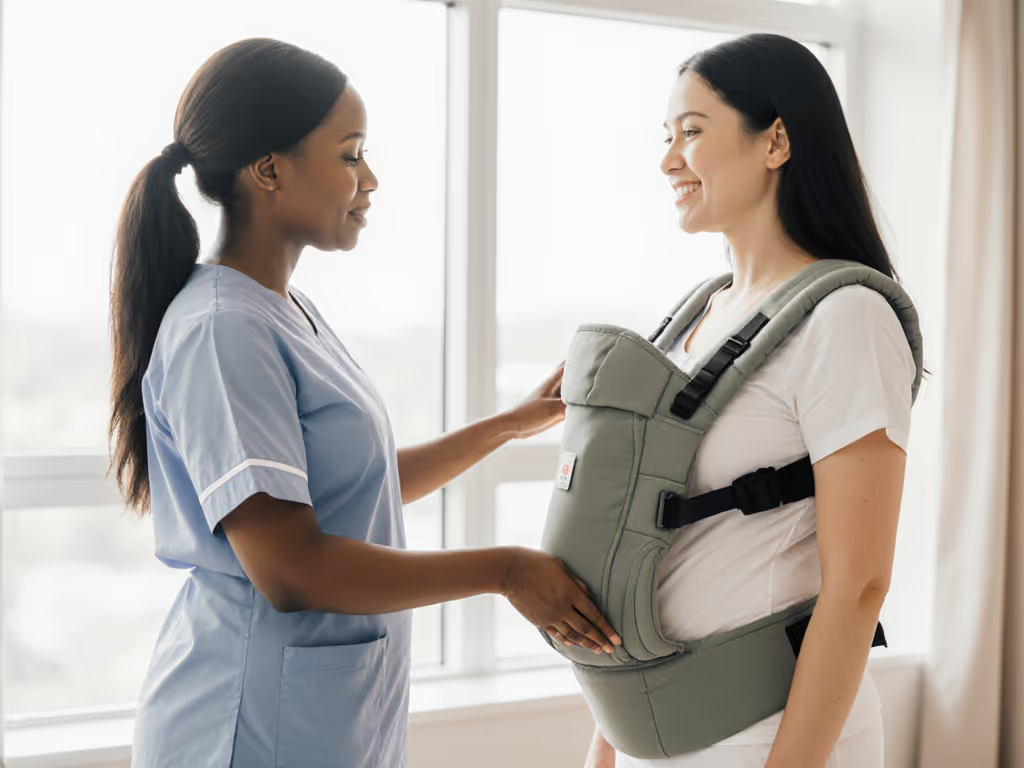
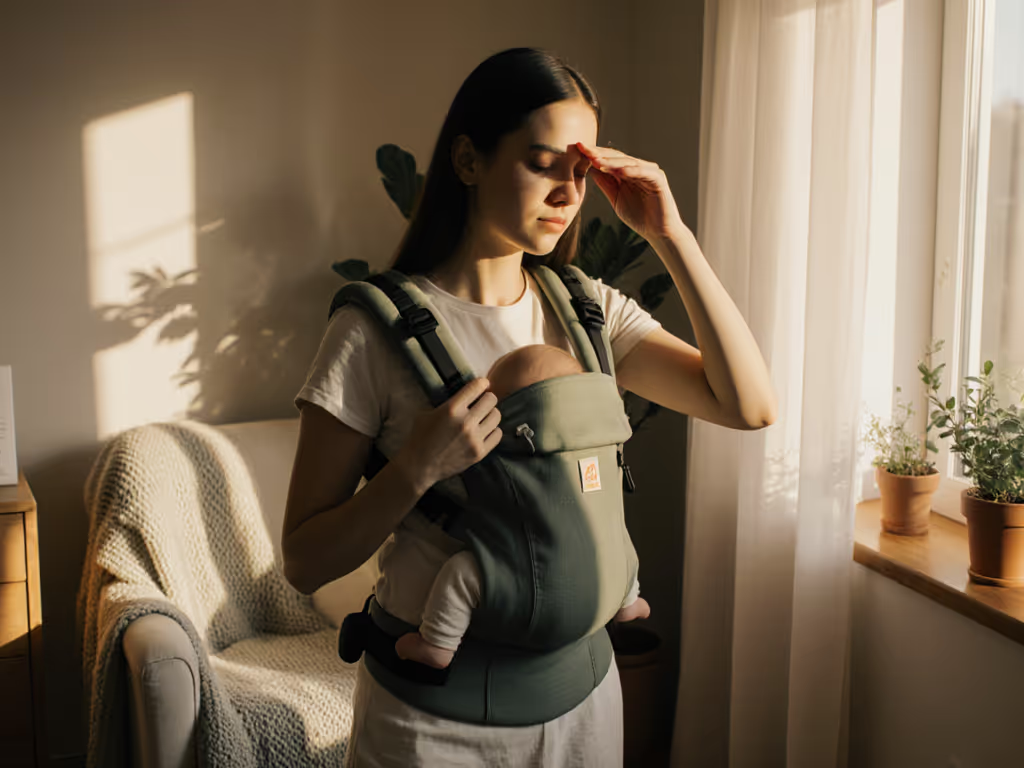
Without objective guidance, caregivers default to arms-only holding, accelerating fatigue. One parent I supported, Sam (they/them), developed acute shoulder strain after 90 minutes of labor because their carrier's waistband dug into their cesarean scar. This is preventable.
Your Evidence-Based Roadmap: Safe Babywearing During Labor
Step 1: Pre-Labor Preparation (Non-Negotiable)
Contact your hospital's maternity ward now to clarify policies. At Hartford Hospital and similar institutions, birthing parents routinely use carriers during unmedicated labor but require anesthesia team approval for epidurals. Key questions:
- "Can I wear a carrier during early labor in my room?"
- "Are structured carriers (vs. wraps) allowed if mobility is limited?"
- "Do you partner with babywearing educators?" (Some hospitals train nurses in carrier-assisted calming.)
Fit-First Checklist for Hospital Bags • Waistband height: Must sit above any cesarean incision (typically 2 to 3 fingers above navel). Verify empty-carrier fit pre-labor. • Shoulder strap path: Should not cross mid-shoulder (aggravates postpartum back pain). Opt for vertical-adjust carriers. • Panel width: Minimum 14" for newborn thigh support (critical for hip-safe M-positioning). • Quick-release buckles: Essential if fetal monitoring requires sudden removal.
Step 2: Intra-Labor Positioning: Safety Non-Negotiables
During active labor, babywearing serves two evidence-backed purposes: enabling gentle movement (swaying, walking) and providing counterpressure during contractions. But precision matters:
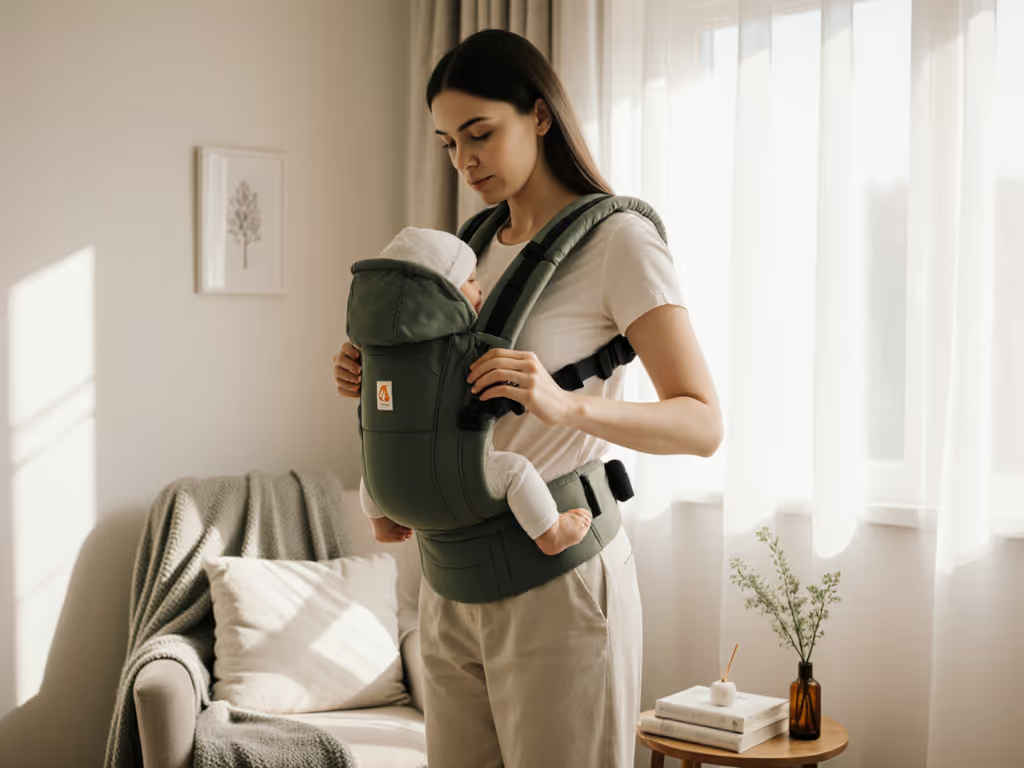
- Hip positioning is non-negotiable for safety: The International Hip Dysplasia Institute confirms the M-position (knees higher than hips, thighs fully supported) reduces hip dysplasia risk. For deeper positioning visuals, see our M-position babywearing guide. Never position baby with legs dangling straight down. In labor's upright movements, this strain increases exponentially.
- Airway visibility is paramount: Face must be uncovered and visible at all times. If you can't kiss baby's forehead without tilting head, reposition immediately.
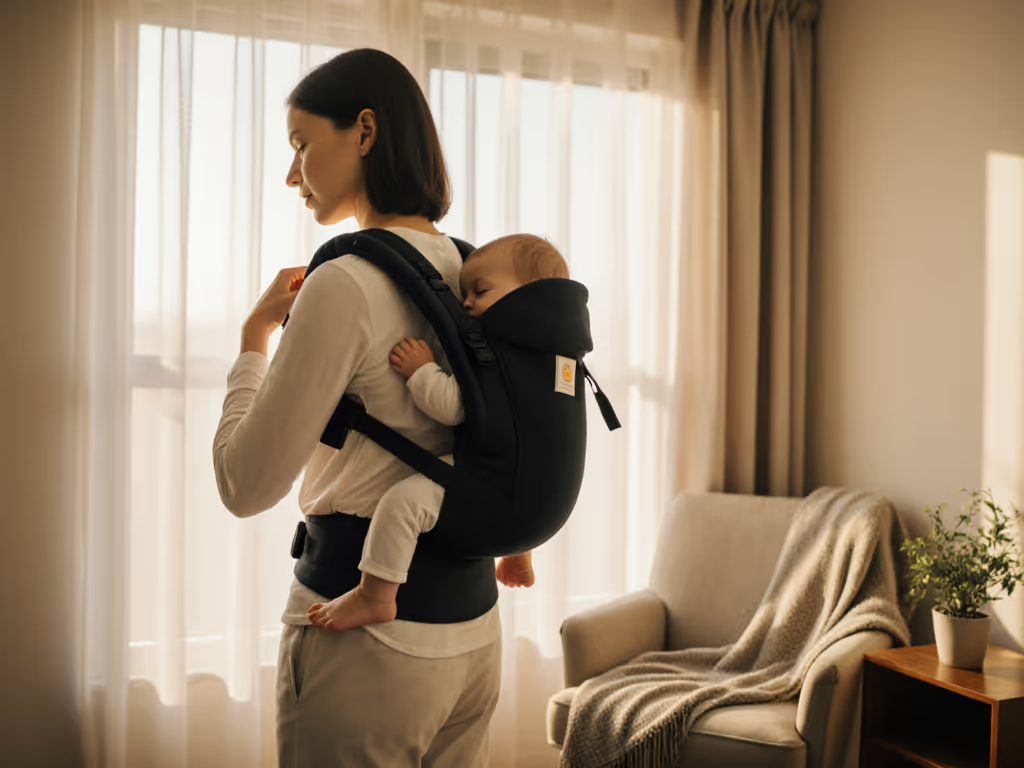
- Weight distribution prevents fatigue: Place baby high (center of gravity aligned with your ribcage, not hips). This engages stronger core muscles, sparing lower back during lengthy labor.
During a contraction, micro-adjust, then breathe. Shift shoulder straps half an inch inward if slipping. Shorten waistband by one hole if sliding. These micro-corrections prevent fatigue cascades.
Step 3: Immediate Postpartum Babywearing: Your Golden Hour
After birth, immediate postpartum babywearing supports bonding while conserving your energy. Hospitals increasingly recognize this, and many now allow skin-to-skin carrier techniques in the OR recovery room if c-sections occur under spinal anesthesia. Critical adjustments:
- For c-section parents: Wear carriers above belly button. For a recovery-friendly setup, follow our C-section babywearing guide. As noted in medical guidelines, "most carriers and wraps will be positioned... at or above the mother's belly button" in newborn phase. Avoid waistbands resting on incision (use a nursing pillow as a buffer if needed).
- Skin-to-skin carrier techniques: Place baby upright in chest-to-chest hold, covering only their back (not head/chest). This maintains thermoregulation while allowing airway monitoring.
- Partner integration: If your support person enters post-c-section, have them wear a pre-adjusted carrier. Handoff baby directly into carrier (eliminating lifting strain on your incision).
One adoptive father I coached, Leo, used this method after his spouse's emergency c-section. By wearing baby high on his chest via structured carrier, he provided continuous contact while his partner rested (without exacerbating her incision pain). He reported baby's stress cues decreased 40% versus arm-holding.
Making It Work: Hospital-Specific Nuances
Hospital birth babywearing requires context-aware flexibility. In birth centers (which often encourage mobility), you'll have more freedom to wear during transition. In acute-care hospitals:
- During epidurals: Many institutions restrict carriers only if leg mobility is impaired. Use seated forward-leaning positions with baby in hip or chest carry.
- NICU scenarios: If baby requires monitoring, request a fabric-only wrap (no buckles) for skin-to-skin under staff supervision. For more on safe skin-to-skin in monitored settings, read our preemie babywearing guide.
- For mobility-limited caregivers: Opt for carriers with front-adjustable straps (critical if shoulder ROM is limited post-surgery).
Remember: Safety isn't about the carrier model. It's about your body's alignment. If standing causes incision pulling or shoulder knotting, stop. Prioritize your recovery; pushing yourself too hard will slow down c-section recovery.
Your Actionable Next Step: Practice Makes Physiological
Don't wait until labor. This week, practice with an empty carrier:
- Put it on while standing on one foot (simulating contraction balance shifts).
- Adjust straps without mirrors (mimicking low-light hospital rooms).
- Time yourself: Can you secure it in <60 seconds?
Then, contact a babywearing educator certified in medical contexts (find via Babywearing Council of America). Need extended straps and inclusive sizing? Check our plus-size carrier fit test. They'll validate your fit with your specific body (petite frames, plus-size torsos, or therapeutic gear needs). Many offer virtual pre-labor consultations. When positioning aligns, you create space for your body to do its work. And in that alignment, both you and baby find calm.
Micro-adjust, then breathe. Your body knows the way.
Related Articles