Migraine-Friendly Babywearing: 9 Strategies for Pain-Safe Carries
By Zoe Mwangi • 6th Jun
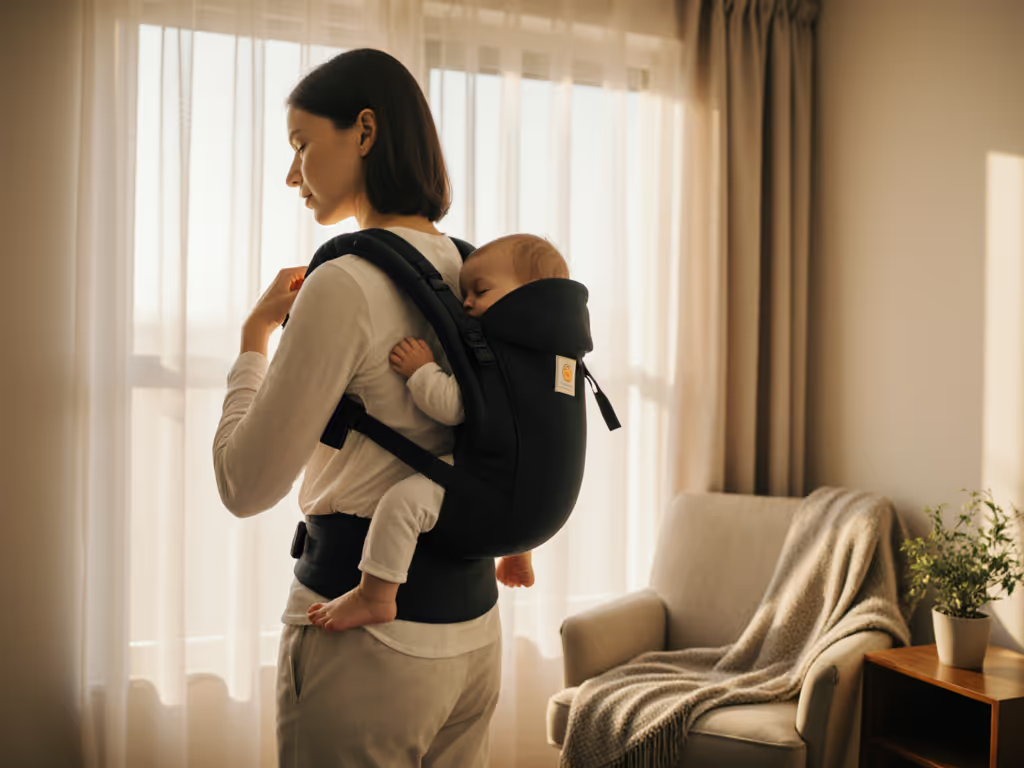
Using babywearing for chronic migraines is possible, but it demands more planning and precision than standard advice ever acknowledges. For condition-specific tactics beyond this guide, see our babywearing with chronic migraines guide. This guide breaks migraine-friendly babywearing into 9 concrete strategies so you can keep your baby close and protect your brain and body.
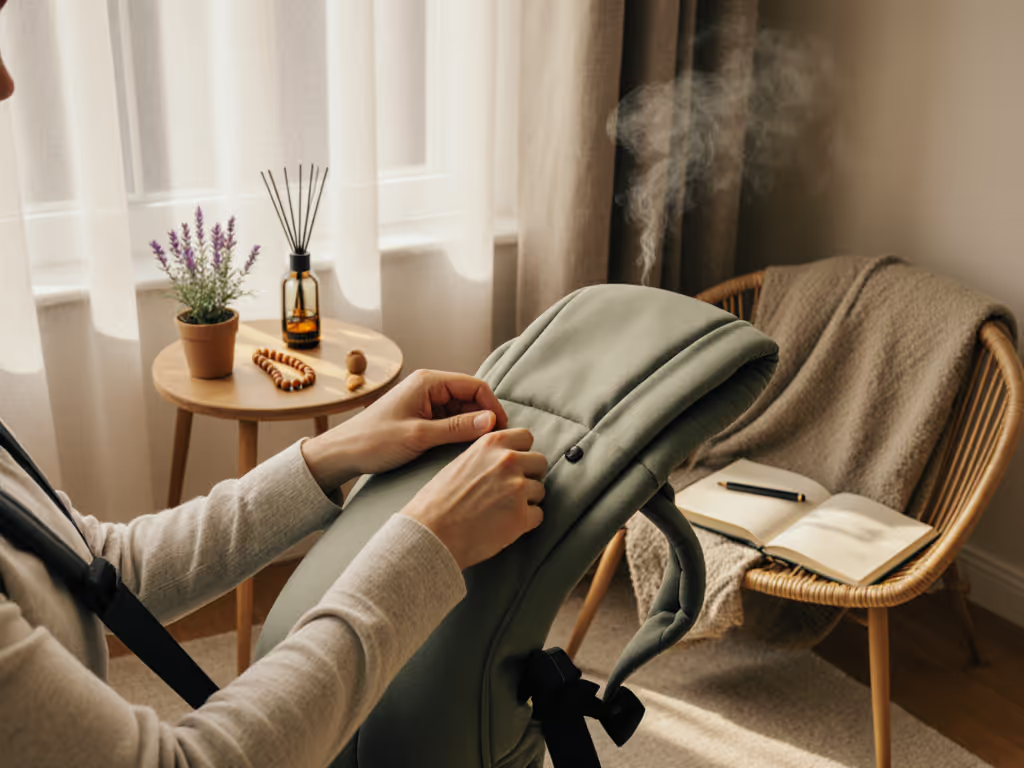
If you live with chronic migraines, standard carrier reviews rarely talk about the one metric that matters most: how many comfortable, pain-safe hours you can realistically get from a setup before it tips you toward a flare.
Value is comfort-hours per dollar, not the sale sticker.
In other words, your version of migraine-friendly babywearing is less about the trendiest carrier and more about combining safety, weight distribution, and sensory-trigger management into a realistic system you can repeat on low-sleep, high-pain days.
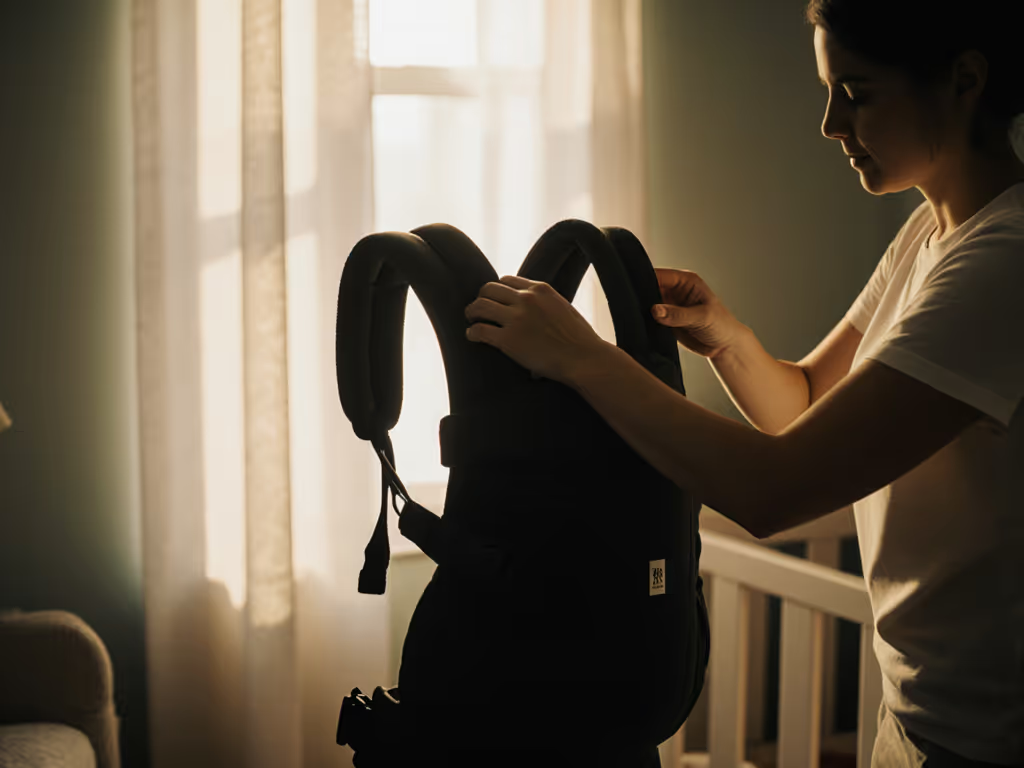
Below are 9 strategies I use when I help families build pain management carrier plans around migraines.
1. Start with safety-first, upright positioning that doesn't strain your neck
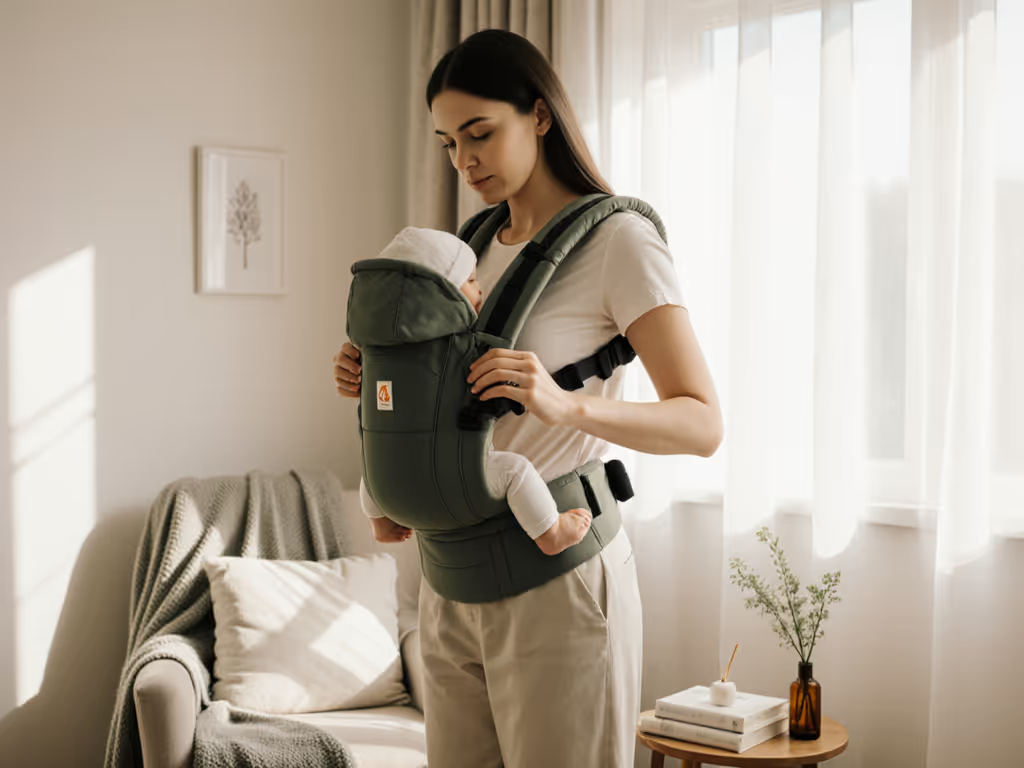
Before we even talk about triggers, your carry must be safe and ergonomic for the baby. Start with the TICKS babywearing safety checklist to verify airway and positioning every time. That means:
- Baby held snug and high on your chest (close enough to kiss). [3][4][5]
- Face visible at all times, with fabric not covering the nose or mouth. [4][5][6]
- Chin off the chest with at least a finger-width gap under the chin, so airways stay open. [3][5]
- Back supported in a gentle natural curve, not slumped into a C shape. [3][4][5]
- Hips in an M-position: bottom deep in the seat, knees higher than hips, thighs supported. [4][5]
These guidelines reduce the micro-adjusting and awkward leaning that often happen when baby is too low, too loose, or slumped (positions that force you into forward head posture and rounded shoulders). [5]
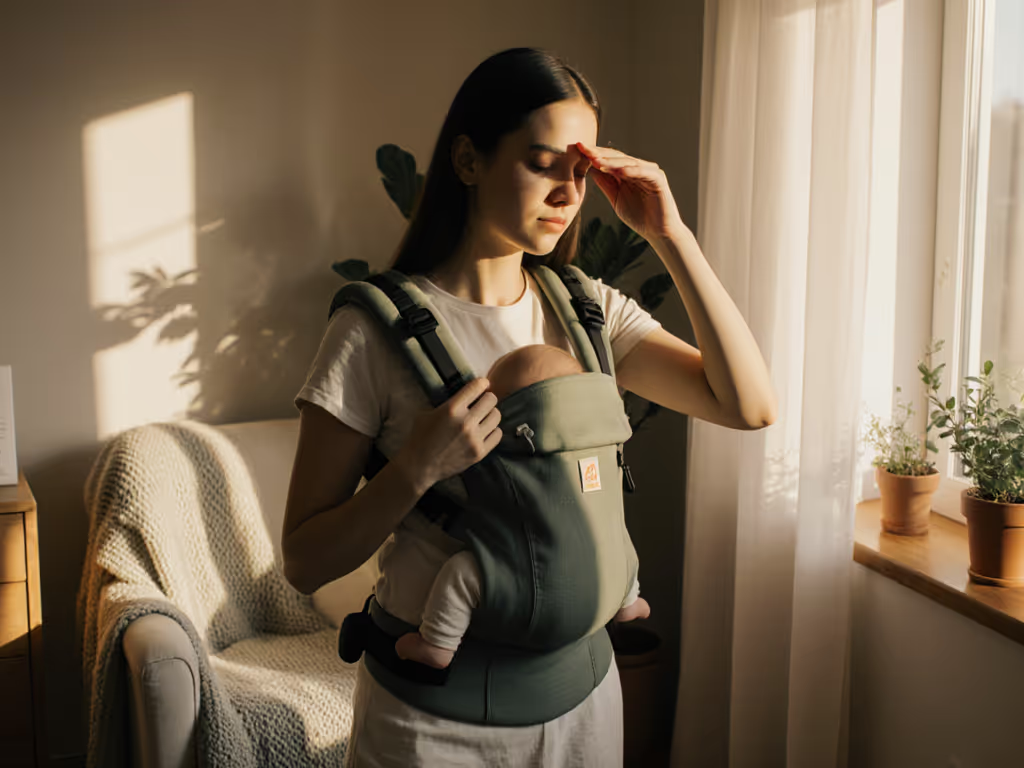
From a migraine perspective (based on general clinical understanding, not specific trials), reducing neck and shoulder strain is key, because sustained tension in those areas is a well-known trigger for many people.
Practical tweak: once baby is in, do a quick "posture scan" in the mirror: can you draw a straight line from ear-shoulder-hip-knee-ankle without leaning forward? [5] If not, adjust baby higher and tighter before you start moving.
2. Match structure and weight distribution to your pain pattern
Different carriers load your body differently. For chronic migraine, the goal is to shift load away from your neck and upper traps as much as possible.
-
If neck and shoulder tension are big triggers, look for structures that:
- Use a wide, supportive waistband so more weight drops into the pelvis instead of hanging from the shoulders. [5]
- Offer crossable shoulder straps or well-padded straps that sit away from your neck.
-
If you also have low-back or pelvic pain, you may prefer:
- Slightly higher, softer waist placement to avoid direct pressure on a C-section scar or pelvic floor.
- Carriers that spread load evenly across both shoulders and torso, not just into a rigid hip belt.
This is where I get numbers-forward. Rough rule of thumb: if your baby weighs 7 kg and you carry 2 hours a day, that's nearly 100 kg-hours of load per week. A small change in distribution (more to the pelvis, less to the neck) compounds quickly over time.
Buy once, cry never only works if the structure matches your specific pain pattern.
If possible, bring your top candidate carrier to a physio or osteo familiar with migraines and ask them to watch you put it on. They can often spot small strap changes that dramatically reduce neck tension.
3. Prioritize quick, low-effort setups for aura and high-pain days
When aura or early warning signs hit, you do not want to be doing a 12-step wrap while your visual field sparkles.
For migraine prevention while babywearing, favor:
- Carriers you can get on in under 60 seconds once adjusted.
- Closures you can see and reach in front of you, avoiding high back clips if shoulder range of motion is limited.
- Simple, repeatable routing (e.g., one buckle each side) instead of long passes of fabric that can twist.
A good heuristic: if you cannot reliably put the carrier on correctly while mildly sleep-deprived, it is too complex for your migraine days.
Test at home: time how long it takes you to go from carrier in a drawer to baby safely positioned. Do three runs. Use the slowest time as your benchmark when deciding if it's realistic for nursery runs or midnight soothing.
4. Build a sensory-trigger plan: light, sound, and touch
Many people with migraines are light- and sound-sensitive between attacks as well as during them. That's where light-sensitive carriers and accessories come in (not because the carrier senses light, but because it helps you manage exposure).
Consider:
-
Light:
- Choose carrier colors that feel soothing to you (often mid-tone, non-glossy fabrics).
- Use brimmed hats or lightly tinted glasses for yourself rather than draping heavy, dark fabric over baby's head (which can obscure their face and airways against safety guidance). [4][5]
- If your carrier has a hood, keep it off the face or only partially used so baby's face stays visible and clear. [4]
-
Sound:
- If loud environments trigger you, combine babywearing with quiet routes or noise-dampening options for yourself (while staying alert to surroundings).
- At home, pair babywearing with consistent, low-level sound (fan, white noise) rather than sharp, intermittent noises.
-
Touch / fabric feel:
- If you're sensory-sensitive, prioritize soft, non-scratchy textiles and avoid bulky seams right at your neck.
- Look for fabrics that don't trap heat or feel plasticky, which can amplify discomfort when you're already on edge. [4]
The carrier is not just a transport tool; it is a portable sensory environment for both of you. Configuring it intentionally lowers your baseline tension, which in turn supports migraine control.
5. Take heat seriously: temperature and hydration as non-negotiables
Heat is a frequent migraine trigger, and babywearing adds a whole extra heat source to your front.
Babywearing guidance already recommends lighter layers for both caregiver and baby, because carriers add warmth and overheating is a safety risk. [4] For more ways to stay cool without compromising safety, read our summer babywearing tips. That safety rule aligns perfectly with migraine prevention:
- Choose breathable, quick-dry fabrics when possible.
- In hot/humid climates, treat long walks with babywearing like light exercise:
- Plan shade
- Carry water
- Schedule during cooler parts of the day
- Check the back of baby's neck and their chest for overheating, and adjust layers as needed. [4]
From the migraine side (based on general medical understanding), steady hydration and avoiding sudden heat spikes are classic prevention strategies. Combining those with safe babywearing practices is efficient: one set of habits covers both you and baby.
6. Use posture and micro-movement as active pain management
Prolonged stillness in a slightly awkward position is an underrated trigger. Babywearing safety advice already encourages balanced posture and avoiding leaning forward or back to reduce strain on the lower back. [5]
For migraine-friendly babywearing, extend that idea:
- Keep weight even across both feet; standing on one leg shifts the pelvis and pulls the neck and shoulders into imbalance. [5]
- Visualize that side-view alignment line from ear through shoulder, hip, knee, and ankle. [5]
- Build in micro-movement: a gentle sway side-to-side or small rock keeps muscles from locking up and is often soothing for baby too. [5]
Try a 30-second check every 10-15 minutes:
- Scan for clenched jaw, shrugged shoulders, or forward head.
- Take 3 slow breaths, letting shoulders drop.
- Adjust feet to hip-width and re-stack your spine.
These small interventions cost almost no time but can materially change how you feel 90 minutes into a contact nap.
7. Design your day around "migraine-safe" wearing windows
Instead of asking "Can I babywear with migraines?" flip the question to:
"When, and for how long, is babywearing safest for my brain?"
A few planning levers:
- Track your week and note when migraines usually hit (e.g., late afternoon, post-lunch slump, post-screen time).
- Reserve short, high-need babywearing tasks (school run, daycare drop, quick shop) for your most stable windows.
- For times you're statistically more vulnerable to an attack, plan backup:
- stroller, bassinet, or safe floor space ready
- a partner/relative on-call when possible
If you use medications compatible with pregnancy or breastfeeding, some (like acetaminophen and certain anti-nausea drugs) are considered appropriate first-line options, but always under medical guidance. [7][8] Timing those around predictable high-demand wearing windows is something to plan with your clinician.
The goal is not zero babywearing on migraine-prone days; it is short, strategic doses instead of unplanned two-hour marathons.
8. Build a tiny, targeted carrier "toolbox," not a closet of maybes
For most migraine-affected caregivers, a two-carrier strategy works better than five half-used options:
- A fast, low-effort carrier (often without a rigid waistband) for quick up-and-down tasks and indoor soothing.
- A more structured, supportive carrier for longer walks or travel when you can predict the load and prep accordingly.
During my own early caregiving season, I bought several carriers secondhand and quietly tracked hours worn versus cost and resale. The one that stayed was the one that truly fit our daily routines and my body's limits; the others moved on almost at cost. That spreadsheet reinforced my bias: fewer, better tools beat a cluttered hallway.
If you think in numbers:
- A carrier that costs 150 and delivers 400 comfortable hours over 18 months is 0.38 per hour.
- A cheaper one at 70 that you can only tolerate for 30 hours before your neck protests is 2.33 per hour plus the cost of replacing it.
For chronic pain, Buy once, cry never means being honest about what your nervous system can tolerate, not just what's on sale.
9. Bring your care team and support network into the plan
Migraine-friendly babywearing is not a solo project. If feeding while wearing is part of your plan, learn safe nursing positions in carriers to protect posture and baby's airway.
-
Healthcare team:
- Ask your neurologist, GP, or midwife which migraine treatments are compatible with pregnancy or breastfeeding; acetaminophen, some NSAIDs, and specific anti-nausea medications are often discussed as options, but individual safety varies. [7][8]
- Consider a referral to physiotherapy to optimize carrier fit around your neck, shoulders, and core.
-
Lactation or feeding support:
- Work on feeding-friendly positions that do not require you to hunch or twist in the carrier.
- They can help you learn micro-adjustments that keep baby's airway clear and spine supported while you feed and then return to a more upright position. [3][4][5]
-
Family and friends:
- Teach at least one other adult your preferred carrier so they can take over quickly if an attack hits mid-wear.
- Practice safe hand-offs: sit down, support baby, unclip slowly, and let the other person take on the load without sudden movements.
The more your circle understands your system, the less you'll push past your limits "just to get through this one errand," which is often how small triggers stack into a full-blown migraine.
Summary and Final Verdict
Migraine-friendly babywearing is absolutely possible, but it demands more intention than the average baby gear checklist:
- Start with textbook-safe positioning to protect both baby and your neck. [3][4][5][6] For hip health specifics, see our M-position babywearing guide.
- Choose structures that move load away from your trigger zones and support neutral posture. [5]
- Treat light, sound, heat, and fabric feel as core design inputs, not afterthoughts. [4][5]
- Build in time, posture, and backup plans so no single wearing session makes or breaks your day.
When you evaluate carriers through the lens of comfort-hours per dollar and how well they fit your migraine patterns, it becomes much easier to ignore hype and focus on a compact, sustainable setup that really works. The win is not wearing your baby for the longest possible stretch; it is carrying them often enough, comfortably enough, that both of you get the closeness you need without sacrificing your health.
If you take one step this week, let it be this: time a single babywearing session, note how your neck and head feel before and after, and adjust one variable (height, tightness, strap position, or duration). Small, measured tweaks compound, and your brain deserves that level of care just as much as your baby does.
Related Articles