Babywearing for Wheelchair Users: Safe Seated Carrying Guide
By Avery Sullivan • 6th Dec

As caregivers who use wheelchairs navigate the beautiful chaos of parenting, the quest for babywearing for wheelchair users becomes essential. Whether you're a new parent or seasoned caregiver, finding adaptive babywearing solutions for seated mobility that prioritize both safety and comfort transforms ordinary moments into quality connection time. I've coached countless caregivers who have told me, "I thought I'd have to choose between mobility and closeness with my baby," but with a thoughtful approach, you don't have to.
Today, we'll navigate this together through practical FAQs that address your specific concerns. No judgment, just clear steps that work whether you're running errands or simply enjoying a quiet moment at home. Remember, hands-free should feel stress-free, a principle I've seen transform anxiety into assurance time and again.
What Makes Babywearing Possible While Seated in a Wheelchair?
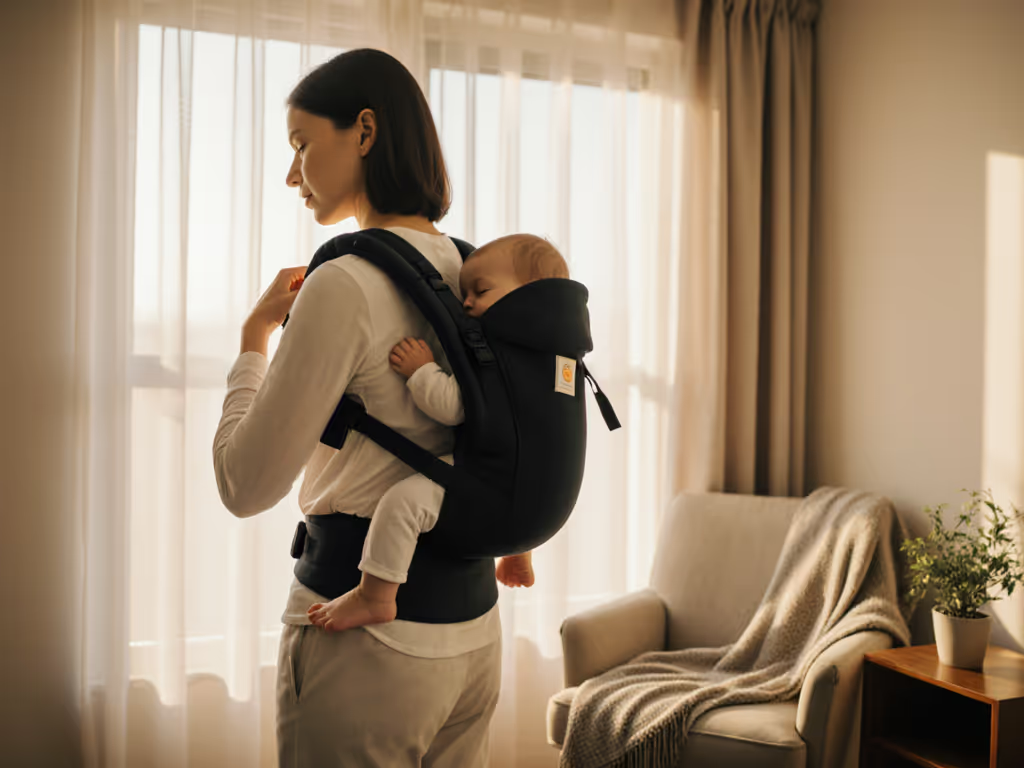
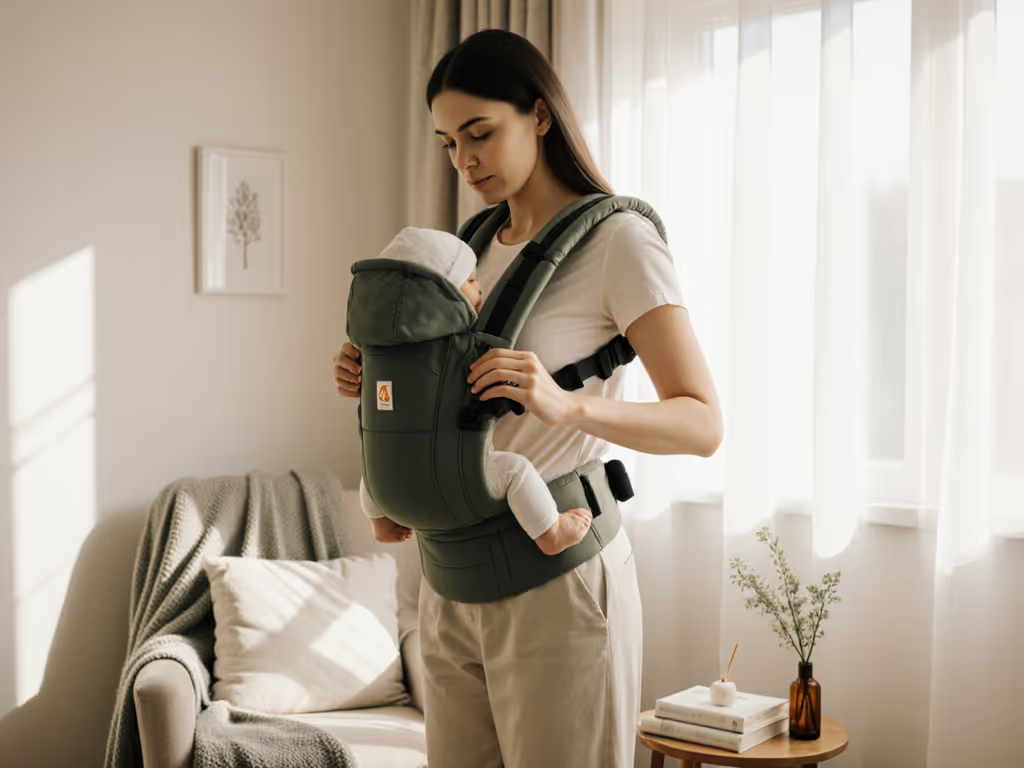
Absolutely, you can babywear while seated! The key lies in selecting carriers designed for front positioning, since back carriers won't work in wheelchair seating. During one of my early coaching sessions, a client described how she initially felt isolated from her newborn until she discovered front carriers that allowed for skin-to-skin contact while maintaining her independence.
When babywearing from your wheelchair, focus on these safety checkpoints:
- Your baby's face must remain visible and unobstructed at all times
- Ensure no parts of your wheelchair pinch baby's limbs during transfers
- Keep your baby's chin off their chest to maintain clear airways
- Position baby high enough that their legs don't contact wheelchair components
Gentle, time-stamped steps matter most when you're tired or stressed (those moments when every second counts and calm feels out of reach). Thinking back to that 2 a.m. diaper leak situation I experienced, the simplest carriers became my lifeline when cognitive load was high.
Which Carrier Types Work Best for Wheelchair Babywearing?
Front-Carry Options That Prioritize Accessibility
The most successful baby carriers for wheelchair users minimize behind-the-back adjustments. If you need models that work with limited reach or dexterity, compare our adaptive carriers for limited mobility. Here's what to look for:
- Hip seat carriers reduce shoulder strain and require fewer adjustments
- Soft-structured carriers with front-adjusting buckles (rather than rear clips)
- Ring slings that can be put on independently while seated
- Specialized carriers designed specifically for seated mobility needs
Wrap carriers often require complex maneuvering that can be challenging from a seated position. As one caregiver shared with me, "I wasted months trying to make a wrap work before discovering a hip seat carrier that I could manage alone (I wish I'd known sooner!)"
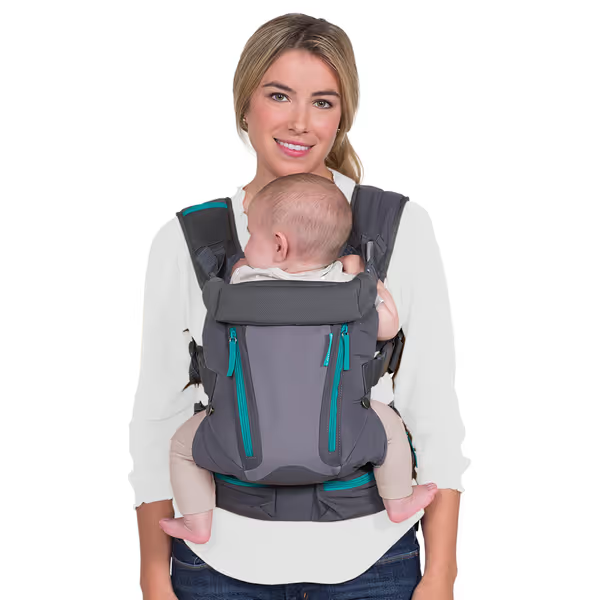
Infantino Carry On Baby Carrier
Comfortable, ergonomic carrier with smart storage for hands-free convenience.
$26.97
Weight Range8-40 lbs (Newborn to Toddler)
Weight Range8-40 lbs (Newborn to Toddler)
Pros
Integrated pockets for essentials eliminates extra bags.
Comfortable for various body types, including plus-size parents.
Easy to put on/take off, reducing setup friction.
Cons
Back clips may be hard for those with limited mobility.
Limited fashion-forward aesthetic options.
Customers find the baby carrier comfortable, particularly noting it's suitable for newborns and doesn't cause back pain. Moreover, the carrier is easy to put on and remove, and customers appreciate its roomy design that accommodates plus-size wearers. Additionally, they like the pockets, with one mentioning a back pocket for first aid items, and find it provides good support with a supportive waistbelt. The carrier works well in all positions, and customers consider it good value for money.
Customers find the baby carrier comfortable, particularly noting it's suitable for newborns and doesn't cause back pain. Moreover, the carrier is easy to put on and remove, and customers appreciate its roomy design that accommodates plus-size wearers. Additionally, they like the pockets, with one mentioning a back pocket for first aid items, and find it provides good support with a supportive waistbelt. The carrier works well in all positions, and customers consider it good value for money.
How Do I Position My Baby Safely in a Wheelchair?
Achieving the T.I.C.K.S. Safety Standard While Seated
The TICKS safety guidelines (Tight, In view, Close enough to kiss, Keep chin off chest, Supported back) are non-negotiable for babywearing while seated. For a step-by-step refresher with visuals, review our T.I.C.K.S. babywearing safety guide. In wheelchair contexts, two considerations become critical:
-
Airway protection: Ensure your baby's head positioning allows for clear breathing, especially when reclining your chair.
-
Body clearance: Confirm there's adequate space between baby and your wheelchair's moving parts, armrests, and controls.
Use clear visual references to check positioning: Can you see your baby's face without leaning forward? If not, your carrier may need adjustment. Remember that babies' heads are proportionally larger than adults', making airway awareness especially crucial.
What About Transferring Baby In and Out of the Carrier?
No-Helper, Stress-Reducing Techniques
Many wheelchair users worry about needing assistance to get baby in and out of the carrier. Try these gentle, time-stamped steps:
- Secure your wheelchair brakes fully
- Position baby facing you on your lap
- Slide the carrier panel up baby's back before bringing straps over shoulders
- Fasten waistband first, then shoulder straps
- Adjust for snugness before lifting baby into carrying position
Practice this sequence during calm moments to build muscle memory. If something still feels off, our babywearing troubleshooting guide walks you through quick fixes for fit and comfort. That "foggy night" when I timed different carriers taught me that setups under 60 seconds dramatically reduce stress when help isn't immediately available.
Can I Adjust the Carrier Without Reaching Behind My Back?
Accessibility-Focused Setup Solutions
Absolutely! Look for carriers that feature:
- Front-adjusting buckles rather than rear positioning
- One-handed waistband tightening mechanisms
- Sliding shoulder straps that don't require behind-the-back manipulation
- Elastic or stretch panels that accommodate movement without readjustment
One of my clients with limited shoulder mobility developed a brilliant technique using a carabiner clipped to front straps to assist with shoulder adjustments (a safe modification that preserved independence without compromising security).
How Can I Build Confidence in My Wheelchair Babywearing?
Creating Your Practice Plan for Mastery
Confidence is built through repeatable steps, not perfection. Try this simple practice plan:
- Day 1-3: Practice carrier setup without baby during relaxed moments
- Day 4-6: Add baby for short 5-minute sessions while stationary
- Day 7-10: Practice transfers with baby while seated in wheelchair
- Day 11+: Incorporate short mobility sessions (wheeling short distances)
Use plain language safety checklists you can keep on your phone: "Is face visible? Is chin off chest? Are feet clear of wheelchair parts?" These quick verification steps build assurance naturally.
Taking Your Next Step Toward Confident Babywearing
If you're ready to experience the connection and freedom of wheelchair accessible baby carriers, your actionable next step is simple: practice one carrier setup sequence today without your baby. Time yourself, note where you encounter friction points, and celebrate completing it (regardless of how long it takes). This builds the muscle memory that makes real-world use feel intuitive.
Find a quiet 10-minute window this week to practice your sequence three times. You'll be amazed how much smoother the fourth attempt feels. Fast, calm setups turn chaos into competence you can feel, a truth I've witnessed transform countless caregiving experiences.
Remember that your unique mobility needs aren't limitations to overcome but considerations that guide you toward solutions designed for your authentic life. With each practice session, you're not just learning to wear your baby, you are reclaiming moments of connection that mobility devices might otherwise restrict.
Hands-free should feel stress-free, and with the right approach, it absolutely can.
Related Articles