Babywearing for Grief: Healing While Holding
By Linh Pham • 27th Feb

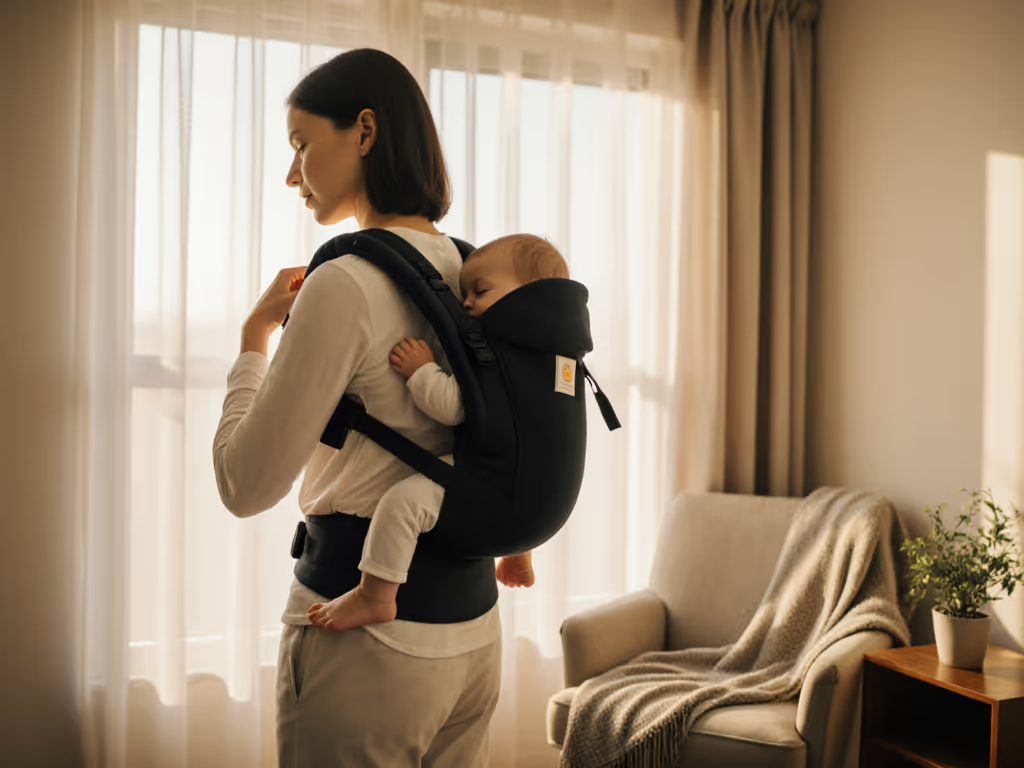
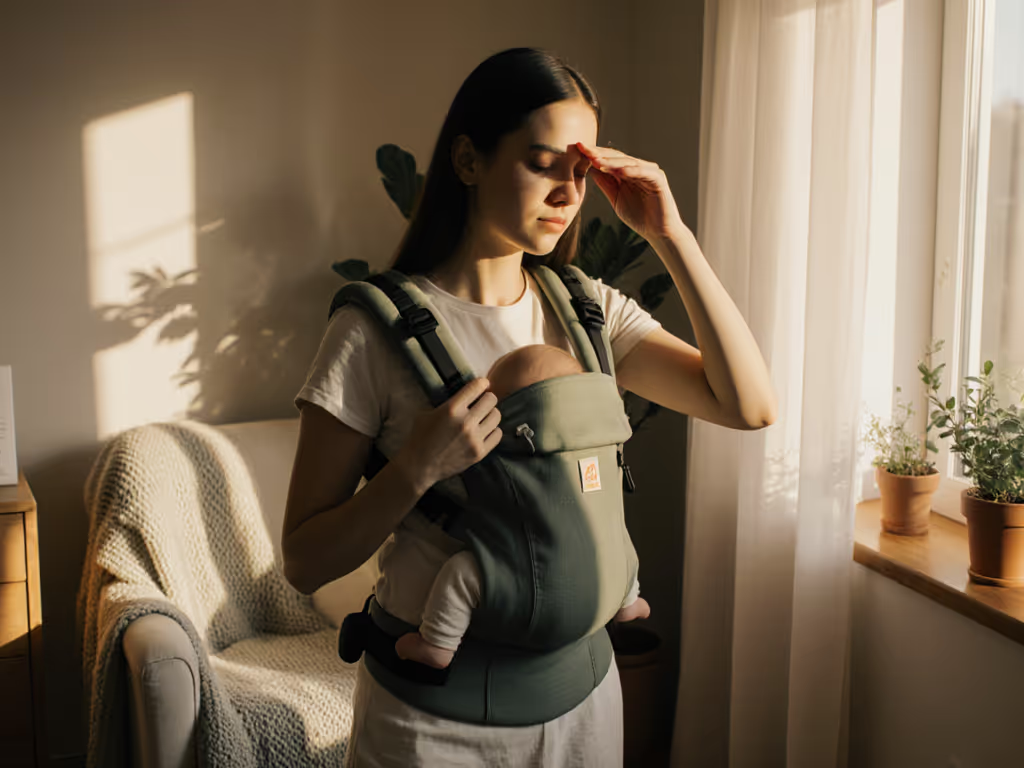
Grief can rob you of your body. When loss strikes (whether sudden or anticipated), caregivers often withdraw from physical closeness, their hands becoming fists, their shoulders hunching inward. The very act of holding your baby, which once brought simple joy, now carries weight: memories of who won't meet this child, the life you expected but didn't get, the presence that's now an absence. In this fracture, babywearing for grief becomes more than a logistical tool. It becomes a pathway back to connection when isolation feels safer than presence. For an evidence-based look at mood benefits, see how babywearing lowers postpartum depression.
The Problem: Grief Disconnects When Connection Matters Most
Bereaved caregivers face a paradox. The research is clear: infants benefit from consistent physical contact and responsive care, and caregivers benefit from the oxytocin release, hands-free functioning, and regulated nervous system that babywearing provides[1]. Yet grief (whether from pregnancy loss, death of a loved one, complicated family circumstances, or any rupture in the life you imagined) often manifests as a kind of numbness or withdrawal. Your arms feel too heavy. Holding your baby becomes a reminder of what's missing. The instinct to stay mobile, to keep hands free, to avoid the vulnerability of close contact, pulls you away from the very thing both you and your baby need most.
This disconnection spirals. Mothers experiencing postpartum depression show reduced confidence in their parenting abilities, heightened feelings of overwhelm, and decreased responsiveness to their infants[1]. While grief and clinical depression are distinct, they share a common pathway: isolation amplifies suffering. When a caregiver withdraws from their baby (because grief has made closeness feel unbearable), the baby senses it. Infants are exquisitely attuned to parental emotion. Their own stress hormones rise. Sleep suffers. Crying increases. And the caregiver, seeing their baby's distress, withdraws further.
The Agitation: Poor Fit Turns Healing Into Harm
Here's where babywearing for emotional healing demands precision. A carrier that doesn't fit your grieving body becomes a source of additional pain, not comfort. If the carrier's shoulder straps dig into your neck (already tight with tension), every step is a micro-injury, a reason to take off the baby sooner than is helpful. If the panel height is wrong for your torso, your lower back absorbs impact that your postpartum core can't yet distribute. If the waistband sits too high and tight, you're fighting your own breath, which means you're fighting your body's ability to downregulate your nervous system. A poorly fitted carrier doesn't invite you to stay close; it tells you to escape.
I learned this acutely three weeks after giving birth, when I attempted a grocery run in a soft wrap I hadn't properly fitted. By the time I'd walked ten minutes, my back was screaming. I was angry. And instead of recognizing that my grief needed the closeness, I blamed the baby for being heavy, blamed myself for being weak, and couldn't wait to put her down. That evening, at home, I measured my panel height against my torso, checked my seat width against my hip points, and tried a structured carrier with micro-adjustable straps. The next day's trip changed everything. Ten minutes in, my pain eased. My posture improved. I could think. And with that physical ease came a mental opening: I could hold her. Comfort is a posture achieved, not a promise on packaging. And once my body felt safe, my mind could grieve while my baby thrived.
For bereaved caregivers, this fit matters even more. Your grief body is vulnerable. It doesn't need additional sources of pain; it needs supports that feel like an embrace, not a bind.
The Solution: How Proper Fit Supports Emotional Regulation in Grief
The Neurological and Physiological Foundation
Babywearing works through multiple mechanisms. When you hold your baby skin-to-skin or through a soft, close carrier, both you and your infant experience a release of oxytocin, the neurochemical that reduces stress and anxiety[1][2]. Regular infant carrying enhances a parent's sensitivity to their baby's cues, which builds confidence in your parenting abilities and reduces feelings of overwhelm[1]. For a grieving caregiver, this is profound: as your nervous system downregulates through proximity and oxytocin, your ability to stay present, to choose presence despite loss, expands. You become more attuned to your baby's needs precisely when you need to feel needed most.
Further, babywearing allows you to move, to engage in daily tasks, to access fresh air and human connection, all of which are protective factors against complicated grief[3]. Your hands are free. You can make tea, walk outside, text a friend, or simply exist without the additional labor of holding. This freedom is critical: it prevents the physical collapse that often accompanies early grief, and it allows your caregiving to remain responsive rather than reactive.
Fit as the Gateway to Sustained Healing
But here's what the data doesn't always say: none of this works if the carrier hurts. For trauma-informed babywearing during bereavement, fit must be precise and adjustable. A carrier that works for your body (whatever that body is) becomes a tool of consent, not coercion.
Foundational Fit Steps for Grieving Bodies
Before choosing a carrier, measure yourself. This isn't about numbers; it's about knowing your body.
-
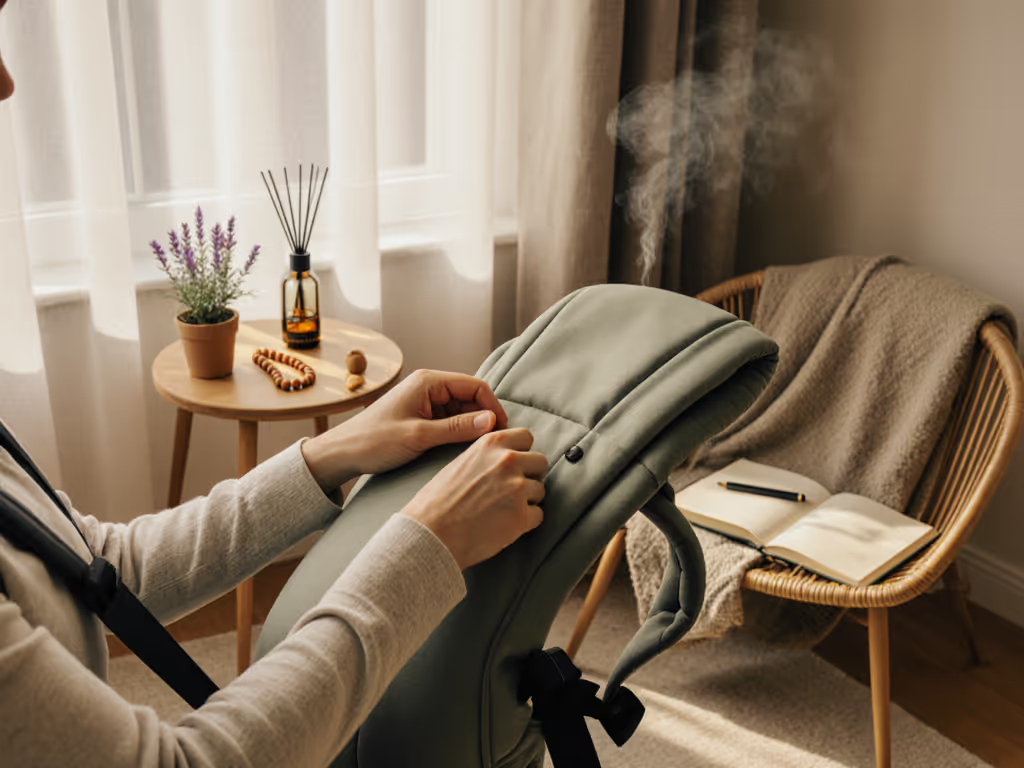
Panel Height: Measure from the base of your neck to your lowest rib at the side of your torso. Panel height should sit between your shoulder blades and your low back, never jamming your neck or forcing your lumbar spine into excessive curve.
-
Seat Width: This is the distance between your hip points (the bony landmarks at the front of your pelvis). Your baby's thighs should be supported fully, creating an M-position with knees higher than hips, which prevents both slumping and hip strain. For your comfort, you need to feel balanced: weight distributed across your waist and shoulders, not collecting in one area.
-
Shoulder Strap Path: When wearing, straps should sit near the outer edge of each shoulder, not pinching your neck or riding toward your collarbone. If you have broad shoulders, narrow shoulders, a large chest, or any asymmetry, the path matters. Straps that dig become a reason to remove the carrier, and that removal interrupts the very regulation you and your baby need. Review the TICKS safety checklist to ensure airway, positioning, and tightness stay safe while you fine-tune fit.
-
Waist Pressure: Check that the waistband sits at your natural waist (just above the hip bone), not riding high into your ribs. For caregivers with diastasis recti, C-section tenderness, or pelvic floor challenges, low-pressure waist options or suspended-shoulder designs prevent additional physical pain from compounding emotional pain. If you’re healing from surgery, our C-section babywearing guide outlines recovery-friendly adjustments.
A Simple Check-In Ritual
Once you've chosen a carrier that fits these metrics, establish a micro-routine before each use:
- Put the baby in the carrier.
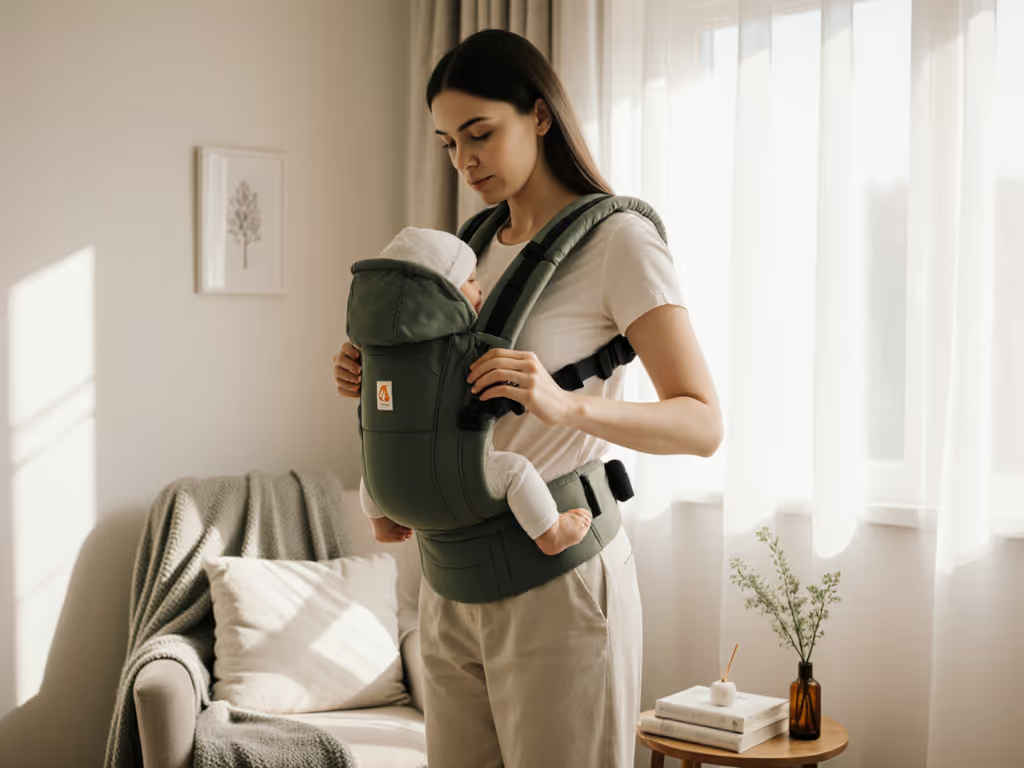
- Close your eyes. Take three slow breaths. Notice: Am I holding tension in my shoulders? Is my lower back in neutral, or am I braced? Can I feel my feet on the ground?
- Adjust one element: tighten a strap a half-inch, lower the waistband, shift the panel slightly, and breathe again.
- When you feel integrated (not perfect; integrated), you're ready to carry.
This ritual does two things: it gives your nervous system a moment to downregulate before you add your baby's sensory input to the mix, and it retrains your proprioception. Grief can make you feel untethered; this small act of tuning into your own body is a grounding tool.
Babywearing Across Grief's Timeline
In the first weeks of acute grief, babywearing for short intervals (20 to 30 minutes) supports both you and your baby without asking you to sustain a physical effort that might trigger overwhelm. Shorter windows also allow you to feel the benefit (the oxytocin hit, the responsiveness, the quiet) without fatigue compounding your emotional weight.
As weeks turn to months, most caregivers can extend to 1-2 hour sessions, depending on their body, the carrier's support, and their energy. The key is listening. If your shoulders are singing, that's a sign to set the baby down safely and rest, not a failure, but a real limit. Babywearing for emotional regulation is not about pushing through pain; it's about sustainable presence.
In the longer arc, babywearing becomes less about managing acute grief and more about maintaining the neurological and emotional benefits of close contact. You've reestablished the habit of presence. Your baby has learned that even in your sadness, you show up. That's the gift: comfort carries competence. Your competence as a parent doesn't live in happiness; it lives in presence despite pain.
Actionable Next Step: Start With Measurement and One Trial
If babywearing after loss feels like something you'd like to explore, begin here:
- Measure your panel height and seat width using the guides above. Write the numbers down, not to conform to a chart, but to know your reference points.
- Identify your body-specific needs. Do you have shoulder pain, pelvic floor sensitivity, or a large bust? Do you prefer front clips or back buckling? Would you benefit from lower waist pressure or extra lumbar support? These aren't limitations; they're data that helps you choose wisely.
- Research one carrier that aligns with your measurements and needs. Read reviews from bodies similar to yours, not from fashion bloggers. Look for mentions of fit duration, strap comfort, and adjustability.
- Commit to a two-week trial with micro-adjustments. Set a phone reminder: "Fit check." Every few days, tune in to whether the carrier is supporting you or straining you. Small adjustments compound. If something still feels off, follow our troubleshooting guide for quick fixes that improve comfort and safety.
- Notice what shifts. Do you have more presence with your baby? Slightly easier breathing? A moment of quietness when you expected chaos? Grief doesn't vanish, but the isolation can soften. That softening is where healing begins.
Your grief is real, and your need to hold your baby while grieving is equally real. A well-fitted carrier doesn't erase either. It simply makes space for both to exist, together.
Related Articles