Babywearing for Anxiety Disorders: Calmer Days, Safer Carry
By Linh Pham • 18th Jun
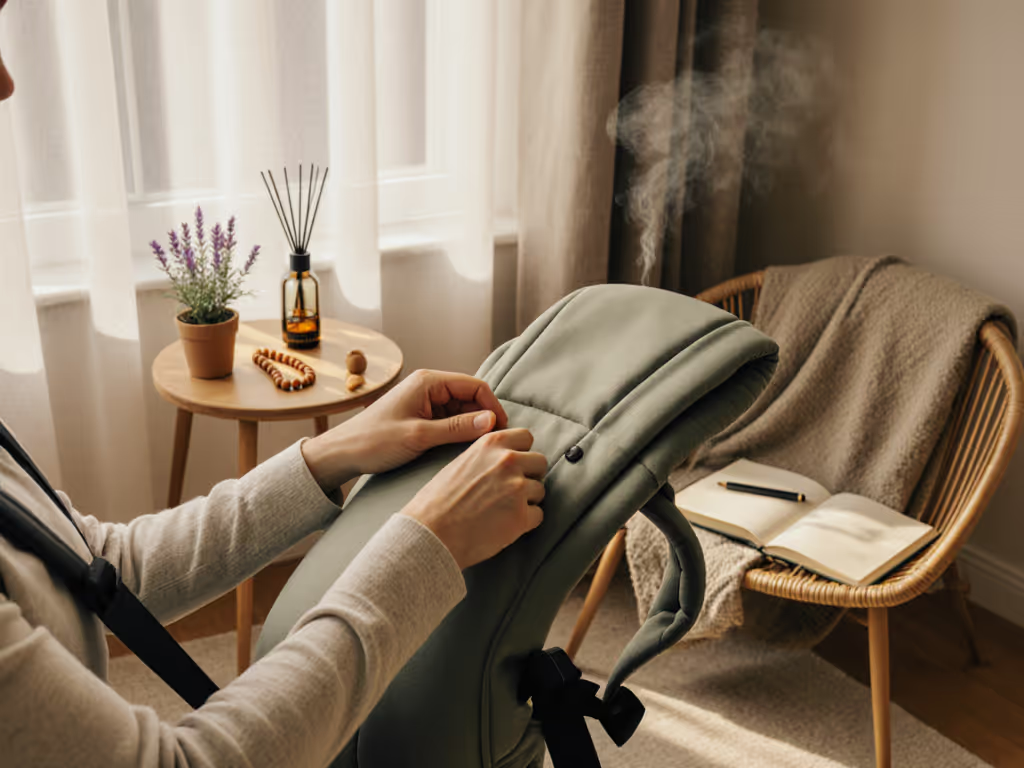
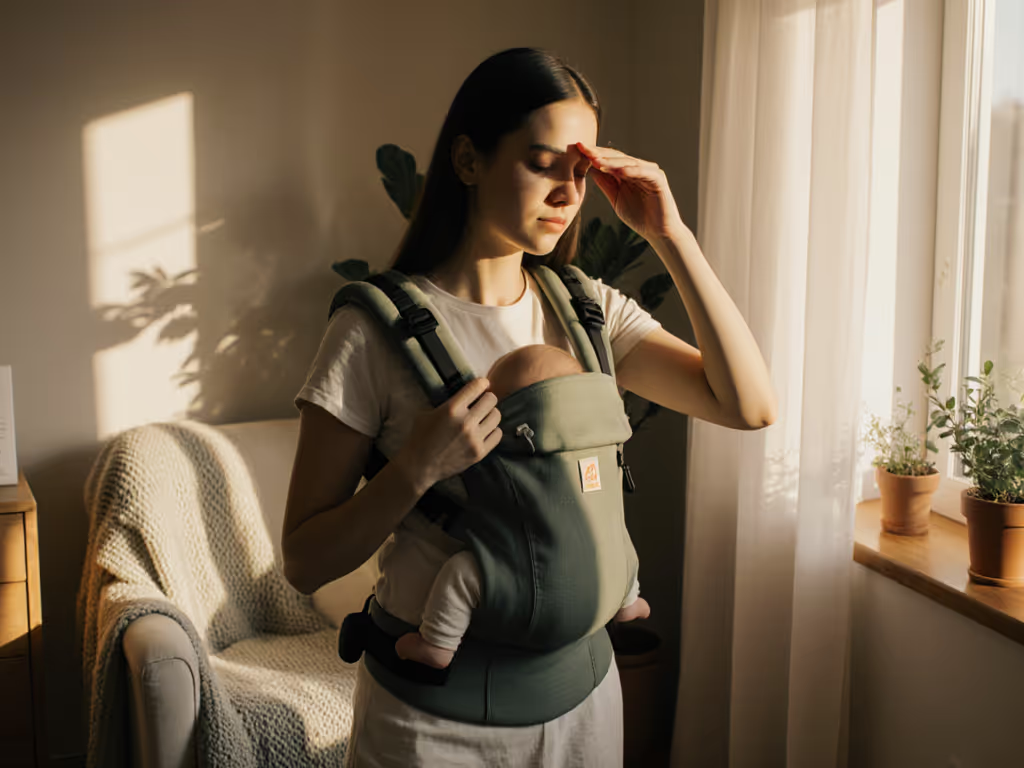
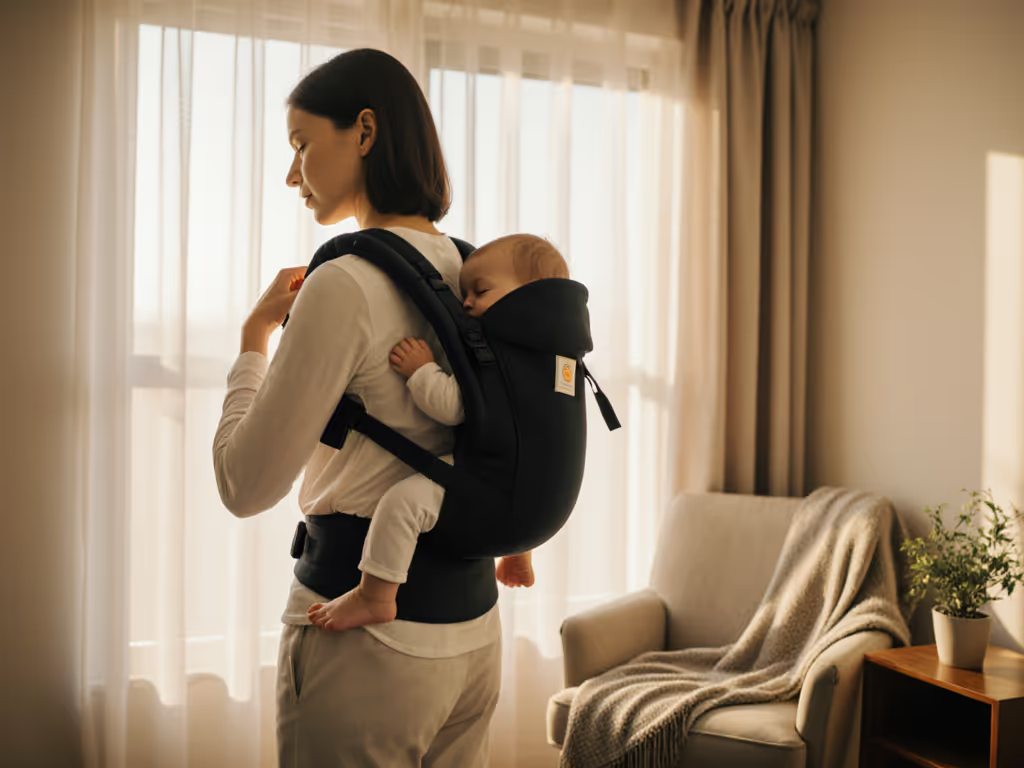
If you live with an anxiety disorder, babywearing for anxiety disorders can feel like both an opportunity and a risk: hands free and close contact sound helpful, yet the idea of "being strapped in" with your baby may spike your nervous system. Done thoughtfully, anxiety management babywearing can become a repeatable, evidence-informed tool (never a cure, but a practical part of your coping plan).
Comfort is a posture achieved, not a promise on packaging.
This article uses a Problem/Agitate/Solve structure: we'll name the specific anxiety challenges of babywearing, look directly at how they can spiral, then build a calm, safe carry routine with clear checklists and grounding techniques. For a step-by-step protocol tailored to anxiety triggers, see our anxiety babywearing setup guide.
1. The Problem: When Anxiety and Babywearing Collide
Living with generalized anxiety, panic disorder, OCD, PTSD, or other anxiety-spectrum conditions often means:
- A brain that scans for danger nonstop
- A body that reacts quickly (racing heart, dizziness, shortness of breath)
- A strong need for escape routes and control
Early caregiving adds layers:
- New safety responsibilities (airways, temperature, positioning)
- Sleep deprivation that amplifies physical anxiety sensations
- Conflicting advice that makes every choice feel high stakes
Babywearing can press on these exact pressure points:
- Fear of airway compromise: "What if they can't breathe and I don't notice in time?"
- Fear of being trapped: Back clips, snug waistbands, and a baby against your chest can feel like there's no quick exit.
- Fear of public panic: "What if I have a panic attack while baby is in the carrier at the store?"
- Fear of doing it wrong: Vague instructions or photos that don't match your body size can make every adjustment feel dangerous.
Many caregivers respond by avoiding carriers altogether or using them rarely, even when strollers are impractical or baby only settles with contact. That avoidance is understandable, but it can also increase isolation, limit movement, and keep your nervous system in a high-alert loop.
2. Agitation: How Misfit and Mistrust Feed the Anxiety Loop
Anxiety thrives on uncertainty and discomfort. Poorly fitted carriers and unclear safety cues double both.
Common patterns I see in anxious caregivers:
-
Physical strain misread as danger A too-low waistband or overly loose straps shift weight into your lower back and neck. That ache, combined with a racing heart from rushing out the door, can be misinterpreted as "something is very wrong with me," feeding panic.
-
Hypervigilance without a framework You keep checking baby's face, chin, and breathing, but without a structured safety checklist, each check raises fresh doubts instead of reassurance.
-
Sensory overload in public Grocery store lights, noises, and crowds plus the sensation of a snug carrier can feel like too many inputs at once. If you've had a panic attack in a similar situation before, your body remembers.
-
Body and identity mismatch If past carriers dug into a soft postpartum belly, rode up on a short torso, or barely buckled on a plus-size body, you may reasonably distrust the whole category, especially with an anxiety disorder coloring your risk assessment.
I still remember a short grocery run with my own baby, three weeks postpartum, when a soft wrap sagged and my back screamed by aisle three. My nervous system read pain as threat; I cut the trip short. At home I measured panel height and seat width and switched to a more structured, micro-adjustable carrier. Ten minutes into the next trip, my posture changed, my back eased, and my anxiety followed.
That experience mirrors what I see daily: when the fit supports your body, your brain has fewer danger signals to interpret. Comfort carries competence.
3. The Solve: Anxiety-Reducing Babywearing, Step by Step
3.1 What the Research Tells Us About Babywearing and Distress
Research on babywearing is still growing, but several consistent findings matter for anxiety disorders:
- Studies have found that babywearing is associated with improved attachment, better infant sleep organization, reduced infant crying, and lower maternal postpartum depressive symptoms.[2] Less crying and better sleep can lower overall stress load for anxious caregivers.
- Babywearing and close physical contact stimulate oxytocin, the "bonding hormone", which promotes relaxation and reduces stress for both infant and caregiver.[4] Oxytocin release through gentle touch has been linked to lower anxiety and improved co-regulation.[4]
- In hospital settings, caregivers who wore babies with Neonatal Abstinence Syndrome reported that babywearing helped calm both the infants and themselves, illustrating a mutual soothing effect.[1]
- A recent study of postpartum women with opioid use disorder found that babywearing reduced urges to use substances and improved maternal health outcomes, suggesting a broader role in emotional regulation under stress.[5]
- Skin-to-skin contact in the early weeks has been shown to reduce depressive symptoms in mothers, and babywearing is one practical way to continue close contact while moving through daily life.[3]
While these studies focus more on depression, bonding, and stress than on specific diagnosed anxiety disorders, together they support a clear pattern: structured close contact through babywearing can reduce subjective distress and improve regulation for both caregiver and infant.[2][4][7]
From an anxiety lens, anything that:
- Decreases unpredictable crying
- Supports more consolidated sleep
- Provides predictable, rhythmic sensory input
is a potential component of an anxiety management babywearing plan.
3.2 Safety First: A Checklist to Quiet the "What If" Loop
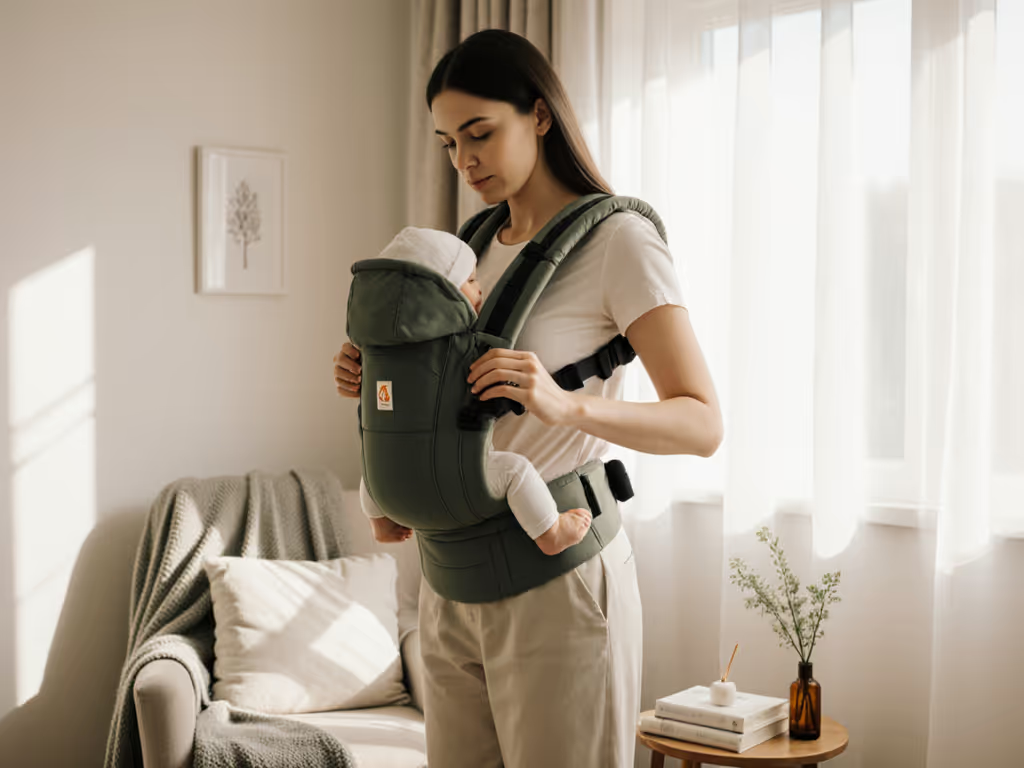
A clear, repeatable safety routine gives your brain data instead of endless "what ifs." Many clinicians and safety organizations teach the T.I.C.K.S. rule for safe babywearing:[6]
- T – Tight: Baby is snug against your body with no slumping gaps.[6]
- I – In View: You can see baby's face without moving fabric.[6]
- C – Close Enough to Kiss: You can easily kiss the top of baby's head.[6]
- K – Keep Chin Off Chest: There is space under the chin; head is not folded forward.[6]
- S – Supported Back: The carrier holds baby's spine so they don't curl into a C-shape.[6]
Add hip safety:
- M-position hips: Knees slightly higher than bottom, legs supported from knee to knee, forming an "M" shape, consistent with guidance from hip health organizations.[6][7]
30-Second Pre-Carry Checklist (say it out loud if helpful):
- "Airway clear, chin lifted."
- "Face visible, fabric off nose and mouth."
- "Knees up, pelvis tilted, M-position."
- "Carrier snug, no slumping."
- "My shoulders and back feel supported, not pinched."
Repeating this same script every time turns a vague fear ("What if I missed something?") into a specific sequence you can trust.
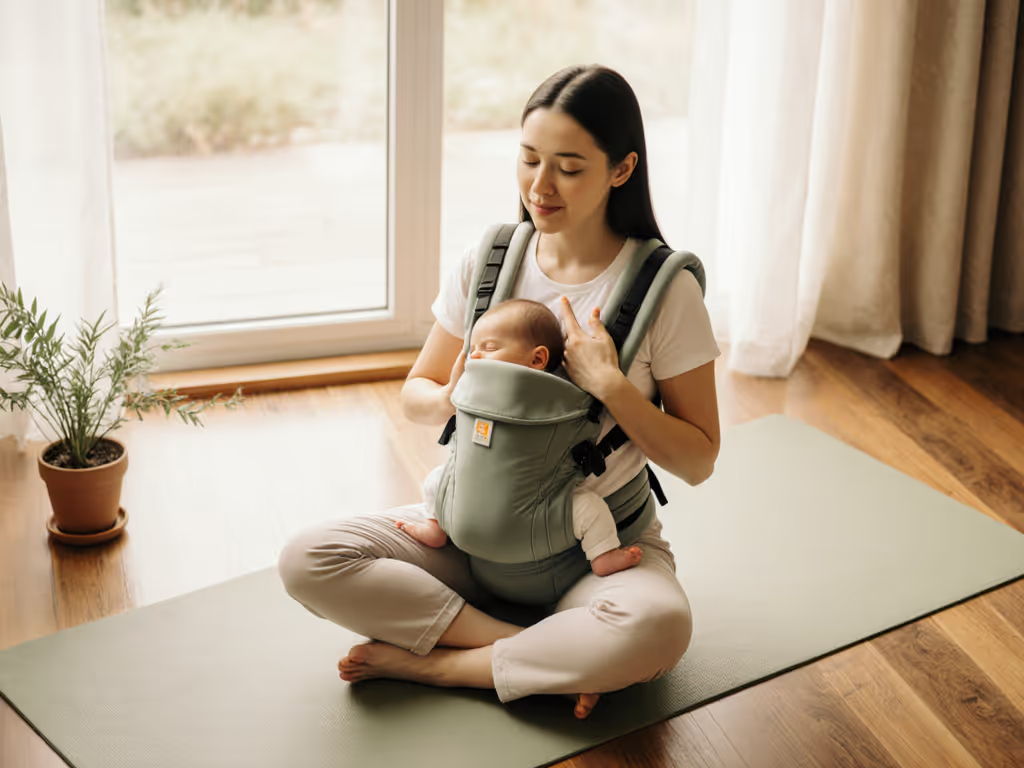
3.3 Grounding Techniques for Anxious Parents While Babywearing
Once safety is checked, we shift to grounding techniques for anxious parents, skills that use your senses and the carrier itself to anchor you.
1. The Weight Check (2 breaths) Feel the exact weight of your baby against your front or back. On an inhale, silently note: "I feel your weight." On the exhale: "We are supported." Repeat twice.
2. The 5-4-3-2-1 Carry Scan Adapt the classic grounding exercise while walking:
- 5 things you can see (aisle signs, trees, your shoes, baby's hat)
- 4 things you can feel (waistband, shoulder straps, baby's back, ground under your feet)
- 3 things you can hear (your footsteps, baby's breath, distant traffic)
- 2 things you can smell (your laundry detergent, the air)
- 1 thing you can taste (sip of water, mint)
3. Rhythm Pairing Walk at a slow, steady pace and match your exhale to every other step: step-step-exhale. Rhythmic movement plus consistent breathing supports co-regulation of both your nervous system and baby's.[4]
These calming carrier techniques work best when practiced first at home, during low-stakes moments. The goal is not to eliminate anxiety, but to give your body something structured and repeatable to do when anxiety rises.
3.4 Panic Attack Prevention While Babywearing: Before, During, After
You cannot control every panic spike, but you can shape conditions around babywearing.
Before you leave:
- Avoid putting the carrier on when you are already at an 8/10 anxiety; instead, use it when you are closer to 4-5/10 and practice in short bursts.
- Use the 30-second safety checklist followed by one grounding exercise.
- Choose settings with an easy exit (quiet aisles, a short loop around the block).
If you feel panic building while wearing:
- Pause your movement. Plant your feet hip-width apart.
- Check baby's safety using the T.I.C.K.S. checklist. Once confirmed, say out loud, "Baby is safe. This feeling is panic, not danger."
- Change one variable: a micro-adjust of the waistband, a step closer to a wall or bench, or turning toward an exit can reassure your brain that you are not trapped.
- If sensations keep escalating and you feel you may faint, sit if possible and, when safe, remove the carrier methodically (never rushing or tugging at straps near baby's airway).
If panic episodes are frequent or severe, especially in the perinatal period, discuss them with a mental health professional. Babywearing is a tool, not a stand-alone treatment.
3.5 Fit and Posture: Making Calm Physically Possible
Anxiety is harder to manage in a body that hurts. This is where precise fit and posture matter. For a deeper dive into caregiver body mechanics, see our ergonomics in babywearing guide.
Front-carry fit in 5 steps:
-
Waistband position Place the waistband higher than you think (often at or just above the hip bones for newborns, lower as baby grows). This keeps baby's head within "close enough to kiss" range and prevents low-hanging weight that strains your back.[6]
-
Panel height The panel should reach roughly from baby's upper back to the base of the neck for newborns, and no higher than the earlobes for older babies who need neck mobility. Too-tall panels can obscure your view and increase airway anxiety; too-short panels allow slumping.
-
Seat depth and leg support Fabric from knee to knee, thighs supported, knees higher than bum. This stabilizes baby's pelvis and reduces wiggles that can feel unpredictable.[6][7]
-
Strap path that respects your shoulders If you have limited shoulder range of motion or chronic pain, front-clip or H-strap styles reduce overhead reaching. Adjust so straps are snug but not digging; padding should sit on the muscle, not on the side of the neck.
-
Movement test Take 10 slow steps and one gentle squat. Nothing should bounce, pull sharply, or force your lower back to arch.
When caregivers realize that a few centimeters of strap or waistband change can shift discomfort from 7/10 to 2/10, anxiety often softens alongside. Comfort carries competence.
4. A 7-Day, Low-Stress Plan to Try Anxiety Management Babywearing
To keep this practical, here is an actionable next step: a one-week experiment that respects both your nervous system and your body.
Day 1-2: Home-only, no time pressure
- Practice putting the carrier on in front of a mirror without baby.
- Say your safety script out loud.
- Notice any strap paths that are hard on your shoulders or c-section area and adjust now.
Day 3: Add baby for 5-10 minutes indoors
- Use the 30-second checklist plus one grounding technique.
- Walk around one room or your hallway.
- Afterward, jot down: anxiety lower / same / higher; any pain points.
Day 4-5: Short, predictable outing
- Choose the easiest possible scenario: a lap around the block, a quiet shop at off-peak hours, or pacing your building's hallway.
- Set a clear limit (e.g., 10-15 minutes of wear).
- Bring a backup plan (stroller, pram, or the option to return home quickly).
Day 6: Adjust based on data
- Review your notes. Did anxiety spike mostly in crowds? When the carrier felt too loose? When you were hungry or overtired?
- Adjust inputs: time of day, route, duration, and micro-adjustments to fit. If a persistently tricky fit is adding stress, try our babywearing troubleshooting guide.
Day 7: Repeat the best-feeling scenario
- Recreate the conditions that felt safest and most sustainable.
- Repeat the same checklist and grounding sequence, intentionally building a sense of "this is what a calm carry feels like in my body."
If you already work with a therapist or prescriber for an anxiety disorder, consider sharing this plan and asking how babywearing can fit into your existing coping strategies and safety plan.
Babywearing will not erase anxiety, but with the right fit, clear safety cues, and rehearsed grounding, it can turn everyday tasks (from grocery aisles to neighborhood walks) into chances to practice regulation for both you and your baby. Comfort is a posture achieved, and over time, these tiny postural and procedural choices can make carrying feel less like a risk and more like a reliable support.
Related Articles